
A Critical Analysis of Doctrines, Reforms, and Legal Practices
Mian Zafar Iqbal Kalanauri
Advocate Supreme Court Pakistan, Barrister called to the Bar at Lincoln’s Inn Arbitrator Fellow CIArb, Mediator CEDAR,IMI,CMC,U.S.A. , Master Trainer Mediation CEDAR , Legal Educator, Reformist of Judicial System and Legal education, White Collar Crime Investigator
Preface
Islamic law, known as Shariah, has been the foundation of legal and ethical governance in Muslim societies for over a millennium. It influences not only religious life but also civil, criminal, economic, and family law. Despite its deep historical roots, the evolving social and legal landscape has raised important debates on the interpretation and application of Islamic jurisprudence in contemporary times.
This book, Articles on Islamic Law, provides a detailed examination of key legal concepts, including marriage, divorce, inheritance, guardianship, polygamy, and adoption under Islamic law. It also critically analyzes Pakistan’s legal framework in light of Islamic principles, highlighting judicial precedents, legal reforms, and challenges faced in the implementation of Islamic law.
As a legal professional with over three decades of experience, my objective in compiling these articles is to enhance understanding of Islamic legal doctrines, promote legal awareness, and contribute to the scholarly and judicial discourse on Islamic jurisprudence. I hope this book serves as a valuable resource for students, legal practitioners, policymakers, and anyone interested in the legal aspects of Islam.
Mian Zafar Iqbal Kalanauri
Advocate, Supreme Court of Pakistan
Executive Summary
Articles on Islamic Law is a comprehensive compilation of legal analyses exploring key Islamic legal doctrines and their contemporary applications. The book is structured into three major sections, each focusing on critical aspects of Islamic family law, gender rights, and legal interpretations in Pakistan.
Section 1: Family Law in Islam
- Marriage, Divorce, and Re-Marriage (Halala) – Discusses the Islamic view on marriage and dissolution, including Halala, Khula, and Triple Talaq.
- Dowry and Family Law – Examines the customary practice of dowry in South Asia, its Islamic legal standing, and judicial enforcement in family courts.
- Women’s Inheritance Rights – Analyzes the Quranic principles of inheritance, the legal obligations of men, and the challenges women face in securing their rights.
Section 2: Contemporary Debates & Legal Reforms
- Guardianship, Custody & Child Support – A legal overview of custody laws, child maintenance, and parental rights under Islamic and Pakistani law.
- Polygamy in Islam & Law in Pakistan – Examines the religious, social, and legal dimensions of polygamy, addressing reforms and controversies.
- Islamic Law on Adoption – Discusses Islamic principles on adoption and the legal framework in Pakistan.
- Qisas and Forgiveness in Islamic Criminal Law – Explains Qisas (retributive justice) and its connection to forgiveness under Islamic jurisprudence.
Section 3: Judicial Interpretation & Gender Equality
- Testimony of Women in Islamic Law – A critical analysis of Article 17 of Qanun-e- Shahadat Order (1984) and its constitutional alignment with gender equality.
- Judicial Precedents & Legal Reforms in Pakistan – Case studies on Islamic family law rulings, gender rights, and legal challenges in modern courts.
This book combines classical Islamic legal thought with contemporary legal interpretations, making it an essential resource for academics, lawyers, students, and policymakers navigating the complexities of Islamic law in modern legal frameworks.
INDEX
Section 1: Foundations of Islamic Law
- Introduction to Islamic Law – Page 1
- The Role of Shariah in Muslim Societies – Page 5
- Sources of Islamic Law: Quran, Hadith, and Ijma – Page 12
- Development of Islamic Jurisprudence – Page 18
- Early Islamic Legal Scholars and Their Contributions – Page 25
Section 2: Core Legal Doctrines in Islam
- Principles of Islamic Justice – Page 32
- Marriage and Divorce under Islamic Law – Page 38
- Guardianship and Child Custody – Page 45
- Islamic Inheritance Law – Page 52
- Islamic Contract Law and Business Ethics – Page 60
Section 3: Contemporary Challenges & Reforms
- The Role of Islamic Law in Modern Legal Systems – Page 68
- Women’s Rights in Islamic Law – Page 75
- Comparative Study: Islamic Law vs. Western Legal Systems – Page 82
- Islamic Finance and Economic Justice – Page 90
- Legal Reforms in Muslim Nations – Page 98
Section 4: Case Studies & Judicial Interpretations
- Notable Court Cases on Islamic Law – Page 105
- The Guardians and Wards Act, 1890: Implications – Page 112
- Child Custody Disputes: Case Studies – Page 119
- Women’s Inheritance Rights in Practice – Page 125
- The Influence of Colonial Laws on Islamic Jurisprudence – Page 132
Appendices
-
- Bibliography & References – Page 140
- Glossary of Islamic Legal Terms – Page 145
- Index of Legal Cases Cited – Page 150
About the Author
Mian Zafar Iqbal Kalanauri is a Senior Advocate of the Supreme Court of Pakistan, an Arbitrator, Mediator, and Legal Educator, recognized for his pioneering work in Alternative Dispute Resolution (ADR), commercial law, and judicial reforms. With over three decades of legal experience, he has been at the forefront of shaping legal education, training judges and lawyers, and reforming Pakistan’s judicial system.
He is the Founder and Senior Partner at Zafar Kalanauri & Associates, a renowned law firm specializing in corporate law, commercial litigation, arbitration, and mediation. He has served as a consultant to Chief justices of High Court /Supreme Court and international organizations, including the World Bank, Asian Development Bank (ADB), and European Union, contributing to major legal reform projects.
As a legal educator, he has taught at leading institutions, including LUMS, Punjab University, and various judicial academies, developing legal curricula and training judges, lawyers, and law enforcement officials. His expertise spans across corporate law, dispute resolution, white-collar crime investigation, and legislative drafting.
Key Contributions & Achievements:
-
- Judicial & Legal Reforms: Instrumental in drafting ADR laws, commercial courts legislation, and legal education reforms.
- Mediation & Arbitration Leadership: A Fellow of the Chartered Institute of Arbitrators (FCIArb) and a mediator for international dispute resolution panels.
- Legal Training & Education: Designed courses and trained judges at judicial academies in Pakistan and abroad.
- Publications & Thought Leadership: Authored over 300 articles on law, legal reforms, and human rights.
- Global Legal Engagements: Represented Pakistan in legal conferences and training programs across the USA, UK, China, Bangladesh, Sri Lanka, and France.
Beyond his legal career, Mian Zafar Iqbal Kalanauri remains a strong advocate for legal awareness, access to justice, and the modernization of Pakistan’s legal system. His work has significantly contributed to bridging the gap between Islamic law and contemporary legal challenges.
For more details on his legal practice, research, and publications, visit:  Website: www.kalanauri.com,
 LinkedIn: Zafar Kalanauri
MARRIAGE, DIVORCE AND RE-MARRIGE (HALALA) IN ISLAM
Marriage in Islam
The primary source of Muhammadan Law is the Holy Quran which represents the God’s Will communicated to the Prophet through the Angel Gabriel. Section 34, Chapter IV in Mulla’s Principles of Muhammadan Law by Hidayatullah, Nineteenth Edition, (for short, “Mulla’s Muhammadan Law”) deals with Interpretation of the Quran. It states that the Courts, in administering Muhammadan law, should not, as a rule, attempt to put their own construction on the Quran in opposition to the express ruling of Muhammadan commentators of great antiquity and high authority.
In Islam, marriage is a legal contract “matrimony contract”; (Nikāḥ-Nāmah)1between two people. The bride is to consent to the marriage of her own free will. A formal, binding contract is considered integral to a religiously valid Islamic marriage, and outlines the rights and responsibilities of the groom and bride. There must be two Muslim witnesses of the marriage contract. Marriage, according to Muslim Law, is a civil contract, Marriage is highly revered and extolled in Islam and accorded a detailed treatment both in the Holy Qur’an and the Sunnah of the Prophet Muhammad (PBUH). It is, for instance, called the sign of God, a way of prophets and the Sunnah of Muhammad (PBUH). The Quran uses the simile of a garment to describe the mutually protective and beautifying relationship between spouses, and requires them to be very kind and considerate to each other. It also assigns different roles to each spouse to ensure smooth functioning of the family that emerges as a result of the marriage contract between husband and wife in a prescribed way.
Islam treats marriage as an everlasting institution with specific rights and responsibilities assigned to each partner. A Muslim marriage is a social contract between two independent persons who have attained puberty. Islam introduces checks and balances to protect and secure the rights of all stakeholders in this matter—the husband, the wife, the children, and society at large. It prohibits all forms of extramarital relations, both before and after marriage, treating them as a transgression. Thus, Islam, with its provisions for establishing and maintaining the integrity of the family, is diametrically opposed to the viewpoint that stands for sexual laxity in the garb of “freedom of choice.”
In spite of its emphasis on marriage and its preservation, however, Islam does not rule out dissolution of marriage as a last resort for estranged couples. Describing divorce as the most detestable among the permissible acts. Islam gives both the partners the right to terminate their marriage contract if they fail to fulfill the primary objectives of marriage.
1 An Islamic marriage contract (Arabic Katb el-Kitab, Hebrew Ketubah, Urdu Nikah-Nama) is an Islamic prenuptial agreement. It is a formal, binding contract considered an integral part of an Islamic marriage, and outlines the rights and responsibilities of the groom and bride or other parties involved in marriage proceedings.
Divorce is another name of dissolution of marriage under three distinct modes in which a Muslim marriage can be dissolved and the relationship of the husband and the wife terminated. The existence of conjugal relations in the case of Muslims has to be determined by reference to the provisions of the Muhammadan Law and not by considerations of equity and good conscience as understood in any other system of law.
Legal and Judicial Framework for Dissolution of Marriage in Pakistan
In Pakistan, the establishment and dissolution of marriage takes place under different laws and ordinances. Lack of awareness regarding the legal framework often creates problems for couples entangled in disputes, forcing them to struggle for their rights. With reference to dissolution of marriage, the following family laws are in practice in the country:
-
- Guardian-Wards Act (GWA) 1890;
- Child Marriage Restraint Act (CMRA) 1929;
- Dissolution of Muslim Marriage Act (DMMA) 1939;
- Muslim Family Laws Ordinance (MFLO) 1961;
- Muslim Family Law Rules (MFLR) 1961;
- Reconciliation Courts Ordinance (RCO) 1961;
- The West Pakistan Muslim Personal Law, Shariah Application Act (WPMPLSAA) 1962;
- West Pakistan Family Courts Act (WPFCA) 1964;
- West Pakistan Family Courts Rules (WPFCR) 1965; and
- Hadd-e-Qazaf Ordinance (HQO) 1979.
Although most of the sections, articles and clauses of these laws are in conformity with the teachings of Islam, there are certain areas where conflict between them creates difficult situations, particularly for women.
Under Section 5 of the West Pakistan Family Courts Act 19642, the Family Courts have been empowered to deal with cases of dissolution of marriage, including khula (divorce on the wife’s demand), and the allied issues of dower, maintenance, restitution of conjugal rights, custody of children, guardianship, dowry, personal property and belongings of the wife.
Although separate Family Courts have been established, the existing Civil Courts are given additional powers of the Family Courts. Amendment 2002 provides the facility of seeking relief through combining different sections, clauses and articles taken from related laws in a single suit.
Rule 6 of the West Pakistan Family Courts Rules 19653 provides that suits for dissolution of marriage or recovery of dower may be filed in a court that has jurisdiction in the area where the
2 5. Jurisdiction: Subject to the provisions of the Muslim Family Laws Ordinance, 1961, and the Conciliation Courts Ordinance, 1961, the Family Courts shall have exclusive jurisdiction to entertain, hear and adjudicate upon matters specified in the Schedule.
3 6. The Court which shall have jurisdiction to try a suit will be that within the local limits of which-
- the cause of action wholly or in part has arisen, or
- where the parties reside or last resided together:
litigant wife ordinarily resides. Moreover, according to Section 19 of WPFCR, the court fee for any plaint or appeal is only Rs.15/-, as opposed to Rs.15,000/- for ordinary civil suits. These provisions are intended to facilitate plaintiff women.
Marriage Dissolution: A Comparison of Practices, Laws and Islam
Dissolution of marriage in Pakistan takes different forms, including separation without divorce pronouncement; talaq (divorce by the husband); khula; talaq-e-mubarat (mutually negotiated divorce as part of the khula process); talaq by the wife through delegated right of divorce; and dissolution of marriage through court.
Three other forms, which are permissible in Islam but not common in Pakistan, include eila, an oath of abstinence from conjugal relations by the husband; liaan, in which permanent separation is awarded by a court after a man accuses his wife of adultery; and khiyar-al-buloogh, in which either spouse, in a child marriage contracted through the respective guardians, is given the right to repudiate the marriage upon attaining puberty.
The following discussion presents a comparison of prevalent practices, Islamic teachings and laws concerning marriage dissolution in Pakistan.
Separation through Divorce
Divorce is the breaking of the spousal relationship with express or implied words, directly or through representation, by the husband, effective instantaneously or consequentially. As far its effects are concerned, it is of three kinds:
- Revocable divorce (talaq-i-rajaee), in which the husband pronounces divorce once and at some later stage realizes that he made a mistake and decides to rescind the pronouncement unconditionally and resumes the normal spousal relationship;
- Irrevocable divorce of minor degree (talaq-i-bain sughra), in which the parties, if they both agree, can re-enter into the marriage contract;
- Irrevocable divorce of major degree (talaq-i-bain kubra) in which the husband cannot re-enter the marriage contract with his divorced wife unless she, after having married and establishing
Provided that in suits for dissolution of marriage or dower, the Court within the local limits of which the wife ordinarily resides shall also have jurisdiction.
Court Decisions: Jurisdiction. Proviso to R. 6, West Pakistan Family Courts Rules, 1965, enables estranged wife to file suit for dissolution of marriage within local limits of which she ordinarily resides. Words “ordinarily resides” must be construed in context of estranged wife who had left her husband’s abode and had sought residence at any other place of her own choice; such place of her choice would answer to concept “ordinarily resides”. Petitioner ordinarily residing at a place other choice, after separation from her husband, was, thus, competent to bring suit for dissolution of marriage in the Court of that place. High Court ordinarily would not go into question of fact in Constitutional Jurisdiction but where findings of Courts below on the face of record appeared to be perverse or based on no evidence, High Court even in Constitutional Jurisdiction could take different view. Both Courts below having unlawfully refused to exercise their Jurisdiction on wrong assumption that they did not have such Jurisdiction, their Judgments were set aside. P.L.J.1997 Lahore 1631 = 1997 CLC 742.
Expression ordinary resides “does not necessarily mean that residence should belong in point of time, residence for a few days is enough. Court has to see place where female has chosen to stay regardless of whether she is a permanent resident of place, whether she has property over there or length of time she has resided there. P.L.J.1996 Lahore 1071 = 1996 CLC 1820.
conjugal relations with her new husband, is divorced for some reason and is willing to re-enter into a marriage contract with her former husband.
Separation without Divorce
There are cases when couples who are separated but not divorced live separately with their respective families, while the formal termination of marriage is withheld. This practice basically stems from the desire to avoid the stigma of divorce or seek escape from spousal torture. It is also considered a symptomatic remedy until better sense prevails and the differences are resolved amicably.
However, in such situations, the woman often has to undergo considerable mental stress and humiliation. Although she is deprived of spousal companionship, she cannot legally enter into a new marriage prior to the termination of the first one. The husband, however, can avail this option. Children in such situations usually suffer unnecessarily, especially if they are residing with the mothers who cannot afford to maintain them adequately or are so distressed that they cannot perform the dual-parent role effectively.
This practice goes against the teachings of Islam, which does not permit the husband to be unjust or selfish. Instead, he is required to either reconcile affably, or divorce her without compromising her honor, dignity and security, or withholding her personal property and belongings. Islam gives concrete rights to women in this regard, unlike the pre-Islamic practices. It even allows a woman to remarry if her husband has gone missing.
The prevalent family laws in Pakistan also do not approve of the unfair nature of separation occurring under any process whether eila or zihar. For instance, Section 2 of the Dissolution of Muslim Marriage Act 1939 facilitates a woman to annul her marriage through providing detailed subtle grounds of contemporary nature in addition to the grounds formally recognized by the Shari’ah. The intent of existing laws clearly favors women towards the annulment of marriage in case they cannot get along with their husbands. Section 8 of the Muslim Family Laws Ordinance 1961 addresses divorce and allied issues unambiguously.4 Section 65 declares that contracting a
4 7. Talaq:
- Any man who wishes to divorce his wife shall, as soon as may be after the pronouncement of talaq in any form whatsoever, give the chairman a notice in writing of his having done so, and shall supply a copy thereof to the wife.
- Whoever, contravenes the provisions of sub-section (1) shall be punishable with simple imprisonment for a term which may extend to one year, or with fine which may extend to five thousand rupees, or with both.
- Save as provided in sub-section (5) talaq, unless revoked earlier, expressly or otherwise, shall not be effective until the expiration of ninety days from day on which notice under sub-section (1) is delivered to the Chairman.
- Within thirty days of the receipt of notice under Sub-section (1), the Chairman shall constitute an Arbitration Council for the purpose of bringing about a reconciliation between the parties, and the Arbitration Council shall take all steps necessary to bring about such reconciliation.
- If the wife be pregnant at the time talaq is pronounced, talaq shall not be effective until the period mentioned in Sub-section (3) or the pregnancy, whichever later, ends.
- Nothing shall debar a wife whose marriage has been terminated by talaq effective under his section from remarrying the same husband, without an intervening marriage with a third person, unless such termination is for the third time so effective.
8. Dissolution of marriage otherwise than by talaq.
second marriage without the prior permission of the first wife (or earlier wives, if there is more than one) is a crime punishable with imprisonment or fine or both. The same section implies the payment of the entire dower, whether prompt or deferred, to the first wife immediately. The first wife can also claim her maintenance if the husband falls short of fulfilling his responsibilities. In case the wife herself opts to leave her husband’s house without any solid reason, such as cruelty or irresponsible behavior on her husband’s part, she is not entitled to seek maintenance.
It has to be concluded that, notwithstanding the clear provisions of family laws and Islamic teachings, the prevalent practice in the country is unfair and, in some cases, abusive towards women. For most women in such cases, the options are quite limited and they are generally forced to live in very unfavorable conditions, hoping that things may eventually take a positive turn.
Divorce by the Husband – Talaq
Unfortunately, divorce seldom proceeds smoothly. It usually results from an aggressive behavior, mostly caused by a moment of rage, against the manner prescribed by the Qur’an and Sunnah. The pronouncement of three divorces in one breath is a common practice, in addition to abuse and character assassination. Women are generally denied their Islamic right to accommodation
Where the right to divorce has been duly delegated to the wife and she wishes to exercise that right, or where any of the parties to a marriage wishes to dissolves the marriage otherwise than by talaq the provisions of section 7 shall, mutatis mutandis and so far as applicable, apply.
5 6. Polygamy:(1) No man, during the subsistence of an existing marriage, shall except with the previous permission in writing of the Arbitration Council, contract another marriage, nor shall any such marriage contracted without such permission be registered under this Ordinance.
- An application for permission under Sub-section (1) shall be submitted to the Chairman in the prescribed manner together with the prescribed fee, and shall state reasons for the proposed marriage, and whether the consent of existing wife or wives has been obtained thereto.
- On receipt of the application under Sub-section (3), Chairman shall ask the applicant and his existing wife or wives each to nominate a representative, and the Arbitration Council so constituted may, if satisfied that the proposed marriage is necessary and just, grant, subject to such condition if any, as may be deemed fit, the permission applied for.
- In deciding the application the Arbitration Council shall record its reasons for the decision and any party may, in the prescribed manner, within the prescribed period, and on payment of the prescribed fee, prefer an application for revision, to the Collector concerned and his decision shall be final and shall not be called in question in any Court.
- Any man who contracts another marriage without the permission of the Arbitration Council shall,
- pay immediately the entire amount of the dower whether prompt or deferred, due to the existing wife or wives, which amount, if not so paid, shall be recoverable as arrears of land revenue; and
- on conviction upon complaint be punishable with the simple imprisonment which may extend to one year, or with fine which may extend to five thousand rupees, or with both.
and maintenance during the iddah, i.e. the prescribed waiting period before a woman may remarry after divorce.
During the iddah of a revocable divorce, the parents of the divorced wife usually do not let her remain in her husband’s house, ignoring the Qur’anic teachings according to which the couple should remain under the same roof so that there is maximum likelihood of resumption of the marital relationship.
The withholding of dowry and other belongings of the divorcee is also a common practice in society. Custody and maintenance of children are the two most contentious issues between separating couples. Commonly, such matters are taken to the courts.The common practices are quite contrary to the Islamic teachings. The Qur’anic injunctions related to talaq clearly and forcefully forbid the exploitation of women. They do not allow men to keep women in a constant fix or coercion on the face of obvious incompatibility. The essence of the Qur’anic commandments in this regard can be summed up as follows:
-
-
- Men are generally vested with the responsibility of taking care of important matters pertaining to the family, including the dissolution of marriage.
- Divorce should always be a thoroughly deliberated decision and delivered in a period of
-
tohar (i.e. when the menstrual cycle is completely over).
-
-
- It should be pronounced in such a way that the iddah is not compromised, as happens through the pronouncement of three verbal divorces in one go, so that the possibility of reconciliation and the provision of rejoining can be utilized.
- The husband has the right to pronounce talaq twice only, with iddah in between, and then either the couple is reunited or separated amicably.
- In the case of revocable divorce, the wife should spend the iddah at her husband’s home, because it might help them reconcile with each other.
- It is obligatory upon the husband to provide maintenance and accommodation for his wife during the iddah.
- It is obligatory upon the husband to provide maintenance for a pregnant or breastfeeding divorcee, until the pregnancy or breastfeeding is over, both in the case of revocable and irrevocable divorces.
-
Based on the Qur’anic teachings, the Prophet Muhammad (PBUH) explained the procedure and mode of divorce clearly. In the light of these guidelines, Muslim jurists set out the detailed rules for all matters related to divorce. The key points relevant to this discussion are outlined below:
-
-
- Any talaq given for the period during which the husband can revert back to his wife is called talaq-e-rujaee (revocable divorce). After the first or second pronouncement of divorce, even if the iddah period is completed, the husband, prior to the pronouncement of the third divorce, has the option of taking his wife back by re-solemnization, with her consent. This type of divorce is called talaq-e-bain sughra. The third pronouncement makes divorce final and irrevocable — it is then called talaq-e-bain kubra or mughallaza (the third, irrevocable divorce). The third divorce means that the couple can never rejoin, unless the extraordinary condition of halala is fulfilled.
- Halala is the situation where a divorced woman marries another man in a regular manner with the solemn intention of living with him, but again unfortunately separates from him due to his death or divorce. She is then allowed under Islamic law to remarry her former husband, if she so wishes. Notably, the ugly custom of preplanned halala, in which the former husband manipulates someone to marry his former wife and then divorce her immediately without even consummation for enabling him to remarry the woman, is a mockery of the divine law and is cursed by the Prophet Muhammad (PBUH). The Caliph Omar and Abdullah bin Omar regarded such marriages as adultery.
- According to the Sunnah, the best procedure for divorce is talaq-e-ahsan (most approved form of divorce) in which divorce is pronounced once in tohar, with no conjugal relations in that period, and then the couple wait for the entire iddah, completing the divorce. During the iddah, the husband has the absolute right of ruju (i.e. reversal of the divorce process by the husband and maintenance of matrimonial relations as in the past) either verbally or practically.
-
The Sunnah also permits a second form of divorce, which jurists call talaq-e-hasan (proper form of divorce). In this, divorce is pronounced three times, with a gap of one tohar period of the wife between each pronouncement, so that each party has ample time for reviewing its standpoint regarding the dispute. Again, the husband has the absolute right of ruju until the divorce becomes final.
The practice of pronouncing three divorces at the same time is against the Sunnah and has been termed as talaq-e-bidah (the innovated divorce) by Muslim jurists. However, two opinions prevail among Muslim jurists regarding the effect of this practice. One group considers such a pronouncement as one divorce, while the other takes it as three divorces and declares the outcome to be the final talaq-e-mughallaza. Notably, it is unanimously agreed that such divorce is against Sunnah and highly disliked. Once the Prophet Muhammad (PBUH) was informed that a man had pronounced a ‘triple divorce’ to his wife. The Prophet rose in anger and exclaimed, “Is the book of Allah being played with while I am still present among you?”
Mahr (dower) has to be paid to the divorcee if it is not already paid. She has a right to her full dower if it was fixed and the couple has had conjugal relations. If there has been a conju gal act but the dower was not fixed, its amount is to be equivalent of dower fixed for other married sisters of her family, his family or based on the sisters-in-law of the families. She is paid half the dower if it was fixed but there was no conjugal act. Finally, if there was neither a fixed dower nor any conjugal relationship, some gifts are given to the divorcee.
The wife has the right to take all her belongings with her, including the things given to her by her husband. God-fearing men are asked to give muta-e-talaq (a monetary parting gift) to their ex- wives on such occasions, which is in keeping with their own financial status.
The iddah is different for women who are pregnant, not pregnant and above the reproductive age. For women in the last two categories, it is three months. However, for pregnant women, the iddah continues until the birth of the child. There is no waiting period for a woman who had no conjugal relations with her husband. The iddah after khula is one menstrual cycle, as described by the Prophet Muhammad (PBUH) and practiced by his companions.
In case of separation based on any type of dissolution of marriage, the mother has the right to custody of the children while the father is obliged to provide financial support for the children.
Mudslinging and character assassination is strictly forbidden for the parting couples.
Divorce cases taken to the courts are settled under Section 7 of MFLO 1961. The detail of this procedure is as follows:
-
-
- The original divorce deed is required to be filed along with the suit.
- The notices of divorce along with photocopies of the divorce deed are to be submitted by the husband to the Chairman Arbitration Council (CAC)/Nazim Union Council (NUC) soon after the pronouncement of the divorce.
- Within 30 days of receiving the divorce notice, the CAC constitutes an Arbitration Council (AC) to facilitate reconciliation between the parties, taking all necessary steps in this regard. Section 2 (a) of MFLO specifies that the CAC and a representative each of the husband and wife constitute the AC.
- Ninety days after the divorce notice is delivered to the CAC, the talaq becomes effective if it has not been revoked during the period.
- If at the time divorce is pronounced, the wife is pregnant, the divorce does not become effective until the baby is born or the 90-day period ends, whichever occurs later.
- Upon the expiry of 90 days, a copy of the decision of the AC, i.e. reconciliation or divorce, duly attested by the CAC, is furnished to each party.
- Failure to provide a notice of divorce to the CAC is punishable by imprisonment for a maximum period of one year or with a fine of up to Rs. 5,000.
- In most parts of the country, a complaint against the husband’s failure to provide the divorce notice can only be filed by the CAC. However, in the province of Punjab, the law has been amended to enable the wife to also file such a complaint.
- Many clauses of Section 7 of MFLO are contrary to the teachings of Islam, which creates confusions and exacerbates problems. The following are among the most significant issues:
- After an irrevocable divorce is pronounced, there is no room for reconciliation in Islam; divorce becomes effective forthwith. However, MFLO makes no distinction between revocable and irrevocable divorces.
-
MFLO accepts the validity of a divorce only if the concerned CAC is properly notified of the occurrence of divorce, following which he issues divorce certificates to the divorcees. On the contrary, the some jurists under the Islamic law hold that the divorce is effective the moment it is pronounced, whether it revocable or irrevocable. The Shari’ah Appellate Bench of the Supreme Court (SABSC) of Pakistan, in one of its decisions, has upheld this Islamic principle, and it is being used as a precedent.
Furthermore, the Ordinance does not accept the divorce as effective until the stipulated 90-day period following notification to the CAC has expired. However, in the Islamic law, the iddah is not same in all situations. For instance, as mentioned above, there is no iddah for a divorced woman who has had no conjugal relations with her husband. The Ordinance, however, debars her from a second marriage until the expiry of 90 days. Furthermore, it allows and advises reconciliation through the Arbitration Council and allows the husband to take her back without
nikah (formal marital contract), whereas there is difference of opinion among jurists, whether Islamic law requires re-solemnization through a fresh nikah. Likewise, for an expecting mother, the delivery of the child ends the iddah period, be it a few days or many months. According to the Ordinance, however, she must observe a waiting period of 90 days, even if the child is delivered earlier.
According to MFLO, the iddah commences from the day the CAC receives notice of divorce. Yet, ironically, there is no time limit set for the husband to give this notice to the CAC. The words used in the relevant section are “as soon as possible,” and this loophole enables the divorcing person to play tricks and prolong the iddah, and thereby the agony of the divorcee, if he so wishes.
Prevalent practices are frequently in blatant violation of Islamic teachings, especially where the laws are weak or ineffective. Thus, the abhorrent practice of triple divorce pronouncements is common. Husbands fail to notify the CAC about their divorces leaving their wives in limbo, with no option of remarriage unless they are ready to face possible charges of adultery. As discussed later in this section, dissolution of marriage, including divorce, is frequently burdened with issues of maintenance rights and custody of children, creating a host of problems for the concerned parties and leading to acrimony, mudslinging and sometimes even blood feuds.
Divorce at the Wife’s Demand – Khula and Talaq-e-Mubarat
Khula is a process through which a woman can dissolve the marriage by surrendering certain rights given to her, such as dower (jewelry, ornaments and any fixed amount given or to be given by the husband), dowry (gifts brought by the bride at the time of marriage) and bari (the gift given by the groom to the bride on the occasion of marriage), etc. In no event is she required to pay from her own pocket to secure her freedom from a non-functional marriage. It is also widely believed that it can be obtained only through court since out-of-court khula settlements are not so common.
With not much to her name legally, the average Pakistani woman normally has to surrender jewelry gifted to her by her husband in cases of khula. There are also cases when she is pressurized to surrender the rights to the tangible items or property given to her by her own parents.
There is a widespread misconception that, in Islam, men alone are empowered with the right to dissolve their marriages. In reality, Islam also gives the woman the right to dissolve her marriage, through an agreement between herself and her husband, which may take the form of either khula or talaq-e-mubarat. In khula, the wife dissolves the marriage by paying for dissolution or surrendering certain rights. In talaq-e-mubarat, both spouses are desirous of separation and reach a mutual settlement that makes this possible. This divinely granted right of khula is stated in the Qur’an as follows:
“If you (the judge) do indeed fear that they would be unable to keep the limit ordained by Allah, there is no blame on either of them if she gives something for her freedom. These are the limits ordained by Allah, so do not transgress them”
There is a consensus among jurists that it is unjust for a husband to receive some kind of payment from his wife if he has been the oppressor. However, if a woman is the guilty party and seeks divorce, the husband can receive something from her the worth of which should not be more than what he had given to her or was supposed to give her as the dower.
The effect of dissolution of marriage through khula is similar to talaq-e-bain: the two cannot rejoin each other without a remarriage through a new matrimonial contract. Jurists of all four major schools in the Muslim world hold that khula can be decided at bilateral level; however, some hold that it can only be obtained through a competent court.
Using the right of khula without reasonable grounds is disapproved of in Islam: according to a saying of the Prophet Muhammad (PBUH), such women will not be able to get even the fragrance of Jannah (paradise).
The family laws of Pakistan are very clear about khula, and it is dealt with under Section 8 of the MFLO. Khula comes into effect by an offer from the wife to compensate the husband to release her from marital responsibilities. With mutual consent, she can be released through talaq-e- mubarat. In the light of a judgment of the courts, the production of evidence by a woman is not necessary to establish that she cannot live with her husband anymore. The right of khula is also exercised under the newly added proviso to Section 10 of the West Pakistan Family Courts, 19646, whereby the Family Court in a suit for dissolution of marriage, if reconciliation falls, shall pass decree for dissolution of marriage forthwith and shall also restore to the husband the Haq Mehr received by the wife in consideration of marriage at the time of marriage. Due to this amendment dissolution of marriage on the basis of khula has become very easy and quick, which has increased the rate of divorce at a very alarming rate in Pakistan.
Notwithstanding these rights and laws, the right of khula is seldom exercised by a woman out of court and in many cases she has to surrender, not only the dower given to her by her husband, but also the belongings and property gifted to her by her own parents to avoid lengthy litigation and character assassination, even where her husband has been an oppressor.
6 [* Words added by Family Courts (Amendment) Ordinance 2002]
*[10. Pre-trial proceeding.–(1) When the written statement is filed, the Court shall fix an early date for a pre-trial hearing of the case.]
* Sub. by West Pakistan Family Courts (Amendment) Act, 1969, S. 6.
- On the date so teed the Court shall examine the plaint, the written statement (if any) and the precis of evidence and documents filed by the parties and shall also, if it so deems fit, hear the parties and their Counsel.
- At the pre-trial, the Court shall ascertain the points at issue between the parties and attempt to effect a compromise or reconciliation between the pares if this be possible,
- If no compromise or reconciliation is possible the Court shall frame the issues in the case and fix date for the
*[recording] of evidence.–
“Provided that notwithstanding any decision or judgment of an) Court or tribunal, the Family Court in a suit for dissolution of marriage, if reconciliation falls, shall pass decree for dissolution of marriage forthwith and shall also restore to the husband the Haq Mehr received by the wife in consideration of marriage awe time of marriage.
* Inst. by W.P. Act 1 of 1969 S. 6 (b).
Dissolution of Marriage through Court
In Pakistani society, a woman normally does not seek separation from her husband and goes to every possible extent to resolve her differences with her husband within the family. In extreme cases, she may seek to terminate her marriage through the intervention of elders or close relatives. She approaches a court for dissolution of marriage only when her matrimonial life is filled with unbearable troubles but the husband is not willing to free her from wedlock. Recently, however, there has been a noticeable increase in the number of cases reaching courts, which is attributed to the enforcement of the decision by courts to resolve each family case within a period of six months.
Muslim jurists believe that, under certain circumstances, a judge can terminate a marriage even without the consent of a husband, for instance, if the husband has gone missing, lost his sanity, or is impotent, or even if he fails to provide maintenance. Similarly, if the husband is unwilling to fulfill marital obligations, the court can intervene and, despite his unwillingness, separate him from his wife. The effect of dissolution of marriage through court is similar to talaq-e-bain, i.e. the two may rejoin through remarriage.
Section 2 of the Dissolution of Muslim Marriage Act 1939 provides a woman the right to terminate her marriage if her husband:
- is missing,
- has failed to provide maintenance,
- is sentenced to imprisonment for seven years,
- has failed to perform marital obligations,
- is impotent,
- is insane,
- is suffering from leprosy or venereal disease,
- is cruel,
- is associated with women of evil repute,
- attempts to force her to lead an immoral life,
- dispossesses her of her property, or
- obstructs her from practicing religion.
She can also dissolve her marriage if it was arranged before she reached the age of pubert y, whether with consent or without her consent, solely by declaring that she has now become an adult and does not recognize the marriage. (This right is discussed further below in the discussion of khiyar-al-buloogh.)
Delegation of the Right of Divorce to Women – Haq-e-Tafweez-e-Talaq
Haq-e-Tafweez-e-Talaq is another option for dissolution of marriage under which a woman is granted the right to annul her marriage. A broad consensus exists among Muslim jurists that Islam gives a woman the right to seek this power from her husband, and it can be delegated by him to her both verbally as well as in writing, at the occasion of marriage solemnization or
afterwards, with different forms and conditions. If she has this right, she can divorce herself and dissolve the marriage. Once this right is delegated, it cannot be repudiated. The husband’s right of divorce remains intact even after he delegates it to his wife.
MFLO also acknowledges this right. Accordingly, in Column 18 of the current nikahnama (standard marriage contract form), the husband may delegate the power of divorce to his wife with conditions arrived at by the parties. In the event that the wife subsequently exercises this right, she is required to send the divorce notice to the Chairman of the Arbitration Council, who issues a divorce certificate if reconciliation efforts from the platform of the Arbitration Council fail.
This option is rarely availed by women in Pakistani society, mostly because of ignorance about this provision in the nikahnama. The parents of a bride also do not seek this right for their daughter considering it a bad omen for the beginning of her marital life. Although the option is there on the official nikahnama, people normally cross it out, often without even consulting the bride. Notably, however, in the literate class in urban areas in general and in the aristocracy in particular, an increasing number of women are seeking this right, especially on the occasion of marriage.
In sum, though there is no religious or legal dispute on this issue, owing to lack of awareness and superstitious thinking, few women avail this option while men normally do not support it.
Dissolution of Marriage after Charges of Adultery – Liaan
Liaan, though rare, is another procedure of dissolving marriage. When a husband levels adultery charges against his wife but is unable to produce four witnesses to prove his claim. In such cases, he may either accept that his allegation was false and face the punishment for committing qazaf—in which 80 stripes are inflicted on him for a false allegation of zina (adultery).
Concept of Halala

Halala
 ……
……
The word “Halala” has not been used in Quran. However, it seems to have been derived from the ward “halal”(Lawful)


 It means, a process in which a definitely divorced lady can again become halal (lawful) for her Husband
 Wife who, as per Sharia Law is halal (lawful) for her husband becomes haram (unlawful), due to one of the following reasons:
- Husband may have exercised his one of the Two Rights of Divorce, but the legal period (Eddat) of his wife expired; and

husband did not reconcile with her during or on the expiry of her legal period (Eddat)

 Husband exercised his one of the Two rights of divorce, but reconciled with her during or on the expiry of legal period
But after some time, due to any reason, again (Second and last Time divorced her; and

did NOT reconcile with her during or on the expiry of legal period.

- Husband had exercised his TWO rights of Divorce and during or before the expiry of legal period

had reconciled twice with wife, BUT AGAIN DIVORCES HER.

 BECUASE
(1)
-
 In two times Divorce with legal period, Husband has only two choices:
Retain wife honourably OR Release her honourably
 (
(
2)
 Divorce is(permissible) Twice (i.e. Husband can only divorce a wife twice, there is no provision of the Third one)
In any of the above mentioned three conditions, the divorce becomes effective and wife become haram(unlawful) for Husband

Now again Husband can only marry this lady, if she marries someone else

and the other husband divorces her, and after divorce becomes effecitve this lady can become lawful(halal) to her First Husband
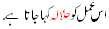
This process is called “Halala”.
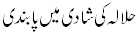
RESTRICTION IN HALALA MARRIAGE

…that they are able to observe the limits of Allah…
The Holy Quran recites on the issue of Halala, as under: Sura 230 (i.e. Verse 230).
“And if he hath divorced her (the third time), then she is not lawful unto him thereafter until she hath wedded another husband. Then if he (the other husband) divorces her, it is no sin for both of them that they come together again if they consider that they are able to observe the limits of Allah. These are the limits of Allah. He manifesteth them for people who have knowledge”.
What it means is that if the Talak was “the third time”, such a Talak was pronounced, then they cannot re-marry unless the wife were to have, in the intervening period, married someone else and her marriage had been dissolved either through divorce or death of that person and the iddat of divorce or death has expired. This is considered as halala”.
To prevent making a mockery of the sacred institution of marriage and of the rights of women, where the man divorces his wife and marries her again and again, Islam imposed the two-strike rule whereby a man is allowed to divorce and remarry the same woman again only twice. If the man divorces his wife for the third time, it would constitute an irrevocable divorce and it would be impermissible for the man to marry the same woman again unless and until she (perchance) marries another man, consummates the marriage, and the man dies or of his own will divorces her.
The term halala is when a man has irrevocably divorced his wife, and they (or some people) intentionally plan and arrange for another person to temporarily marry the (divorced) wife, so that the wife can again become legal again for the first husband. This intentional plotting and planning for arranging the temporary marriage of the divorced wife with another person to intentionally circumvent the Laws of Allah and make her legal for her first husband is what is known as halala.
It is absolutely impermissible and a grave sin in the sight of Allah for the believers to plan such a
halala to intentionally circumvent and make a mockery of the Laws of Allah Subhanah. The Messenger of Allah (PBUH) invoked the curse of Allah on the people who practiced halala and on those for whom it was practiced.
There is no concept as halala in Islam. This is something that has been made by some Muslims and unfortunately is now seen as part of the Shari’ah by some Muslims. The rule of the Qur’an is that if a man divorces his wife for the third time in one marriage contract then that wife cannot get back to the man unless she (genuinely) marries another man and then (genuinely) is divorced by that man. In other words, this rule should not be dealt with by a pre-planned marriage and divorce.
It is preferable not to give any title to marriages that are done with specific conditions as this will result in generalising conclusions. The main thing that makes the religious nikah (marriage) different from zina (adultery) is the fact that it is a permanent contract, by the consent of the two parties, to stay together (unless cancelling the contract by divorce) and that it is openly announced. Any conditions that do not negate the above conditions (and other religious laws) can be imposed to this contract, although in principle it is always better to keep it without any further conditions.
Islamic sharia disallows a couple remarrying after having been through three divorces. Some Sunni schools view a triple talaq, when the husband saying “I divorce you” three times in a row, as equivalent to three single talaq. Other Sunnis and Shia treat that as a single divorce, arguing that the Islamic prophet Muhammad did so and Umar having no authority to change that7.
Couples cannot remarry until the ex-wife marries another man, to ensure that divorce is not taken lightly. She cannot go back to this husband who has divorced her three times, unless she marries another person who out of his own free will divorces her. This rule is given by the Shari’ah to reduce the occurrence of three divorces and to protect the honor of the woman. Nikah halala cannot be done as a condition or intention to make her lawful to her ex-husband. After iddah is observed, the original couple may remarry. nikah halala is used mainly in countries that recognize the triple talaq.
A man is entitled to take his wife back twice after two respective talaqs and for a third time also before the expiry of her iddat after he gives her a talaq for the third time. But after that the separation is irrevocable. She is then free to be married to any other person of her choice. If then in the normal course of life a dispute between them develops leading to first talaq by the second husband, she is again free to be married to any person of her choice including the second husband (by whom she has got the first divorce) and also including the first husband as well. The relevant point here is that a halala cannot be planned in advance, as a nikah between her and the second husband with an understanding of a divorce afterwards will not be valid. If she does so, it will be an illegitimate relationship with the second husband and with the first husband also with whom she comes to live after a pre-planned halala. Muhammad (PBUH) has cursed both such men who perform halala and for whom halala is performed. The second Caliph Hazrat Umar ruled during his reign that he will punish with stoning to death those who perform a pre-planned halala. Imam Sufian Sauri says: “If someone marries a woman to make her halala (for her ex-
7 Muslim 3491, 3492
husband) and then wants to keep her as wife, he is not permitted to do so unless he solemnises a nikah afresh, as the previous nikah was unlawful.” (Trimizi)
The widespread understanding of fiqhi halala is greatly unlike from the Quranic idea of halala. Regrettably, because of our prejudice tendency, existing deficiency in having a bond with Quran and dearth of research, the Quranic idea of halala has been outshine by fiqhi halala. Indeed in the legal and Quranic idea of halala neither prerequisite nor plan of divorce is there at the occasion of marriage. If a new marriage is performed with the objective of living together eternally and it turns into disastrous naturally and divorce occurs or the new husband expires, simply then the marriage with the ex-husband happens to be permitted. So, there should be no undisclosed method used in the ending of the new marriage to render remarriage with former husband viable i.e. it is completely incidental and effortless.
In this regards, we need to deliberate on a few points as below:
- According to Quran, marriage is never temporary. It is always permanent and that i s why the law of divorce is there to dissolve the marriage in case the relations are completely spoiled between the couple. What is then the difference between precondition and intention of divorce from the results perspective? It is therefore quite astonishing that some of our religious jurists have not only allowed the marriage with the intention of divorce but have declared it blessed8.
If the spirit of nikah ehsaan is not there then it will difficult to call it a marriage. The word ehsaan is extracted from hisn‘ meaning fort, i.e. the place that serves as a place of protection. That is why a married man is called mohsin and married woman is called mohsina because they protect each other i.e. they get sheltered in a fort. The traditional nikah brings the woman in its fold of security. This protects the honour and dignity of woman as well as tames the unrestrained sexual desires of man, hence he also gets secured in the form of marriage. This is what Quran has pointed out by calling man a muhsin and woman a muhsina.
Addition of with muhsineen‘ is to show that extra marital relations are disallowed in open or in secret.
Just review the words of and honestly decide after pondering whether prevalent form of halala comes under the definition of muhsineen or not, i.e. if this form of halala makes man the protector of the honour and dignity of woman or a looter of her chastity usually lasting a few nights.
- Secondly, the agreement of man and woman plays a vital role in the marriage and no one denies the importance rather requirement of this covenant. Hence the question arises if the free will of partners is taken care of in the prevalent form of halala?
- Thirdly, in the case of pregnancy due to halala, is there any legal plan in the minds of man and woman? Also, is the issue of inheritance there in the minds of partners, in case of death
8 Durr-e-Mukhtar chapter, Al Raja, Published Mujtaba-i-Delhi, 1\241,as referred try Fatawa-e- Razwiya, vol.12, p.409, Raza Foundation, Jamia Nizaniia Razwiya, Andurun-e-Lahori Darwaza, Lahore No.8, Pakistan (54000).
during the period of halala. You may not find answer to these questions because the prevalent form of halala is only temporary and is only there to cater to the urgency of situation. Prevalent form of halala does not have any basis like a ‘permanent marraige’ i.e. this sowing is not to get the crop.
- Fourthly, man and woman tend to find out about each other’s social, financial, moral and religious status before entering the matrimonial relation. It is only after satisfactory investigation that the relation comes into being. Does- halala also require this kind of scrutiny? Hand on heart, do we really think that this kind, halala is the Quranic objective of marriage. If not, then we should indeed not consider the prevalent form of halala as the legitimate dissolution of marriage.
It shows that where Quran has termed the marriage as ehsaan it has actually completely explained its meanings by this word i.e. a marriage which is opposite of musafihat and that is only possible when there is an intention of ehsaan. The marriage which is absent with the essence of ehsaan is not the opposite of musafihat – it is actually musafihat. The people, who take sex as the main objective of marriage, should ponder a little more on this verse of Quran. Does the prevalent halala not just comprise of sex only and don’t we have the possibility of clandestine sex in, this kind of marriage during halala or afterwards. Is there anyone who thinks about this aspect?
Sexual immorality is possible in women just like men. In case of halala if a woman gets exposed to this kind of relation, will it not open the possibilities of extra marital relations for her later on? The reason is that like the words have come for men, similarly the words Al Nisa 25 have come for women. That is, the women should also come under the bound of marriage to be muhsina rather than having overt and covert sexual relations. We believe that halala on one hand provides a blatant way for sexual desires, whereas on the other hand opens up the possibilities of clandestine illicit relations after divorce.
Our understanding is that this Quranic statement contains a universe of meanings within. This statement has provided such a description of marriage due to which not only mutaa but the prevalent halala also becomes illegal because both of them are devoid of ehsaan and full of musafihat.
This is also worth remembering that once Prophet Muhammed (PBUH) told sahaba,
“Should not I warn you about the rented bull? The companions asked the Prophet w h o are they? He replied that those are the mohallil. Curse of Allah be upon the mohallil and mohallil lahu.”
The interpretation of by Pir Karam Shah Alazhari is as follows:
“From here onwards it is the discussion about 3rd divorce (4) i.e. if he has given the 3rd divorce as well, then until she marries someone in the same way as she married the first husband and then the second husband after consummating the marriage does not divorce per his free will, she can marry the first husband again. This is a clear order from Quran
which is not subject to any interpretation. Now-a-days a solution has been sought in terms of halala for which Prophet Muhammed (PBUH) has ordered “Allah’s curse on the person doing halala and the one for whom it is being done.9
This is quite clear now that Prophet Muhammed (PBUH) declared halala10 profane, Hazrat Umar (RA) called it worth stoning and Hazrat Uthman (RA) considered it devoid of the trait of nikah. In the p r e s e n c e of such clear verdicts, the emphasis for Halala is quite un-understandable.
Legal position of Halala in Pakistan
Muslim Family Laws Ordinance (MFLO) requires a man to give notice & go through a mediation/reconciliation process before divorce. However, it is often not followed, and the divorce is still enforced. A man is required to pay the meher (dower) at the time of divorce, if he has not paid it earlier. If the woman has the right of divorce in the Nikahnama, she can give a divorce and she does not have to give up her right to meher. Under MFLO a divorcing husband shall, as soon as possible after talaq has been pronounced, in whatever form, give a notice in writing to the chairman of the Union Council. Failure to notify, in the above stated manner, invalidated talaq until the late 1970s and early 1980s, but introduction of the zina Ordinance allowed scope for abuse as repudiated wives were left open to charges of zina if their husbands had not followed the MFLO’s notification procedure. Since early 1980s, the practice of the Courts in Pakistan is that they validate a talaq despite a failure to notify as provided under the MFLO. In all other three types of divorces i.e. khula, mubara’at and judicial divorce; divorce is effective according to the law of the land and possibility of remarriage is there. The limitation of two talaqs is applicable only in case of divorce through “talaq”. In all other dissolutions this limitation is not applicable.11
The separated husband and wife through finalization of talaq can resume the marital relationship by means of re-marriage nikah as there is no legal impediment including that of an intervening
9 Zia-ul-Quran, vol. I, marginal note of verse #230 Sura — to-al Baqara, Zia-ul-Quran Publicationes, Ganj Bakhsh Road, Lahore, N/A.
10 Here regarding halala we want to point out that most of the scholars of filth rather all of them believes that the legitimate halala will be the only way for women who have received talaq-e-Mugallaza (i.e. three divorces at a time). However, Allama Tamanna Imadi and Allama Jaafar Shah, Phulwari believes that this legitimate Halala will be valid for only those woman who have taken Divorce on her own will as a substitute for wealth, not for that woman who have been divorced by her husband on his own will. As per Jaffer Shah Phulwari, “After second Marriage if the later husband also divorced her accidently, then she will be entitled for her former husband, this law was only for women who have taken Khula from their husband but it was considered for the woman who have been divorced thrice.” (Qurani Qanun-e-Talaq, p.35, Dar-ul-Tazkeer, Rahman.Market, Ghazni Street, Urdu Bazaar, 2003.) Details could be found in the above mentioned two scholars’ books. At-Talaq Marratan is a well-known book of Allama Tamanna Immaadi comprises of 167 pages, I have the issue of 2004, which was published from Dost Associates Urdu Bazaar Lahore. And The book of Jaffer Shah of 88 pages.
11 PLD 2003 Peshawar 169
marriage or hillala. Section 7(6) 12of MFLO also allows such a re-union without an intervening marriage. The other Islamic countries have also enacted similar laws. Therefore a man can remarry his divorced wife, twice even after two effective talaqs. But he is prohibited to marry her for the third time. Doctors of Islamic Shariah declare that after two complete effective divorces the woman loses subject (status) of legality for the previous husband but not before that. The eminent Islamic scholar Maulna Abul Ala Maududi in Tafheem-ul-Quran,Volume I at page 176 has subscribed to this view that there is no moral or legal obstacle in doing so.
The purpose of this allowance and the restriction according to Abul Ala Maududi in `Meaning of Quran’13is,
“This verse was meant to reform a serious social evil common in Arabia before the advent of Islam. A husband was allowed to pronounce divorce as often as he pleased. Whenever his relations were strained with his wife, he would pronounce divorce and then reunite as and when it suited him. As there was no limit to this, it was repeated over and over again……”
The misuse of this method was to disgrace the woman by restraining her from doing a lawful act.
“…thus the wife could neither have conjugal relations with him nor was free to marry anyone else”…….14
And restraining anybody from doing anything what law allows him is cruelty…..”This verse of Quran shuts this door of cruelty”……15
This view has also been fortified by superior courts of the country by their authoritative pronouncements.16
12 Section 7(6) : “Nothing shall debar a wife whose marriage has been terminated by talaq effective under the section from re marrying the same husband, without an intervening marriage with the third person, unless such termination is for the third time so effective.”
13 The Meaning of the Qur’an; 10th edition, pg167
14 The Meaning of the Quran; 10th edition, p.167
15The Meaning of the Quran; 10th edition, p.167
16Gulzar Ahmed V Mst. Maryum Naz (2000 MLD 477), Fazal-Subhan v Mst. Sabreen and others (PLD 2003 Peshawar 169), Muhammad Ayub Khan v Mst. Shehla Rasheed and others (PLD 2010 Karach 131), Zulfiqar Ali v Mst. Yasmeen Mukaram and another (PLD 2011 Lahore 458), Danish v Mst. Fauzia Danish (PLD 2013 Karachi 209)
Islamic Law and Tradition of Dowry and Recovery through Family Courts
A dowry is a gift given by the bride’s family to the groom and the newly formed household at the time of their marriage. Historically most societies have had brides go to their husband’s families, and often women could not legally own property. The husband would be primarily responsible for the economic prosperity of the household, while women would care for children and the household needs. When a woman or girl married into a family that was agricultural, she often was welcomed as another worker. In families that were more prestigious, however, she may have been viewed as another mouth to feed, and the dowry was an important sign of her gratitude for becoming a member of her husband’s family. The earliest dowries were usually land entitlements, but later were attached to sentimental and decorative items as well as various commodities and even later to money.
In the first era of Islam marriage was a simple affair, without pomp or ceremony. Any expenditure incurred in its performance was quite minimal, and not a burden on either family. Indeed, the Prophet stated: ‘the most blessed marriage is one in which the marriage partners place the least burden on each other.‘ 1Nowadays, much difficulty and hardship can be caused by the setting and giving of dowries, bride-prices and mahr – not to mention enormous wedding feasts and celebrations in some cultures which bring a most unreasonable financial burden on the families concerned. Financially crippling celebrations are totally in opposition to the spirit of Islam, and are not necessary. They are purely a matter of the culture of certain regions. No Muslim should feel obliged to continue these un-Islamic traditions, or be embarrassed about breaking with their old cultural traditions.
The custom of giving dowry (jahez) is not part of Islam, although it actually seems to be on the increase among several Muslim cultures, notably those of Indian, Pakistani and Bangladeshi origin, even when they have settled in the UK or USA. In fact, it is a practice which has never been sanctioned by Islam and is not prevalent amongst Muslims of other cultures. It seems to be in imitation of ancient Hindu culture in which daughters were not given any share in the family property, but were given payments, part of which might be in the form of household goods, as a measure of compensation. Islam granted daughters a rightful share in their family property and inheritance.
A ‘bride-price’ is either an amount of money, goods or possessions given to the bride by the bride’s family at the time of her marriage, in order to attract a good husband for her. It would in effect become the property of the husband or his family upon his marrying her. This is a totally un-Islamic practice. In Islam, women are not ‘owned’ by their families and should not be ‘traded with’ in this manner. It is an insulting practice. An amount of money demanded from the bridegroom or his family by the bride or her family, usually the bride’s father, without which the
1 (al-Haythami, Kitab ab-Nikah, 4:255).
daughter will not be given in marriage. In the ‘jahiliyyah’ society before Islam, this money was regarded as the property of the girl’s guardian.
The matters of fathers giving the bride gifts of money or property, or paying for an enormous wedding feast, or providing a home, or setting her up in her home with furniture and household effects are left to the discretion of the people involved in Islam. The Prophet himself saw to the marriages of his four daughters. He gave his daughter Fatimah various gifts when she married Ali b. Abu Talib, but there is no record of his having given anything to his other daughters on the occasion of their marriages. Had such gifts been a recommended Sunnah, he would surely have given the others gifts as well. Moreover, the gifts given to Fatimah were extremely modest household articles. The Prophet gave Abu Bakr some money and asked him to accompany Bilal and Salman, (or Ammar Ibn Yasir) to buy some household necessities for Fatima’s house. The Prophet said to Abu Bakr: “Buy some appropriate household necessities for my daughter with this money.” Abu Bakr said: “He gave sixty-three (63) dirhams, so we went to the market and bought the following:
1. Two mattresses made of Egyptian canvas (One stuffed with fiber and the other with sheep wool) 2. A leather mat 3. A pillow made of skin, filled with palm tree fiber 4. A Khaibarion cloak 05 An animal skin for water 6. Some jugs and jars also for water 7. A pitcher painted with tar 8. A thin curtain made of wool 9. A shirt costing seven dirhams 10. A veil costing four dirhams 11. Black plush cloak 12. A bed embellished with ribbon 13. Four cushions made of skin imported from Ta ‘ef stuffed with a good smelling plant 14. A mat from Hajar 15. A hand- mill 16. A special copper container used for dyestuff 17. A pestle for grinding coffee 18. A (water) skin.
When Abu Bakr and the other companions had bought the above-mentioned articles, they carried them to Um Salama’s house. When the Prophet saw them, he started kissing every article and supplicated to Allah, saying: “O Allah, bless them! For they are people who the majority of their belongings are made of natural materials.”
A woman holds a very high status in the Islamic faith. She is honoured and respected at all times, but many startling transgressions have crept into Islamic practice. These transgressions have been caused by cultural influence that has no basis in Islamic scripture. Muslims living in the Indian subcontinent have slowly incorporated the act of dowry into their lives. Dowry originated in the upper caste Hindu communities as a wedding gift (cash or valuables) from the bride’s family to the groom’s family. There is nothing strange or unique about a culture influencing Muslim practice, as it is a common characteristic around the globe that when a new religion spreads in an area, people who live in that area retain some of the customs and traditions which they have been practicing for centuries. There is nothing wrong with this as long as those practices do not contradict Islamic law. The practice of dowry, however, does in fact transgress Islamic law.
We usually use the word gift for something, which we give voluntarily, to a person we like. A gift is something that strengthens the friendship bond between two people. Dowry, which is usually defined as a “gift” given along with the bride, by a bride’s family to the bridegroom, is used as a tool of coercion and greed in societies like Pakistan. The bride’s family must give this
“gift” or the marriage will not take place. Always the price of the dowry is set higher than the bride’s family can afford and sadly, this results in the bride becoming burden on her family. The bride’s family then struggles to pay the “gift”.
In Islam it is the man who pays the Mahr (dower) to the woman. The verses in the Qur’an prove that it is the man who is obligated to pay the Mahr (dower) to the woman unless the woman chooses not to take it. 2
Cultures that demand dowry from the bride’s family are actually practicing the opposite of what Allah has commanded. They have reversed Allah’s words in their practice. The bride is forced to pay a negotiated amount to the groom unless the man chooses not to take it. When the woman brings less than the negotiated amount, she has to endure constant torture from her in-laws after marriage. When the husband or in-laws are not satisfied with the dowry brought by the bride, they even go to the extent of killing the woman after marriage. The most severe among all the dowry abuse is “bride burning”. The parties engaged in the murder usually report the case as an accident or suicide.
Dowry abuse is rising in Pakistan despite a Dowry and Bridal Gifts (Restrictions) Act 1976. Many women remain unmarried due to this dowry. Another common practice is that people ‘exchange’ their sons. In other words, they give a bridegroom (mostly their son) to a girl to be married in exchange for a bridegroom from the girl’s family (the bride-to-be’s brother or any unmarried male relative) so that they can have their daughters married without dowry. This places an incredible disadvantage on the parents who have daughters and no sons. The parents of daughters having to give money to get their daughters married!
It is a sad irony that women (mostly mothers-in-law) are oppressive towards other women (daughters-in-law). Mostly, mothers-in-law-to-be are the ones who demand dowry from the bride’s family and who end up torturing the daughter-in-law after marriage if she brings less than the negotiated amount. So in an effort to respect parents and to conform to cultural norms, Muslim youth in Pakistan are bending over backwards to follow traditions that aren’t even rooted in Islam. Demanding dowry and getting married may seem valid in the eyes of many, but will the marriage be validated in the eyes of Allah?
Dowry is purely a matter of culture. One should not feel obliged to continue these un-Islamic traditions. If a culture contains un-Islamic aspects, then one should not feel any shame to break the culture’s traditional practices. The practice of dowry has caused Muslims in many parts of the world to continue their prejudices against women despite the Islamic prohibitions against it. In Pakistan, a woman is considered to be a great burden mainly because of the dowry system. Here, it is common to see people rejoicing over the birth of a son and lamenting over the birth of
2 “And give women (on marriage) their dower (Mahr) as a free gift; but if they, of their own good pleasure, remit any part of it to you, take it and enjoy it with right good cheer.” (An-Nisa’ :4) Also (prohibited are) women already married, except those whom your right hands possess: Thus hath Allah ordained (Prohibitions) against you: Except for these, all others are lawful, provided ye seek (them in marriage) with Mahr (dower, a bridal money given by the husband to his wife at the time of marriage) from your property,- desiring chastity, not lust, seeing that ye derive benefit from them, give them their dowers (at least) as prescribed; but if, after a dower is prescribed, agree mutually (to vary it), there is no blame on you, and Allah is All-knowing, All-wise. (An-Nisa’ :24)
daughter. In Pakistan, the reason why people prefer male children over female children is mainly due to cultural practices such as dowry. Why aren’t people listening to the message of Islam instead of following the customs of others around them?
Allah has given us warning of this in the Qur’an. Allah tells us that infanticide is a grave sin and that favouring one gender over the other has no grounds in Islam. When news is brought to one of them, of (the Birth of) a female (child), his face darkens and he is filled with inward grief! With shame does he hide himself from his people because of the bad news he has had! Shall he retain her on (sufferance) and contempt, or bury her in the dust? Ah! What an evil (choice) they decide on? 3
As Muslims, we should consider the birth of daughters to be a great blessing. In addition to the Qur’an, the Hadiths also carry the message to value women.
Malik reported Allah’s Messenger (may peace be upon him) as saying: He, who brought up two girls properly till they grew up, he and I would come (together) (very closely) on the Day of Resurrection, and he interlaced his fingers (for explaining the point of nearness between him and that person). 4
Narrated ‘Aisha: (the wife of the Prophet) A lady along with her two daughters came to me asking me (for some alms), but she found nothing with me except one date which I gave to her and she divided it between her two daughters, and then she got up and went away. Then the Prophet came in and I informed him about this story. He said, “Whoever is in charge of (put to test by) these daughters and treats them generously, then they will act as a shield for him from the (Hell) Fire.” 5
Islam stresses fairness and kindness. Islam ensures that boys and girls are treated equally. Discrimination between children because of their gender is not advocated in Islam. It is so unfortunate to see people submitting themselves to the dictates of culture rather than the will of Allah, who is our Creator, Cherisher and Sustainer.
Let us not succumb to the ‘fitna’ caused by culture and let us stand firm in practicing Islam by enjoining what is right and forbidding what is wrong! 6 In Islam, the dowry or the mahr, is clearly stated as an obligation by the groom to his bride in the Quran. Allah says in the Quran, “And give the women their Mahr as a free gift…7 Islam also guarantees the bride has the right to keep the dowry in any event.”But if you had given the latter a cantar for dower (mahr) take not the least of it back…8
3 (An Nahl: 58-59),
4 [Sahih Muslim: Book 032, Number 6364]
5 [Sahih Bukhari :Volume 8, Book 73, Number 24],
6 ‘Let there arise out of you A band of people inviting to all that is good,
Enjoining what is right, and forbidding what is wrong: They are the ones to attain felicity.’ (Al-Qur’an: Aal-e-Imran: 104),
7 Quran [4:4].
8 Quran [4:20].
Prophet Muhammad’s (pbuh) in Last Sermon
“…….O People, it is true that you have certain rights with regard to your women, but they also have right over you. If they abide by your right then to them belongs the right to be fed and clothed in kindness. Do treat your women well and be kind to them for they are your partners and committed helpers. And it is your right that they do not make friends with any one of whom you do not approve, as well as never to commit adultery…….9
Nothing could be more un-Islamic than ostentation. It is ridiculous to attempt to justify flamboyant displays of wealth in lavish gifts or feastings by citing the Prophet’s extremely modest gifts to Fatimah. As soon as a daughter is born, the family in general and the father in particular starts calculating the huge financial burden that lies ahead of him. Whereas a Muslim father seizes, the same opportunity with both his hands as his Prophet (pbuh) has promised him heaven or paradise for bringing up his daughter the way he takes care of his male child. A Muslim father does not have to bother for dowry, as there is nothing called ‘Dowry’ in Islam. On the contrary, Islam enjoins the groom to give a ‘Bridal-Gift’ or ‘Dower’ as a token of love and assurance to his would be wife at the time of marriage. In fact without payment of this sum, the marriage cannot get solemnized. The Holy Qur’an instructs the believers
“And give the women (whom you marry) their dower (obligatory bridal gift) happily” (4:4)
Whatever the reasons, Islam does not approve of the dowry being a condition for marriage. It may be said that this is what is done in Pakistan. A dower is agreed between the two parties, but then it is forgone by the wife at a later stage. The fact is that the dower is treated as an awkward technicality. It is mentioned in the marriage contract but on the wedding night, the bride is taught by her family that she must tell the bridegroom that she has forgone every part of it. In other words, she is not doing it out of her own free will. She has no choice in the matter. The bridegroom expects that she would do that. If she does not do it, there may be trouble within the family, especially if the figure named is high. Perhaps neither the bride nor the bridegroom knows why they have to go through this process of naming a figure and forgoing its payment. Islam provides for a dower to be paid as a compensation for the woman in return for the obligation marriage imposes on her to be a good bed fellow to her husband. In other words, she is giving out of herself something to her husband, in consideration of which she is entitled to receive an amount of money in cash or kind, which she deems to be appropriate. Therefore, a woman’s right to a dower is not lost unless she herself relinquishes it. For this reason, if the dower is not specified in the marriage contract, the woman does not lose her claim to it. She may ask her husband to give her something, which she deems to be satisfactory. If they can agree on a figure, then the same can be written in the form of an agreement, which will specify an amount, which is normally given to a bride in her social status.
It is now clear that the dower payable by the bridegroom is the one, which Islam requires in marriage. The dowry system is merely a tradition in certain societies. We cannot say to a man who wants to see his daughter married and, therefore, gives her suitor a dowry that he has done
something forbidden. We simply say to him that this is not the way Islamic marriage is arranged. It does not affect the validity of the marriage. Nor is it forbidden for the bridegroom to accept the gifts given to him by his father-in-law. But we should try to explain to the community that the dowry system impedes marriage and is not sanctioned by Islam. When people are aware of the tradition of the dowry may weaken within the Muslim community and it may give way to the proper Islamic tradition.
But despite all this the custom of dowry is prevalent in our society and there are certain presumptions regarding the dowry articles which are as under:
- On occasion of the marriage some bridal gifts and dowry articles are given by the parents of the bride and presents are also given by the family of bridegroom;
- The amount of dowry articles given by the family of the bride depends upon their economic conditions and status; which in any case is much more than rupees five thousand which is the restriction imposed in the Dowry and Bridal Gifts Restriction Act;
- The list of dowry articles is not prepared/maintained and signed by the parties at the time of marriage as this is considered to be a bad omen;
- In case of dispute between the husband and wife, when the wife leaves the house of the husband as a result of conflict she is not allowed to take with her the dowry articles (except from jewelry in some cases) which remain at the house of the husband.
c. As per Islamic law and section 5.of the Dowry and Bridal Gifts (Restriction) Act,1976 the dowry and bridal gifts are the property of wife. 10
Under Section 3 of the Dowry and Bridal Gifts (Restriction) Act 1976 the maximum ceiling of five thousand has been given regarding the aggregate value of the dowry and presents given to the bride by her parents. 11This act provides the penalty of imprisonment which may extend to six months or with fine which shall not be less than the amount proved to have been spent in excess of maximum limit laid down in the Act under Section 9, on a complaint filed against violation of the act under Section 8-A of the Act to the Deputy Commissioner. 12The rule 4 of
10 Sec 5. Vesting of dowry etc., in the bride.- All property given as dowry or bridal gifts and all property given to the bride as a present shall vest absolutely in the bride and her interest in property however derived shall hereafter not be restrictive, conditional or limited.
11 Sec 3 Restriction on dowry, presents and bridal gifts.-(1) Neither the aggregate value of the dowry and presents given to the bride by her parents nor the aggregate value of the bridal gifts or of the presents given to the bridegroom shall exceed five thousand rupees;
Explanation. The ceiling of five thousand rupees specified in this subsection does not in any way imply that the dowry, bridal gifts and presents of a lesser amount may not be given.
-
- No dowry, bridal gifts or presents may be given before or after six months of nikah, awl, if rukhsati takes place sometime after nikah, after six months of such rukhsati.
12 8. List of dowry etc. to be furnished to Registrar.-(1) The parents of each party to a marriage shall furnish to the Registrar lists of dowry, bridal gifts and presents given or received in connection with the marriage.
- The lists referred to in subsection (1) shall be furnished,-
- in the case of property given or accepted before or at the time of the marriage, at the time of the marriage; and
- in the case of property given or accepted after the marriage, within fifteen days of its being given or accepted.
the Dowry and Bridal Gifts (Restriction) Rules, 1976 framed in exercise of the powers conferred by Section 10 of the Dowry and Bridal Gifts (Restriction) Act, 1976 13 provide for preparation of lists of dowry and presents given or received in connection with the marriage which shall be furnished by the parents of the bride in Form D-1 and lists of bridal gifts and presents given or received in connection with the marriage shall be furnished by parents of the bridegroom in Form D-2. In practice however at the time of marriage no such lists are prepared. As per Section 5 of the Dowry and Bridal Gifts (Restriction) Act, 1976 or property given as dowry and bridal gifts and all property given to the bride as presents shall vest absolutely in the bride.
It is the consistent view of the superior courts that articles of dowry, bridal gifts, presents and all other properties are the belonging of bride and the husband if deprives her of the same, she has the right to recover all these articles even though the same were given in contradiction of the provisions of Section 3 of the Dowry and Bridal Gifts (Restriction) Act, 1976. 14It is to be
- The lists referred to in subsection (1) shall –
- contain details of the property alongwith the value thereof; and
- be signed or thumb-marked by the persons furnishing to, the Registrar and attested by at least two witnesses.
- The parents of each party to a marriage shall furnish to the Registrar the details of expenditure incurred on the marriage, duly signed or thumb-marked by them within one week.
- The Registrar shall forward the lists furnished under subsection (1) and the details of expenditure submitted under subsection (4) to the Deputy Commissioner within fifteen days of receipt of such list or details of expenditure.
Sec 9. Penalty and procedure.- (1) Whoever contravenes, or fails to comply with, any provision of this Act or the rules made thereunder shall be punishable with imprisonment of either description for a term which may extend to six months, or with fine which may extend to ten thousand rupees, or with both, and the dowry, bridal gifts or presents given or accepted in contravention of the provisions of this Act shall be forfeited to the Federal Government to be utilized for the marriage of poor girls in such a way as may be prescribed by rules made under this Act;
Provided that if both the parents of a party to the marriage contravene, or fail to comply with, any provision of this Act or the rules made thereunder, action under this section shall be taken only against the father;
Provided further that if the parent who contravenes, or fails to comply with, any provision of this Act or the rules made thereunder is a female, shall be punishable with fine only.
- Any offence punishable under this Act shall be triable only by a` Family Court established under the West Pakistan Family Court Act, 1964 (W. P. Act No. XXXV of 1961).
- No Family Court shall take cognizance of an offence punishable under this Act except upon a complaint in writing made by, or under the authority of, the Deputy Commissioner within nine months from the date of niah, and if rukhsati takes place some time after nikah, from the date of such rukhsati.
- While trying an offence punishable under this Act, a Family Court shall follow the procedure prescribed by the Code of Criminal Procedure, 1h98 (Act V of 1898), for the trial of offences by Magistrates.
13 Sec 10. Power to make rule.-The Federal Government may, by notification in the official Gazette, make rules for carrying out the purposes of this Act.
14 Sec 3. Restriction on dowry, presents and bridal gifts.-(1) Neither the aggregate value of the dowry and presents given to the bride by her parents nor the aggregate value of the bridal gifts or of the presents given to the bridegroom shall exceed five thousand rupees;
Explanation.-The ceiling of five thousand rupees specified in this subsection does not in any way imply that the dowry, bridal gifts and presents of a lesser amount may not be given.
(2) No dowry, bridal gifts or presents may be given before or after six months of nikah, awl, if rukhsati takes place some time after nikah, after six months of such rukhsati.
noted that the marriages are registered under Section 5 of the Muslim Family Laws Ordinance 196115 and in the form of ‘Nikahnama’ prescribed by Rule 8 of the Muslim Family Rules 1961 in Form- II, which is to be filled and registered does not contain any entry regarding dowry articles.
The strength of a law consists in its implementation. Many of our laws are without teeth. They are mere show pieces. A good member of them is made just to pacify the people when they make a hue and cry about a particular problem. Once they are enacted no one is bothered about their implementation. People’s participation is minimum in Pakistan due to illiteracy, ignorance and apathy of the common people. In a democratic system of government, laws cannot be implemented without the active participation and collaboration of the people.
Many of the laws enacted for the benefits of women are not implemented effectively due to the apathy and indifference of the law-enforcing agencies, such a police, bureaucrats, lawyers and judges. The situation can be changed only by awakening the conscience of the people, especially women, regarding their duty to become active partners in implementing the laws made for their benefits. Below are given some suggestions for the effective solutions to the problems relating to dowry articles.
- The maximum ceiling for the bridal gifts should be increased to rupees two lac by amending Section 3 of the Dowry and Bridal Gifts (Restriction) Act, 1976 to make it more realistic.
- The Nikah Nama Form prescribed by Rule 8 of the Muslim Family Laws Rules, 1961 under Section 5 of the Muslim Family Laws Ordinance, 1961 should be suitably amended to include an entry regarding dowry articles.
- It is recommended that offering dowry in any form be made an offence just like demanding dowry is explicitly made an offence. A new section 3-A in the Dowry and Bridal Gifts (Restriction) Act, 1976 should be inserted:
2009 MLD 998 Rehan Iqbal Balooch Vs Presiding Officer, 2008 YLR 1124 Shariat-Court-Azad-Kashmir Shaukat Hayat Vs Mst. Shabnam Akhtar , 2006 CLC 1393 Mst. Nasim Sharif VsImtiaz Ali Khan, PLD 2004 Lahore 290 Mst. Shahnaz Begum Vs Muhammad Shafi, 2004 YLR 1932 Supreme-Court-Azad-Kashmir Muhammad Mafrooz Vs Mst. Shafeen Akhta,.1995 SCMR 885 Muhammad Tazeel Vs Khair Un Nisa.
15 Sec5. Registration of marriage.–(1) Every marriage solemnized under Muslim Law shall be registered in accordance with the provisions of this Ordinance.
- For the purpose of registration of marriage under this Ordinance, the Union Council shall grant licences to one or more persons, to be called Nikah Registrars, but in no case shall more than one Nikah Registrar be licensed for any one Ward.
- Every marriage not solemnized by the Nikah Registrar shall, for the purpose of registration under this Ordinance by reported to him by the person who has solemnized such marriage.
- Whoever contravenes the provisions of sub-section (3) shall be punishable with simple imprisonment for a term which may extent to three months, or with fine which may extend to one thousand rupees, or with both.
- The form of nikahnama, the registers to be maintained by Nikah Registrars, the records to be preserved by Union Councils, the manner in which marriage shall be registered and copies of nikahnama shall be
supplied to the parties, and the fees to-be charged thereof, shall be such as may be prescribed.
- Any person may, on payment of the prescribed fee, if any, inspect at the office of the Union Council the record preserved under sub-section (5), or ;)btain a copy of any entry therein.
“Penalty for demanding dowry. If any person demands, directly or indirectly, from the parents or other relatives or guardian of a bride , as the case may be, any dowry, he shall be punishable with imprisonment for a term which shall not be less than six months, but which may extend to two years and with fine which may extend to ten thousand rupees: Provided that the court may, for adequate and special reasons to be mentioned in the judgment, impose a sentence of imprisonment for a term of less than six months.”
- Women’s organizations must be formed and registered wherever possible in view of strengthening women and to enable them to fight for their rights. Initiative must be taken by women’s organizations to study the laws critically, to find out their loopholes, and to suggest ways and means to amend them, and implement them effectively. Women legal researchers must interview police officers, bureaucrats, lawyers, judges and common people to get their opinions on the efficacy of the Dowry and Bridal Gifts (Restriction) Act, 1976 Act and the problems faced in implementing its provisions.
- The Section 5 of the West Pakistan Family Courts Act, 1964 16deals with the jurisdiction of the Family Courts and provides that the Family Courts shall have exclusive jurisdiction to entertain, hear and adjudicate specified in part-I of the schedule. It is to be noted that Section 17 of the West Pakistan Family Courts Act, 1964 makes the provisions of the Code of Civil Procedure Code, 1908 and Qanun-e-Shahdat Order, 198417 inapplicable to proceedings before Family
16 Sec 5. Jurisdiction.—(1) Subject to provisions of the Muslim Family Laws Ordinance, 1961, and the Conciliation Courts Ordinance, 1961, the Family Courts shall have exclusive jurisdiction to entertain, hear and adjudicate upon matters specified in the Schedule Part I of the Schedule
SCHEDULE
(See Section 5)
Part 1
Dissolution of marriage, Khula Dower.
Maintenance.
Restitution of Conjugal rights.
Custody of children, and the visitation rights of parents to meet them Guardianship.
**[Jactitation of marriage].
*[“8. Dowry.”]
“9. Personal property and belongings of a wife.
PART II
Offences and aid and abetment thereof under sections 337-A(i), 337-F(i), 341, 342, 343, 344, 345, 346, 352 and 509 of the Pakistan Penal Code (Act XLV of 1860).”.
**. Inst. by W.P. Act 1 of 1969, S. 8.
*. Added by Act 1 of 1997, dated 1.1.1997.
- Words added by Family Courts (Amendment) Ordinance 2002
17 Sec 17. Provision of Evidence Act and Code of Civil Procedure not to apply.–(1) Save as otherwise expressly provided by or under this Act, the provisions of the Evidence Act, 1872 Qanun-e-Shahadat, 1984 (P.O. No. 10 of 1984) and the Code of Civil Procedure 1908, *[except sections 10 and 11], shall not apply to proceedings before any Family Court in respect of Part I of Schedule
- Words added by West Pakistan Family Courts (Amendment) Act of 19()7, S. 2.
(2) Sections 8 to 11 of the Oaths Act, 1873, shall apply to all proceedings before the Family Courts.
Court in respect of Part-I of the Schedule. The Schedule of the West Pakistan Family Court Act, 1964 was amended vide Family Courts (Amendment Act) (VII) of 1997 whereby item 8 regarding dowry was added. Thus, in 1997 through this amendment the suit for recovery of dowry articles became a family suit and prior to that it used to be to be a civil suit. The whole problem regarding recovery of dowry articles and appreciation of evidence started with this amendment as from then onwards the provisions of CPC and Qanun-e-Shahdat became inapplicable. Another complex situation arose when the Chief Justice Committees meeting issued directions to the Judges of the Subordinate Courts to substitute to examination of Chief of a witness for an affidavit to be sworn by him in Family cases and Rent matters in year 2001.
The provisions relevant on the question of recording of examination in chief are contained in Article 2(c) of the Qanun-e-Shahdat Order 18which is part of the examination of a witness or his evidence. An affidavit on behalf of the witness that too without any order having been by the court under Rule 1 of Order XIX CPC or without any agreement by the parties to dispense with the ordinary mode of evidence i.e. (Order XVIII Rule 4 CPC) cannot be acquitted with the examination of such witness recorded orally in open court in the presence of and under the personal discretion and superintendence of the Judge. An affidavit replacing an examination in chief may contain irrelevant and scandalous facts which the court otherwise shall not allow to be deposed when the deponent is before the court as a witness. The opposite party would definitely subject the deponent to cross examination on such fact as well. Resultantly, the court time which is sought to be saved by the filing of affidavits in place of an examination in chief, is likely to be consumed more if such an affidavit happens to be submitted.
As regards the family suits Section 11 of the West Pakistan Family Courts Act, 1964 governs the recording the evidence of the Family Court. Sub Section 4 of the Section reads as under:-
“(4) The Family Court may permit the evidence of any witness to be given my means of an affidavit;
“Provided that if the court deems fit, it may call such witness for the purpose of examination in accordance with subsection (3)”
The subsection (3) provides for a witness to give evidence in his own words, but a party or his counsel may examine, cross-examine or re-examine him.
A combined reading of Section 11 19leads to the conclusion that ordinary mode of giving evidence before a Family Court is by examination of a witness in the court and that it is only with
18 Sec 2 (c) “evidence” includes–
- all statements which the Court permits or requires to be mad before it by witnesses, in relation to matters to fact under inquiry such statement are called oral evidence; and
- all documents produced for the inspection of the Court, such documents are called documentary evidence;
19 11. Recording of evidence.–(1) On the date fixed for the *[recording of the evidence], the Family Court shall examine the witnesses produced by the parties in such order as it deems fit.
* Subs. by W.P. Family Courts (Amendment) Act (1 of 1969) S 7 (a).
(2) The Court shall not issue any summons for the appearance of any witness unless, within three days of the framing of issues, any party intimates the Court that it desires a witness to be summoned through the Court and the Court is satisfied that it is not possible for such party to produce the witness,
*[(3) The witnesses shall give their evidence in their own words;
Provided that the parties or their counsel may further examine, cross examine or re-examine the witness:
Provided further that the Family Court may forbid any question which it regards as indecent, scandalous or frivolous or which appears to it to be intended to insult or annoy or in needlessly offensive in form],
the permission of the “Court” that he may give evidence by means of an affidavit. Thus a blanket direction to replace examination in chief of a witness by an affidavit sworn by him may defeat the spirit of the provisions contained in Section 11 ibd, therefore this practice should be done away with as it is complicating the decision of family cases. 20
The subsection (3) of Section 7 of the West Pakistan Family Courts Act 1964 provides that the plaintiff has to append all the documents in his power and possession on which he relies along with the plaint. Where he relies on other documents in possession or power, as evidence in support of his claim, he shall enter such documents in a list to be appended to the plaint, (giving reasons of relevancy of these documents to the claim in plaint). 21Similar provision is contained in Section 8 of the said Act with regard to the production of the documents by the defendant. These provisions are similar to the provisions contained in Order XIII Rule 1 and Order VII Rule 14 of CPC with regard to the production of documents. The accumulative effect of Sections 7, 8 and 11 of the West Pakistan Family Court Act 1964 read with Rule 10A of the West Pakistan Family Courts Rules, 1965 is that even a Family Court while recording and appreciating
- Subs. by West Pakistan Family Court (Amendment) Act, 1969, S. 7 (b),
*[(3-A) The Family Court may, if it so deems fit, put any question to any witness for the purposes of elucidation of any point which it considers material in the case
- Added by West Pakistan Courts (Amendment) Act, 1969, S. 7.
(4) The Family Court may permit the evidence of any witness to be given by means of an affidavit:
Provided if the Court deems fit it may call such witness for the purpose of further examination in accordance with sub-section (3).
R.10-A (1) West Pakistan Family Court Rules 1965 -Mode of recording-Presiding Officer of the Family Court is authorised to have the evidence of witnesses taken down in writing by, someone else in his presence and hearing and under his direction and superintendence.
20 Substitution Of Examination-In-Chief Of A Witness For An Affidavit Sworn By Him by Mian Zafar Iqbal Kalanauri , Member Punjab Bar Council, PLD 2001 Journal 26.
21 Sec 7. Institution of suit.–(1) Every suit before a Family Court shall be instituted by the presentation of a plaint or in such other manner and in such Court as may be prescribed.
(2) The plaint shall contain all material* facts relating to the dispute and shall contain a Schedule giving the number of witnesses indeed to be produced in support of the plaint, the names and addresses of the witnesses and a brief summary of the facts to which they would depose:
* The words “material” inserted by West Pakistan Ordinance X of 1966, section 7.
“Provided that a plaint for dissolution of marriage may contain all claims relating to dowry, maintenance, dower, personal property and belongings of wife, custody of children and visitation rights of parents to meet their children.”; and further that the parties may, with the permission of the Court, call any witness and at any later stage, if the Court considers such evidence in the interest of justice.
**[(3) (i) Whereas a plaintiff sues or relied upon a document in his possession or power, he shall produce it in Court when the plaint is presented, and shall at the same time deliver the document or a copy thereof to be filed with the plaint.
(ii) Where he relies on any other document, not in his possession or power as evidence in support of his claim, he shall enter such documents in a list to be appended to the plaint giving reasons of relevancy of these documents to the claim in the plaint]
** Substituted by West Pakistan Family Courts (Amendment) Act, 1 of 1969, S. 3.
(4) The plaint shall be accompanied by as many duplicate copies thereof including the Schedule and the lists of documents referred to irk sub-section (3), as there are defendants in the suit, for service upon the defendants.
*[(5) A Family Court shall conduct hearing of the suits as expeditiously as possible and shall not adjourn hearing for a period exceeding seven days and shall dispose off the suit within a period of 120 days from the date fixed by the court for the appearance of the Defendant.]
*. Added by Senate Bill No. III of 1999 (PLJ 1999 Fed. St. 175).
evidence has take into account the general principles contained in the Civil Procedure Code,1908 and the Qanun-e-Shahdat Order,1984. Therefore, the Family Court should not ignore these principles regarding the production and proof of documents such as the list of dowry articles and a receipt of the purchase of dowry articles and bridal gifts. The tendancy of the certain Judges of Family Courts to render verdicts on the basis of mere assumptions should be discouraged and they should be directed to follow the general principles contained in the Qanun-e-Shahdat Order, 1984 regarding the proof of documents and appreciation of documents.
WOMEN INHERITANCE IN ISLAM AND OBLIGATIONS OF MEN
Introduction:
The inheritance laws are an important part of a country’s legislature. It is a source which assures equitable transfer of a deceased’s resources. In most of the cases, these inheritance shares are a major source of sustenance for the younger generations. Its significance is further augmented in developing and agrarian under developed economies; in countries like Pakistan, the livelihoods of a large number of people dependent on the inherited farms and businesses. Since Pakistan is an Islamic state, its law of inheritance has been established according to the directives of the Holy Quran and Sunnah. Though the Islamic law deals with matters of inheritance in an exhaustive manner its practice in Pakistan is much different; women are often deprived of this fundamental right especially when it comes inheritance of immovable assets i.e. land.2 The susceptibility of women for numerous reasons has been obstructing them in the exercising their right to inheritance; viz.- patriarchal set-ups, misinterpretation of the divine mandate, inadequate implementation of the land laws.3 This phenomenon of deprivation is deeply rooted in the country’s cultural practices underpinned by its patriarchal setup. Cultural practices such as considering dowry as an alternative to inheritance often have nothing to do with religious commandments, which can be seen in case of West Bengal4 and China5 where female inheritance is denied on the basis of a similar reasoning.
2 Mehdi, Rubya and Gordon R Woodman. Gender and Property Law in Pakistan: Resources and Discourses. Lahore: Vanguard, 2002.
3 Zakriya, Zakir and Saeed Wattoo. Women’s right to inheritance in Pakistan: role of culture, customs and creed. Lahore: Department of Sociology, University of the Punjab, 2005.
4 McCreery, John L. “Women’s Property Rights and Dowry in China and South Asia.” Ethnology 15, No. 2 (April 1976): 163. doi:10.2307/3773327.
Islamic Concept of Inheritance Explained in the Holy Quran and Sunnah:
Allah, the Exalted, stated in the Glorious Qur’an:
(Allah commands you as regards to your children’s (inheritance); to the male, a portion equal to that of two females.) [4:11]
The Holy Quran is seen as the ultimate source of guidance and knowledge in Islam. It defines inheritance as the automatic transfer of possessions by which the estate of deceased person transfers to the heirs as successors. The law of inheritance is formulated in Islam such that property left by the deceased cannot be concentrated in one place. It is distributed in such a way that all near relatives get their share first. In the absence of nearer kin, the property would be transferred to the next kin (Maududi, 1960).6
In this regard, the primary and most noteworthy instruction in the Quran with regards inheritance is offered in S ūrat l-Baqarah:
“It is prescribed for you, when death approacheth one of you, if he leaves wealth, that he bequeath unto parents and near relatives in kindness. (This is) a duty for all those who ward off (evil).”7
The concept of inheritance is further supported by Sūrat al-Māidah:
“O ye who believe! Let there be witnesses between you when death draweth nigh unto one of you, at the time of bequest – two witnesses, just men from among you, or two others from another tribe, in case ye are campaigning in the land and the calamity of death befall you. Ye shall empanel them both after the prayer, and, if ye doubt, they shall be made to swear by Allah (saying): We will not take a bribe, even though it were (on behalf of) a near kinsman nor will we hide the testimony of Allah, for then indeed we should be of the sinful.”8
Both the quoted verses show how much emphasis is placed by Islam on immediate distribution of property among the relatives of the deceased.
According to Islamic law of inheritance, there is no distinction between movable and immovable property or between familial and self-acquired property. For claiming inheritance the only requirement is kinship with deceased person. In Islam the right of an heir either apparent or presumptive comes into existence for the first time on the death of ancestor.9 It is
5Accessed December 21, 2019. http://www.landesa.org/wp content/uploads/2011/01/RDI_116.pdf
6 Maullana Maududi. Towards Understanding Islam. English version, translated by Khurram Murad, accessed at Google: http://www.scribd.com/doc/61954634/Maulana-Maududi-Towards- Understanding-Islam-Translated-by-Khurram-Murad.
7 Sūrat l-Baqarah (2:180)
8 Sūrat l-Māidah (5:106)
9 Faridunji Mulla. Mulla’s Mohamendan Law. 16thed. Mansoor Book House Law Book Publishers & Book Sellers, Lahore.
evident from Quranic teachings that inheritance is not a birth right but it shall only be claimed after the ancestor’s death. Furthermore, claiming inheritance is a right of both male and female heirs and or relatives of the deceased according to their shares designated by Islam. The shares of property as determined by Quran should not be altered as commanded in An-Nisā’(4: 33) and:
“And unto each We have appointed heirs of that which parents and near kindred leave; and as for those with whom your right hands have made a covenant, give them their due. Lo! Allah is ever Witness over all things.”10
The Holy Quran has dealt with the matters regarding inheritance comprehensively by defining the shares of kinsmen in accordance of relationship with the deceased. According to Islamic law, the estate of a deceased Muslim is to be applied successively in many matters as laid down by Islam: in Payment of (1) the deceased’s funeral expenses; (2) expenses of obtaining probate, letters of administration, or succession certificates; (3) wages due for services rendered to the deceased within three months next preceding his/her death by any laborer, artisan or domestic servant, (4) other debts of the deceased according to their respective priorities (if any); (5) legacies not exceeding one-third of what remains after all the above payments have been made. The remaining is to be distributed among the heirs of the deceased according to the law of the sect the deceased belonged to, at the time of death.11
Those who misunderstand Islam claim that Islam does injustice to women in terms of inheritance. They opine that it is unfair to grant the male a double to that of the female even though they are children of the same parents. Allah, the Exalted, offered a full and detailed method of women’s inheritance in the Qur’an and Sunnah, and if an unbiased student of knowledge reflects on the details, he or she will discover the fault of this opinion.
In Islam, women are entitled the right of inheritance,12 though generally, Islam allots women half the share of inheritance available to men who have the same degree of relation to the decedent. For example, where the decedent has both male and female children, a son’s share is double that of a daughter’s.13 Additionally, the sister of a childless man inherits half of his property upon his death, while a brother of a childless woman inherits all of her property.14 However, this principle is not universally applicable, and there are other circumstances where women might receive equal shares to men. For example, the share of the mother and father of a decedent who leaves children behind.15 Also the share of a brother who shares the same mother is equal to the share of a sister who shares the same mother, as do the shares of their descendants.
10 An-Nisā’ (4: 33)
11 Faridunji Mulla. Mulla’s Mohamendan Law. 16thed. Mansoor Book House Law Book Publishers & Book Sellers, Lahore.
12 From what is left by parents and those nearest related there is a share for men and a share for women, whether the property be small or large, determinate share.”Sura 4:7
- Qur’an, [Quran 4:11]
- Qur’an, [Quran 4:126]
15 If the deceased left children behind, each of the parents shall get one sixth of the estate, but if the deceased left no children and the parents are the only heirs, the mother shall get one third of the estate…””Sura 4:11
There are some who say women are entitled to equal inheritance in Islam. In seventeenth century Ottoman cities, such as Bursa, inheritance issues were commonly resolved in courts, with the defendants even being family members of women that were suing them.16
Sometimes, women get double the share as that of men; for example, if there are only parents and husband, husband will receive half, father gets 1/6 and mother gets 2/6. This is according to Ibne Abbas’s interpretation of verses 11, 12 of Surah An-Nisa.
Also, the Qur’an does not discriminate between men and women in cases of kalalah relation.1718 Kalalah describes a person who leaves behind neither parents nor children; it also means all the relatives of a deceased except his parents and children, and it also denotes the relationships which are not through [the deceased’s] parents or children. Islamic scholars hold that the original reasons for these differences are the responsibilities that are allotted to spouses. A husband in Islam must use his inheritance to support his family while a wife has no support obligations. Additionally, Arab society traditionally practiced the custom of bride price or dower rather than dowry; i.e., the man paid a gift to his wife or her family upon marriage, rather than the opposite, placing a financial burden on men where none existed on women. This custom was continued but changed materially by Islam. The divine injunction stipulated that the dowry (mahr) is due to the wife only not her family. It can also be deferred thereby reducing the burden if the husband is unable to afford the requested dowry at the time of the marriage. The wife can defer it till a stipulated date or it can become a debt on the estate when the husband dies. [4] And give their dowries willingly to women (as an obligation), but if they, of their own accord, remit a portion of the dowry, you may enjoy it with pleasure.19
To begin with, Allah has determined all the shares of all the relatives in respect to their relationship to the deceased. As He the Most Wise said:
(There is a share for men and a share for women from what is left by parents and those nearest related, whether the property is small or large, an obligatory share.) [4:7]
Allah has stated three types of shares for a woman’s inheritance as follows:
- A woman will have an equal share as that of the man.
- A woman will have an equal share to that of the man, or a little less.
16 Gerber, Haim. “Social and Economic Position of Women in an Ottoman City, Bursa, 1600 1700.” International Journal of Middle East Studies, vol. 12, no. 3, 1980, pp. 231–244. JSTOR, www.jstor.org/stable/163000
17 If a man or a woman is made an heir on account of his [or her] kalalah relationship [with the deceased] and he [or she] has one brother or sister, then the brother or sister shall receive a sixth, and if they be more than this, then they shall be sharers in one-third, after payment of any legacies bequeathed and any [outstanding] debts without harming anyone. This is a command from God, and God is Gracious and All-
Knowing.” Qur’an, [Quran 4:12
18 People ask your pronouncement. Say: God enjoins you about your kalalah heirs that if a man dies childless and he has only a sister, then she shall inherit half of what he leaves and if a sister dies childless, then her brother shall be her heir; and if there are two sisters, then they shall inherit two-thirds of what he [or she] leaves. If there are many brothers and sisters, then the share of each male shall be that of two females. God expounds unto you that you err not and God has knowledge of all things.” Qur’an, [Quran 4:176
19 Surah An Nisa verse 5
- A woman will have half the share of a man.
This means that the minimum of her shares is half, and considering that a female has no continual financial responsibilities as a child, sister, wife or mother, and these responsibilities are always on the men of the family, this is very generous indeed.
In contrast to all the other societies, Islamic Jurisprudence stipulates the rules and regulations about all the affairs of a man, from big to small, to bring harmony to their lives. Just like a person has specific instructions for how to live and use his money in his lifetime, his wealth after his death is dealt with the same way. Unlike other social systems, a person can generally do with his wealth in his life however he wants but his will has certain restrictions according to the Islamic Law. Through his will he can only give 1/3 of his wealth to whoever he wants, all the rest is distributed according to the law of inheritance derived from the Qur’an.
In the famous tradition; the companion Sa’ad ibn Abi Waqqas was ill and requested to bequest the majority of his wealth as charity, or a half of it since he was wealthy and only had one daughter. The Messenger of Allah (Peace be upon Him) forbade him and only allowed him to give a third, and said:
“A third and a third is a lot, and it is better that you leave your heirs wealthy rather than leave them needy begging from the people. You will not spend anything seeking Allah’s countenance but you receive a reward for that expenditure, even the morsel of food you put into your wife’s mouth.” [Bukhari No. 2591 & Muslim No. 1628]
An important point to note is that in many civilizations, man-made laws of inheritance are at the whim of a powerful individual; to give or deprive, as one will, however unjustly. Moreover, in these societies often there is no law that obligates a man with financial responsibilities and relieves the women from them. On the other hand, according to Islam, a male is required to take care of the entire financial needs of the female dependents of the family until they are married. From the time a female marries, her financial responsibilities are her husband’s obligation. After the death of the husband, the son or other male relative is obliged to care for the widow.
Therefore, demanding a “fair,” “just” or “equal” share of inheritance for both male and female Muslims, who do not have equal financial obligations and responsibilities, is an unfair and unjust demand. It is only fair and just to give preference to a male heir, in light of his financial responsibilities, over the female heir from the inheritance of the father, mother or others. Considering all this, the fact that a female is still entitled by the Islamic law to a half share of the portion of inheritance received by the male, and sometimes an equal share, is indeed fair, just, and generous.
Gustave Le Bon says in his book Arab Civilization:
“The principles of inheritance which have been determined in the Qur’an have a great deal of justice and fairness. The person who reads the Qur’an can perceive these concepts of justice and fairness in terms of inheritance through the verses I quoted. I should also point out the great level of efficiency in terms of general laws and rules derived from these verses. I have compared British, French and Islamic Laws of inheritance and found that Islam grants the wives the right of inheritance, which our laws are lacking while Westerners consider them to be ill-treated by the Muslim men.”
Women Rights of Inheritance in ancient World:
In the ancient world woman inherited nothing and, even when she inherited, she was treated like a minor. She had no independent legal personality. According to certain ancient legal systems, a daughter received an inheritance but her children did not. On the other hand, a son not only received an inheritance himself, but his children also inherited the property left by their grandfather. Certain other legal systems allowed woman to inherit but not in the form of a definitely prescribed share, or in the language of the Qur’an `an appointed share’. They simply allowed a progenitor to make a bequest in her favour, if he so desired. Historians and Investigators have given detailed accounts of the various laws of inheritance found in the ancient world, but we need not go into all their details. For our purpose, the above given summary is enough.
The main reason of the deprivation of woman of inheritance was the prevention of transfer of wealth from one family to another. According to the old belief, the women’s role in procreation was insignificant. The mothers served only as receptacles, where the seed of the father developed into a child. On this account, they believed that the children of a man’s son were his own children and a part of his family, but the children of a man’s daughter were not a part of his family, for they were a part of the family of their paternal grandfather. Thus, had a daughter received an inheritance, which would have meant the transfer of property to her children, who belonged to a family unconnected with that of the deceased.
Dr. Musa `Ameed says that in the olden days religion, and not any natural relationship, was the basis of the formation of a family. The grandfather, besides being the social head of his children and grandchildren, used to be their religious head also. The execution of religious ceremonies and rituals was handed down to succeeding generations through the male descendants only. The ancients regarded only men as the means of preserving progeny. The father of the family not only gave life to his son, but also passed to him his religious beliefs and rituals. According to the Hindu Vedas and the Greek and the Roman laws, the power of procreation was confined to men only, and hence family religions were the monopoly of men, and women had no hand in religious affairs except through their fathers or husbands. As they could not take part in the execution of religious ceremonies, they were naturally deprived of all family privileges. Hence, when the system of inheritance came into being, they were excluded.
The exclusion of woman from inheritance had other reasons also, one of them being that she was not fit to be a good soldier. In a society in which great value was attached to the heroic deeds and the power of fighting, and a warrior was regarded superior to a hundred thousand non-fighters, woman was deprived of inheritance, because she lacked the fighting capacity. For this very reason, the pre-Islamic Arabs were opposed to inheritance by woman, who could not inherit as long as a male member of the family, howsoever distant, existed. That is why they were greatly surprised, when the Qur’an expressly said:
“For men is a share of what the parents and the near relatives leave, and for women is a share of what the parents and the near relatives leave, whether it be little or much-an appointed share’, (Surah an-Nisa, 4:32)
It so happened that the brother of Hassan Bin Thabit, the famous poet, died in those very days, leaving behind a wife and several daughters. His paternal cousins appropriated all his property and did not give anything to his widow or daughters. The widow complained to the
Holy Prophet who called her deceased husband’s cousins. They said that a woman was unable to carry arms and to fight the enemy. It was the men who defended themselves and the women. Hence, they alone had the right to inherit the property. Thereupon, the Holy Prophet conveyed to them the command of Allah, as revealed in the above quoted verse.
The Holy Quran has dealt with the matters regarding inheritance comprehensively by defining the shares of kinsmen in accordance of relationship with the deceased. According to Islamic law, the estate of a deceased Muslim is to be applied successively in many matters as laid down by Islam: in Payment of (1) the deceased’s funeral expenses; (2) expenses of obtaining probate, letters of administration, or succession certificates; (3) wages due for services rendered to the deceased within three months next preceding his/her death by any laborer, artisan or domestic servant, (4) other debts of the deceased according to their respective priorities (if any); (5) legacies not exceeding one-third of what remains after all the above payments have been made. The remaining is to be distributed among the heirs of the deceased according to the law of the sect the deceased belonged to, at the time of death.20
Classes of Heirs According to Sunni Law of Inheritance:


These are people who have blood relations with the deceased but are neither sharers nor residuaries
Distant Kindred
Residuaries
Classes of heirs
Sharers
These are the people who are entitled to a particular share of inheritance.
It comprises of the people who have no prescribed share in inheritance but succeed to the residue after claims of the sharers’ have been satisfied
Figure 1: Classes of heirs in Sunni law of inheritance
The Holy Quran, Surat-un-Nisa explains about inheritance in a just manner that is due to each individual, male and female. This chapter of The Quran very clearly specifies that women should no longer be treated as chattels and commodities, but as individuals, they have the legal right to inherit. It is enjoined:
“O ye who believe! It is not lawful for you forcibly to inherit the women (of your deceased kinsmen)”21
Contrary to pre-Islamic practices (where women, slaves and minors could never inherit), Islam not only recognizes women as free individuals, but also gives legal insight regarding their right to inherit property.
The Quran mentions this plainly in Al- Nisa:
20 Faridunji Mulla. Mulla’s Mohamendan Law. 16thed. Mansoor Book House Law Book Publishers & Book Sellers, Lahore.
21 Surat An-Nisā’ (4:19)
“Unto the men (of a family) belonged a share of that which parents and near kindred leave, and unto the women a share of that which parents and near kindred leave, whether it be little or much – a legal share.” (Surat An-Nisā’- 4:7)22
Those fix and determined shares of relatives are described in the next verses of SuratAn- Nisa:
“Allah charged you concerning (the provision for) your children: to the male the equivalent of the portion of two females, and if there be women more than two, then theirs is two-thirds of the inheritance, and if there be one (only) then the half. And to each of his parents a sixth of the inheritance, if he has a son; and if he has no son and his parents are his heirs, then to his mother appertaineth the third; and if he has brethren, then to his mother appertaineth the sixth, after any legacy he may have bequeathed, or debt (hath been paid). Your parents and your children: Ye know not which of them is nearer unto you in usefulness. It is an injunction from Allah. Lo! Allah is Knower, Wise.”23 In the very next verse the shares of spouses are very clearly defined: “And unto you belonged a half of that which your wives leave, if they have no child; but if they have a child then unto you the fourth of that which they leave, after any legacy they may have bequeathed, or debt (they may have contracted, hath been paid). And unto them belonged the fourth of that which ye leave if ye have no child, but if ye have a child then the eighth of that which ye leave, after any legacy ye may have bequeathed, or debt (ye may have contracted, hath been paid). And if a man or a woman have a distant heir (having left neither parent nor child), and he (or she) have a brother or a sister (only on the mother’s side) then to each of them twain (the brother and the sister) the sixth, and if they be more than two, then they shall be sharers in the third, after any legacy that may have been bequeathed or debt (contracted) not injuring (the heirs by willing away more than a third of the heritage) hath been paid. A commandment from Allah. Allah is Knower, Indulgent.”24 The shares of distance kindred are further explained in last verse of Surat An-Nisa: “They ask thee for a pronouncement. Say: Allah hath pronounced for you concerning distant kindred. If a man dies childless and he have a sister, hers is half the heritage, and he would have inherited from her had she died childless. And if there be two sisters, then theirs are two- thirds of the heritage, and if they be brethren, men and women, unto the male is the equivalent of the share of two females. Allah expounded unto you, so that ye err not. Allah is Knower of all things.”25 Although Islam further elaborates about the rights of all heirs including the residuary class, the researcher’s major focus is on the right to inheritance of women as nearest kin of the deceased. The figures below briefly illustrate shares of women in inheritance as mother, daughter, sister and wife.
22 Surat An-Nisā’ (4:7)
23 Surat An-Nisā’ (4:11)
24 Surat An-Nisā’ (4:12)
25 Surat An-Nisā’ (4:176)
Figure 2: Shares of women as nearest kin of the deceased in Sunni sect
| Relationship with the deceased | Share in property
(In accordance with Sunni law) |
| Daughter | In case of brother(s): 1/2 of the share of the brother. In case of only daughter(s): 2/3 of the total inheritance.
The remaining is directed towards the residuary class. |
| Wife | In case of children: 1/8th of the property.
In case of no children: 1/4th of the deceased’s property. |
| Mother | Inherits 1/6th of the property in some cases and 1/3rd in others. |
Woman’s Inheritance in Islam:
The Islamic law of inheritance is free from all the shortcomings and defects of the past. The only thing, which is objectionable in the eyes of the upholders of equality between man and woman, is that the share of woman is half that of man. According to the Islamic law, a son receives twice as much as a daughter, a brother twice as much as a sister and a husband twice as much as a wife does. The case of father and mother is the only exception.
If a deceased has children and his parents are alive, each of his parents will get one-sixth of the property left by him. It is because of woman’s special position with regard to dower, maintenance, military service and some of the criminal laws, that her share has been fixed at half that of man.
For reasons mentioned earlier, Islam considers dower and maintenance essential and effective in the consolidation of a marriage. They ensure domestic harmony and coherence. The abolition of them is likely to shake the family structure and to push woman to prostitution. The dower and maintenance being compulsory, naturally, woman’s financial commitments have been reduced and man’s burden has proportionately increased. To compensate man for his extra burden, his share in inheritance has been fixed at twice that of woman. It is dower and maintenance, which have reduced woman’s share.
Sunni and the Shia schemes of Inheritance:26
There is a fundamental divergence between the Sunni and the Shia schemes of inheritance. Sunni law is essentially a system of inheritance by male agnate relatives or ‘asabah-i.e. relatives who, if they are more than one degree removed from the deceased, trace their connection with him through the male links. Among the ‘asabah, priority is determined by:
- class, descendants excluding ascendants, who in turn exclude brothers and their issue, who in turn exclude uncles and their issue;
26 The New Encyclopaedia Britannica. 1989. 15th ed. Vol. 22. Edited by Philip W. Goetz. “Islam: The Culture of Islam: Islamic Law, Shari’ah.” Chicago: Encyclopaedia Briannica, Inc.
- degree, within each class the relative nearer in degree to the deceased excluding the more remote;
- strength of blood tie, the germane, or full blood, connection excluding the half blood, or consanguine, connection among collateral relatives.
This agnatic system is mitigated by allowing the surviving spouse and a limited number of females and nonagnates-the daughter; son’s daughter; mother; grandmother; germane, consanguine, and uterine sisters; and uterine brother-to inherit a fixed fractional portion of the estate in suitable circumstances. But the females among these relatives only take half the share of the male relative of the same class, degree, and blood tie, and none of them excludes from inheritance any male agnate, however remote. No other female or non-agnatic relative has any right of inheritance in the presence of a male agnate. Where, for example, the deceased is survived by his wife, his daughter’s son, and a distant agnatic cousin, the wife will be restricted to one-fourth of the inheritance, the grandson will be excluded altogether, and the cousin will inherit three-fourths of the estate.
Shi’i law rejects the criterion of the angatic tie and regards both maternal and paternal connections as equally strong grounds of inheritance. In the Shia system, the surviving spouse always inherits a fixed portion, as in Sunni law, but all other relatives, including females and non-agnates, are divided into three classes:
- parents and lineal descendants;
- grandparents, brothers and sisters, and their issue;
- uncles and aunts and their issue.
Any relative of class one excludes any relative of class two, who in turn excludes any relative of class three. Within each class the nearer in degree excludes the more remote, and the full blood excludes the half blood. While, therefore, a male relative normally takes double the share of the corresponding female relative, females and nonagnates are much more favourably treated than they are in Sunni law. In the case mentioned above, for example, the wife would take one-fourth, but the remaining three-fourths would go to the daughter’s son, or indeed to a daughter’s daughter, and not to the agnatic cousin.
Objections by the Westernized People:
Some Westerners, while criticizing woman’s lesser share in inheritance and using it as a propaganda weapon against Islam, assert that, after all, there is no necessity of lessening woman’s share in inheritance and compensating her for the loss by allowing her dower and maintenance. Is there any need of going into by lanes and adopting out-of-the-way methods? Why should not woman’s share, from the beginning, be equal to that of man so that we may not he be compelled to compensate her by allowing her dower and maintenance?
The gentlemen, who happen to be more loyalists than the king, have mistaken the cause for the effect and the effect for the cause. They think that the dower and the maintenance are the effects of women’s peculiar position with regard to inheritance, whereas the real position is just the reverse. Further, they seem to be under the impression that the financial aspect is the only consideration. Had that been the only consideration, obviously there would have been neither the need of the system of dower and maintenance nor that of disparity between the shares of man and woman. As we have mentioned earlier, Islam has taken into consideration many aspects, some of them natural and others psychological. It has considered woman’s
special needs, arising out of her procreative function. Man, naturally has no such needs. Besides, on the one hand, woman’s earning capacity is less than that of man and, on the other; her consumption of wealth is more. In addition, there are several other finer aspects of their respective mental make-up. For example, man always wants to spend for the sake of the woman of his choice. Other psychological and social aspects, which help in the consolidation of the domestic relations, have also been considered. Considering all these points, Islam has made dower and maintenance obligatory. Thus, it is not simply a financial question, so that it may be said that there is no need of reducing woman’s share at one place and compensating her at another.
Objection of the heretics of the early Islamic era:
We have said that the dower and the maintenance are a cause and the peculiar position of woman with regard to inheritance is its effect. This point is not a new discovery. It came up even in the early days of Islam.
In the second century of the Hijri era there lived a man named Ibn Abi al-‘Awja, who did not believe in religion. Taking advantage of the religious freedom of that period, he openly gave expression to his atheistic ideas. Sometimes he even came to the Masjid al-Haram (in Mecca) or Masjid al-Nabi (in Madina) and engaged in arguments on the principles of Islam with the scholars of that time. One of his objections against Islam concerned inheritance. He used to say:
“What is the fault of the poor woman that she gets one share whereas the man gets two“.
According to him, this was injustice to woman, the Imam Ja’far as-Sadiq (P), in reply to him, said that it was so, because woman was exempted from performing military service. Further, Islam had enjoined upon man to pay her dower and maintenance and, in certain criminal cases where the kinsmen of the offender had to contribute to the blood-money, she was exempted from such payment. These were the reasons why her share had been reduced. Thus, Imam Sadiq expressly attributed woman’s peculiar position, with regard to inheritance, to the existence of the law regarding dower and maintenance and her exemption from military service and the payment of blood-money.
Female Inheritance in Islam and the Judeo-Christian Tradition:
One of the most important differences between the Quran and the Bible is their attitude towards female inheritance of the property of a deceased relative. Rabbi Epstein has succinctly described the Biblical attitude: “The continuous and unbroken tradition since the Biblical days gives the female members of the household, wife and daughters, no right of succession to the family estate. In the more primitive scheme of succession, the female members of the family were considered part of the estate and as remote from the legal personality of an heir as the slave. Whereas by Mosaic enactment the daughters were admitted to succession in the event of no male issue remained, the wife was not recognized as heir even in such conditions.” Why were the female members of the family considered part of the family estate? Rabbi Epstein has the answer: “They are owned-before marriage, by the father; after marriage, by the husband.”
The Biblical rules of inheritance are outlined in Numbers 27:1-11.
A wife is given no share in her husband’s estate, while he is her first heir, even before her sons. A daughter can inherit only if no male heirs exist. A mother is not an heir at all while the father is. Widows and daughters, in case male children remained, were at the mercy of the male heirs for provision. That is why widows and orphan girls were among the most destitute members of the Jewish Society.
Christianity has followed suit for long time. Both the ecclesiastical and civil laws of Christendom barred daughters from sharing with their brothers in the father’s patrimony. Besides, wives were deprived of any inheritance rights. These iniquitous laws survived until late in the last century.
Among the pagan Arabs before Islam, Inheritance rights were confined exclusively to the male relatives. The Quran abolished all these unjust customs and gave all the female relatives inheritance shares:
“From what is left by parents and those nearest related there is a share for men and a share for women, whether the property be small or large-a determinate share” (4:7).
Muslim mothers, wives, daughters, and sisters had received inheritance rights thirteen hundred years before Europe recognized that these rights even existed. The division of inheritance is a vast subject with an enormous amount of details (4:7,11,12,176). The general rule is that the female share is half the male’s except the cases in which the mother receives equal share to that of the father. This general rule if taken in isolation from other legislations concerning men and women may seem unfair. In order to understand the rationale behind this rule, one must take into account the fact that the financial obligations of men in Islam far exceed those of women. A bridegroom must provide his bride with a marriage gift. This gift becomes her exclusive property and remains so even if she is later divorced. The bride is under no obligation to present any gifts to her groom. Moreover, the Muslim husband is charged with the maintenance of his wife and children. The wife, on the other hand, is not obliged to help him in this regard. Her property and earnings are for her use alone except what she may voluntarily offer her husband. Besides, one has to realize that Islam vehemently advocates family life. It strongly encourages youth to get married, discourages divorce, and does not regard celibacy as a virtue. Therefore, in a truly Islamic society, family life is the norm and single life is the rare exception. That is, almost all marriage-aged women and men are married in an Islamic society. In the light of these facts, one would appreciate that Muslim men, in general, have greater financial burdens than Muslim women have and thus inheritance rules are meant to offset this imbalance so that the society lives free of all gender or class wars. After a simple comparison between the financial rights and duties of Muslim women, one British Muslim woman has concluded that Islam has treated women not only fairly but also generously.
Apart from recognition of woman as an independent human being acknowledged as equally essential for the survival of humanity, Islam has given her a share of inheritance. Before Islam, she was not only deprived of that share but was herself considered as property to be inherited by man. Out of that transferable property Islam made an heir, acknowledging the inherent human qualifies in woman. Whether she is a wife or mother, a sister or daughter, she receives a certain share of the deceased kin’s property, a share, which depends on her degree of relationship to the deceased, and the number of heirs. This share is hers, and no one can
take it away or disinherit her. Even if the deceased wishes to deprive her by making a will to other relations or in favor of any other cause, the Law will not allow him to do so. Any proprietor is permitted to make his will within the limit of one-third of his property, so he may not affect the rights of his heirs, men and women. In the case of inheritance, the question of quality and sameness is fully applicable. In principle, both man and woman are equally entitled to inherit the property of the deceased relations but the portions they get may vary. In some instances, man receives two shares whereas woman gets one only. This is no sign of giving preference or supremacy to man over woman. The reasons why man gets more in these particular instances may be classified as follows:
First man is the person solely responsible for the complete maintenance of his wife, his family and any other needy relations. It is his duty by Law to assume all financial responsibilities and maintain his dependents adequately. It is also his duty to contribute financially to all good causes in his society. All financial burdens are borne by him alone.
Secondly, in contrast, woman has no financial responsibilities whatsoever except very little of her personal expenses, the high luxurious things that she likes to have. She is financially secure and provided for. If she is a wife, her husband is the provider; if she is a mother, it is the son; if she is a daughter, it is the father; if she is a sister; it is the brother, and so on. If she has no relations on whom she can depend, then there is no question of inheritance because there is nothing to inherit and there is no one to bequeath anything to her. However, she will not be left to starve; maintenance of such a woman is the responsibility of the society as a whole, the state. She may be given aid or a job to earn her living, and whatever money she makes will be hers. She is not responsible for the maintenance of anybody else besides herself. If there were a man in her position, he would still be responsible for his family and possibly any of his relations who need his help. So, in the hardest situation her financial responsibility is limited, while his is unlimited.
Thirdly, when a woman gets less than a man does, she is not actually deprived of anything that she has worked for. The property inherited is not the result of her earning or her endeavors. It is something coming to them from a neutral source, something additional or extra. It is something that neither man nor woman struggled for. It is a sort of aid, and any aid has to be distributed according to the urgent needs and responsibilities especially when the distribution is regulated by the Law of God.
Now, we have a male heir, on one side, burdened with all kinds of financial responsibilities and liabilities. We have, on the other side, a female heir with no financial responsibilities at all or at most with very little of it. In between we have some property and aid to redistribute by way of inheritance. If we deprive the female completely, it would be unjust to her because she is related to the deceased. Likewise, if we always give her a share equal to the man’s, it would be unjust to him. So, instead of doing injustice to either side, Islam gives the man a larger portion of the inherited property to help him to meet his family needs and social responsibilities. At the same time, Islam has not forgotten her altogether, but has given her a portion to satisfy her very personal needs. In fact, Islam in this respect is being more kind to her than to him. Here we can say that when taken as a whole the rights of woman are equal to those of man although not necessarily identical (see Qur’an, 4:11-14, 176).
The superiority of the Qur’an’s commandment over the modern one with respect to the female Inheritance:
The Qur’an decrees that the male shall receive the portion of two females (in inheritance). The Qur’anic injunction of inheritance is perfectly just and a perfect mercy for women. It is just because, in the majority of cases, and according to the Islamic Law, the husband provides both for the wife’s and the children’s livelihood, whereas the wife is not under any legal obligation to provide either for him or for herself. Thus, she is compensated for the half-share less that she is allocated from any inheritance than the man. It is a perfect mercy because a girl is delicate, vulnerable and so is held in great affection by her father who, thanks to the Qur’anic injunction, does not see her as a child who will cause him loss by carrying away to others half of his wealth. In addition, her brothers feel compassion for her and protect her without feeling envy of her, as they do not consider her as a rival in the division of the family possessions. Thus, the affection and compassion, which the girl enjoys through her family, compensate for her apparent loss in the inheritance.
It is for this reason that it is severe injustice, far from being kindness, to institute more for the girl than her due out of unrealistic feelings of compassion-unrealistic because no one can be more compassionate than God. Rather, if the Qur’anic bounds are exceeded, women may become, for the reasons we have given, vulnerable to exploitation and tyranny in the family, especially in view of the barbaric selfishness of modern times which can be as bad as the tyranny of the jahiliyya (the pre-Islamic age of ignorance) when infant girls were buried alive. As for the Qur’anic injunctions, all of them, like those pertaining to inheritance, prove the truth expressed in the verse, we have not sent you (Muhammad), save as a mercy unto all beings.
Modern civilization, which, in essence, is a system of savagery because it lacks real human values, wrongs mothers more than girls by depriving them of their rights. Being the purest and finest reflection of Divine compassion, the affection of mothers is the most revered reality in the creation. A mother is so compassionate, self-sacrificing and intimate a friend that she sacrifices all she has including her life for her children. A timid hen, for instance, whose motherliness represents the lowest degree, has been observed to attack a dog in order to protect her chicks.
It is, for this reason, plain to those who are really human, if not to those who appear human but are bestial in essence, what a great injustice and shameful disrespect, what a heart- rending ingratitude and a harmful poison for social life it is, to deprive such a respected, dear being of her rightful share in the wealth of her son. As for the Qur’anic injunction, this gives the mother one sixth of her son’s inheritance, as in the verse, and to his mother a sixth, it is in perfect accordance with justice and universal truths.
The Issue of Financial Security:
One aspect of the world-view of Islam is that everything in heaven and earth belongs to Allah:
“To Allah belongs all that is in the heavens and on earth…” (Qur’an 2:284)
As such, all wealthy and resources are ultimately “owned” by Allah. However, out of Allah’s mercy He created humankind to be, collectively, his trustees on earth. In order to help
humanity, fulfill this trustee-ship, he made the universe serviceable to humanity:
“And He (Allah) has subjected to you, as from Him, all that is in the heavens and on earth: behold, in that are signs indeed for those who reflect.” (Qur’an 45:13)
It is the human family that is addressed in the above and in other verses of the Qur’an. And since that family includes both genders, it follows that the basic right to personal possession of property (as Allah’s trustees) applies equally to males and females. More specifically:
The Shari’ah (Islamic Law) recognises the full property rights of women before and after marriage. They may buy, sell or lease any or all of their properties at will. For this reason, Muslim women may keep (and in fact they have traditionally kept) their maiden names after marriage, an indication of their independent property rights as legal entities.
Financial security is assured for women. They are entitled to receive martial gifts without limit and to keep present and future properties and income for their own security, even after marriage. No married woman is required to spend any amount at all from her property and income on the household. In special circumstances, however, such as when her husband is ill, disabled or jobless, she may find it necessary to spend from her earnings or savings to provide the necessities for her family. While this is not a legal obligation, it is consistent with the mutuality of care, love and cooperation among family members. The woman is entitled also to full financial support during marriage and during the waiting period (‘iddah) in case of divorce or widowhood. Some jurists require, in addition, one year’s support for divorce and widowhood (or until they remarry, if remarriage takes place before the year is over).
A woman who bears a child in marriage is entitled to child support from the child’s father. Generally, a Muslim woman is guaranteed support in all stages of her life, as a daughter, wife and mother or sister. The financial advantages accorded to women and not to men in marriage and in family have a social counterpart in the provisions that the Qur’an lays down in the laws of inheritance, which afford the male, in most cases, twice the inheritance of a female. Males inherit more but ultimately, they are financially responsible for their female relatives: their wives, daughters, mothers and sisters. Females inherit less but retain their share for investment and financial security, without any legal obligation to spend any part of it, even for their own sustenance (food, clothing, housing, medication, etc.).
It should be noted that in pre-Islamic society, women themselves were sometimes objects of inheritance. In some Western countries, even after the advent of Islam, the whole estate of the deceased was given to his/her eldest son. The Qur’an however, made it clear that both men and women are entitled to a specified share of the estate of their deceased parents or close relations:
“From what is left by parents and those nearest related, there is a share for men and a share for women, whether the property be small or large-a determinate share” (Qur’an 4:7)
Employment:
With regard to the woman’s right to seek employment, it should be stated first that Islam regards her role in society as a mother and a wife as her most sacred and essential one. Neither house cleaners nor baby sitters can possibly take the mother’s place as the educator of an upright, complex-free and carefully reared child. Such a noble and vital role, which largely shapes the future of nations, cannot be regarded as idleness. This may explain why a married
woman must secure her husband’s consent if she wishes to work, unless her right to work was mutually agreed to as a condition at the time of marriage.
However, there is no decree in Islam that forbids women from seeking employment whenever there is a necessity for it, especially in positions, which fit her nature best, and in which society needs her most. Examples of these professions are nursing, teaching (especially children), medicine, and social and charitable work. Moreover, there is no restriction on benefiting from women’s talents in any field. Some early jurists, such as Abu- Hanifah and Al-Tabari, uphold that a qualified Muslim woman may be appointed to the position of a judge. Other jurists hold different opinions. Yet, no jurist is able to point to an explicit text in the Qur’an or Sunnah that categorically excludes women from any lawful type of employment except for the headship of the state. Omar, the second Caliph after the Prophet (P), appointed a woman (Um Al-Shifaa’ Bint Abdullah) as the marketplace supervisor, a position that is equivalent in our world to “director of the consumer protection department.”
In countries where Muslims are a numerical minority, some Muslim women, while recognizing the importance of their role as mothers, may be forced to seek employment in order to survive. This is especially true in the case of divorcees and widows and in the absence of the Islamic financial security measures outlined above.
Economic Rights of Women in Pakistan: Rhetoric and Reality:
It may be argued that Islamic law in recognizing a wide range of economic rights for women, in effect, transcends the public/ private dichotomy. This includes the rights to earn, acquire, access and dispose of their property, both movable and immovable. An adult Muslim woman may not be coerced into dealing with her possessions by anyone, including close male relatives such as her father, brother, husband and son. But these rights appear to have remained for the large part in the domain of theory; reality being at variance with this formal equality. In this section, it is proposed to look into the reality of economic rights available to women in Pakistan.
It may be argued that economic independence is an important means to achieving empowerment. But, the problem of acquiring some measure of economic rights for women in Pakistan is that religion and custom are used to reinforce women’s ‘protected’ and hence economically dependent position. Though, Islam allows women to own and inherit property, yet the fact that the share in inheritance is invariably half that of men in similar relationships, is itself a crucial drawback. It is estimated that very few women get even their half share of inheritance.
In the rural areas of Pakistan, in particular, a clear violation of the rights to inheritance takes place where agricultural land is often not given to daughters and kept ”in the family’. Dowry is considered as an appropriate share of daughters in parental property and women rarely have access to or control over property in their names. Where women do inherit property, the same is mostly taken over and controlled by male heirs through general power of attorney, gift deeds or relinquishment deeds in favour of the male heirs.
Access to credit, the right to bank loans, mortgages and other forms of financial credit are rights that in theory are available to both men and women in Pakistan. But a number of social, cultural and economic barriers mitigate against the exercise of these rights and access
to existing sources of credit. First, there is the general impression about women that they need the support of a male relative to guide them as financial concerns fall outside the domain of women’s perceived roles and function. Then there is the general environment and unwritten rules of the `public’ sphere inhibiting women’s access and participation in economic activity. Obstacles of women’s mobility in terms of transport in reaching banks and other lending institutions during daylight hours are numerous. Beyond certain hours, it is ‘improper’ for women to be seen outside the house and women therefore are restricted in reaching these. Financial institutions such as the Agricultural Development Bank of Pakistan, the industrial Development Bank of Pakistan, and other banks do not have enough female staff to cater to women borrowers. Women get deterred when dealing with male staff of these institutions.
The First Women Bank was set up by the Government in 1989 as a first step towards improving the socio-economic status of women. This Bank caters specifically to the needs of women by offering both traditional and non-traditional credit and banking facilities. This Bank is controlled, managed and run by women. It is difficult to assess the extent of impact that the First Women Bank has had in integrating women as active partners into the mainstream of socio-economic life of the country.
Finally, although no religious injunction makes any overt suggestion to this effect, State policies very often fail to recognize women as primary earners or as heads of household, the number of women in both categories is on the increase. While official figures estimate about 5% of women headed households as intensive study carried out in Karachi, Lahore and Islamabad about 5 years ago indicating 10% household as being headed by women. This state of affairs results in further problems for women as the burden of provider and head of household’s entails being more ‘visible’ and in the public sphere, a situation not looked upon with great favour by societal norms.
Conclusion:
The basic aim of this research paper is to create awareness among women regarding the Islamic laws governing inheritance. Inheritance laws are an important part of a state’s legislature. Awareness about the existing policies governing any matter plays a pivotal role in the successful implementation of those laws, and empowerment of the target group. Non- acknowledgment and giving of inheritance to women is a major dilemma facing the Pakistani society, which is lack of knowledge and awareness regarding Shariah law and state legislature due to rampant illiteracy and dominant role of custom and culture which greatly affects utilization of female friendly policies. The religious leaders have failed to play their role to convince the families (especially male) in forming popular opinions, and believes that their utilization in creating mass awareness with regards to female inheritance rights is instrumental and thus it should be encouraged. Generally, there is the lack of awareness amongst women about their legal rights has been perpetrated by low level of female education along with the misinterpretation of religious commandments, which is a common practice in patriarchal setups. The women themselves consider dowry as an alternative to inheritance and furthermore, have been socialized to believe that the Islamic notion of purdah also encompasses restriction of female mobility and thus women shouldn’t have access and control over properties if they own any; making property ownership and control a male dominated affair. Similarly, knowledge about state laws protecting female inheritance, which are based on Islamic guidelines, is also limited. It is strongly recommended religious leaders should be utalised in spreading knowledge about inheritance laws owing to the fact that religious gatherings constitute a major source of knowledge for Muslims especially those
residing in rural areas. Moreover, mass awareness through electronic and print Media should be created by disseminating this knowledge in local languages. Lastly not to ignore that, female literacy should be encouraged by establishing strong frameworks supporting these endeavours.
Guardianship, Custody, Visitation, Child Support under
Islam and Pakistan Law
This Research article attempts to deliberate on the Guardianship, Custody, Visitation, and Child Support under Islam with special focus on development of custody laws in Pakistan. A thorough analysis of customary practices, personal status laws and trends of courts is carried out. In the end it is suggested that some changes can be brought in laws, rules and practices can be formulated for Pakistan, in the light of Islamic principles, contemporary practices of the Muslim world, and International laws.
Cases of child custody fall under muamlat1 in compendiums of Islamic Fiqh. Muamlat unlike Ibadat 2are subject to change with respect to time and place. Islam lays down general principles as a directive for deciding child custody cases. These principles are still upheld by the contemporary courts and legislative authorities of Pakistan. In Pakistan Islam is legally recognized as the State religion and the Sharia is generally given a special place in legislation and administration of justice.
Custody and Guardianship
Before we proceed with the detailed study of the subject it is important to distinguish between the terms ‘Custody’ and ‘Guardianship’. Though these terms are used interchangeably, both have different implications in law.
1 Muamalat is set of rules (fiqh) related to worldly matters such as business/trading/commerce transactions, lending and borrowing contracts. Muamalat also involves the rules regarding the social interactions between human such as marriage, inheritance (waqaf, faraidh) and other human activities
2 Ibadat is an Arabic word, that means devotion to Allah (God)
In Arabic language guardianship is termed as ‘Wilayat’ and custody as ‘Hidhanat’.Custody means physical or material possession of the children, whereas its Arabic equivalent Hidhanat literally means ‘training’ or upbringing of the child’. The term guardianship means the constructive possession of the child which deals with care of his or her person as well as property and its Arabic equivalent ‘Wilayat’ literally means to ‘protect’ or to defend. Legally the term guardianship is defined in the Guardians and Wards Act3 of Pakistan as ‘A person having the care of person of minor or of his property or of both his person and property’. The terms custody and guardianship seems to have similar connotations, but it is often argued that guardianship is a superior right.
According to the principles of established Muslim jurisprudence, father is the natural guardian (Wali) of the person and property of the minor child4.Whereas custody (hidhanat) is a right of the child and not of either of the parents, or any other person claiming through them. The basic consideration always is to provide to the child the most natural, most considerate and most compassionate atmosphere to grow up as a better member of the society. Islam keeps the institution of family in high esteem and tries to preserve it. Rights and duties of the spouses have been prescribed in a manner to keep an ideal balance. While it is the man’s job to earn livelihood and provide sustenance to the family, the wife’s duty is to give birth to the children, to bring them up and to groom them. She is not required to work for her family or earn a living.
Law of hidhanat in Sharia has been framed keeping in view the roles of both parents. That is why mothers are given preference while deciding custody of the children born out of the wedlock during child’s initial years (till 7 years). There is a consensus of all sunni schools of thought on this. Schools of fiqh differ in custody laws for boys and girls after 7 years of age. It has been observed in the recorded cases of classical Islamic era that the judges took into consideration the wishes and welfare of the minors while deciding their custody. It must be remembered here that wish of the ward is subject to the following two considerations:
- Welfare of the child
- Reasons of disqualifications of the mother and father to seek further custody
According to Ibn Qayyam, ‘There are two types of guardianships. In one, father prevails over the mother and that is in matters of money and marriage. In 5the other one the mother prevails over the father and that is in matters of nourishing and upbringing’6
3Guardians and Wards Act 1890, section 4 (2)
4 PLD 1963 Lah.534
5 Ibn Qayyam (1292-1350CE / 691 AH- 751 AH) was a Sunni Islamic
Under Islamic law even if the mother has the physical custody of her children, father continues to be the guardian of the child as he is supposed to support the child financially. However it should be noted that under the prevailing social setup where the father is not the sole financial contributor and the mother shares financial responsibility and in most cases is the main contributor to the financial needs of the family then the privilege of ‘guardianship of person and property’ should vest in her as well.
Child Custody in Quran, Sunnah and Fiqh
An in depth study of Islamic law reveals that there is no verse in Quran on custody of minors but the classical Muslim jurists have referred to the verse of fosterage7 (Ayat al Radha’at) which says that the mother should breast feed their infants for two complete years. Therefore through Iqtada al Nass it is inferred that in the years of infancy the right of upbringing and fostering the child remains with mother.
As per the provisions of Verse No. 2, Ayat No. 233 of the Holy Quran, no parent will be subjected to torture for his being the parent of a child. The said provision is reproduced here to below for the perusal:
رِزْﻗُﮭُ ﱠن ۚ◌وَﻋَﻠَﻰ اﻟْﻣَوْﻟُودِ ﻟَﮫُ ﻟِﻣَنْ أَرَادَ أَن ﯾُﺗِ ﱠم اﻟ ﱠرﺿَﺎﻋَﺔَ ۖ◌ وَاﻟْوَاﻟِدَاتُ ﯾُرْﺿِﻌْنَ أَوْﻻَدَھُ ﱠن ﺣَوْﻟَﯾْنِ ﻛَﺎﻣِﻠَﯾْنِ “
وَﻋَﻠَﻰ ۚ◌ ۚ◌ﻻَ ﺗُﺿَﺎ ﱠر وَاﻟِدَةٌ ﺑِوَﻟَدِھَﺎ وَﻻَ ﻣَوْﻟُودٌ ﻟﱠﮫُ ﺑِوَﻟَدِهِ ﻻَ ﺗُﻛَﻠﱠفُ ﻧَﻔْسٌ إِ ﱠﻻ وُﺳْﻌَﮭَﺎ ۚ◌ وَﻛِﺳْوَﺗُﮭُ ﱠن ﺑِﺎﻟْﻣَﻌْرُوفِ وَإِنْ أَرَدﺗﱡمْ أَن ۗ◌ ﺟُﻧَﺎحَ ﻋَﻠَﯾْﮭِﻣَﺎﻓَﺈِنْ أَرَادَا ﻓِﺻَﺎﻻً ﻋَن ﺗَرَاضٍ ﻣِّﻧْﮭُﻣَﺎ وَﺗَﺷَﺎوُرٍ ﻓَﻼَ ۗ◌ ﻟِكَاﻟْوَارِثِ ﻣِﺛْلُ ذَ  ﺗَﺳْﺗَرْﺿِﻌُوا أَوْﻻَدَﻛُمْ ﻓَﻼَ ﺟُﻧَﺎحَ ﻋَﻠَﯾْﻛُمْ إِذَا ﺳَﻠﱠﻣْﺗُم ﱠﻣﺎ آﺗَﯾْﺗُم ﺑِﺎﻟْﻣَﻌْرُوفِ
ﺗَﻌْﻣَﻠُونَ ﺑَﺻِﯾرٌ
The mothers shall give suck to their Children for two whole years, (that is) for those (parents) who desire to complete the term of suckling, but the father of the child shall bear the cost of the mother’s food and clothing on a reasonable basis. No person shall have a burden laid on him greater than he can bear. No mother shall be treated unfairly on account of her child, or father on account of his child. And on the (father’s) heir is incumbent the like of that (which was incumbent on the father). If they both decide on weaning, by mutual consent, and after due consultation, there is no sin on them. And if you decide on a foster suckling-mother for your Children, there is no sin on you, provided you pay (the mother) what
jurist and commentator of Quran. His scholarship was focused on
Hadith and fiqh.
6 Ibn Qayyam, Zad al Ma’ad, translated by Syed Rais Ahmad Jaferi (Karachi: Nafeees Academy) Vol 4, p.289
7 Al-Quran 2:233
you agreed (to give her) on reasonable basis. And fear Allah and know that Allah is All-Seer of what you do.
( , Al-Baqara, Chapter #2, Verse #2338


In the light of hadith literature available and the decisions of Prophet Mohammad (pbuh) on the cases brought before him on child custody, three principles have been laid down while deciding the custody of a child. Firstly, the mother possesses priority right of child custody so long as she does not remarry9. Secondly in a situation where both parents profess different religions, custody of the child should go to that parent who follows the religion of Islam10 and lastly when the child has gone past the years of minority (7 years) he will be given an option to choose between both parents11.
An analysis of the opinions/ decisions of the Companions of the Prophet (pbuh) seem to be in complete harmony with the decisions of Prophet Mohammad (pbuh). Decisions of the companions of the Prophet show that priority right of the child custody in the years of infancy goes to the mother12. When the child reaches the age when he is in a position to decide right from wrong, his wish is taken into consideration13 and mother has a superior right of custody as long as she does not remarry14. In addition when the child is in mother’s custody, the father is
8 Translation by Mushin Ali
9 Al Bahaiqi, Sunan al Kubra, Dakkan, Vol8, p.4
10 Al Bahaiqi, Sunan al Kubra, Dakkan, Vol8, p.4
11 Al Bahaiqi, Sunan al Kubra, Dakkan, Vol8, p.4
12 Zaid bin Ishaq bin Jariya narrated that once a child custody case was brought to Abu Bakr who decided in favor of the mother and then said I have heard from Holy Prophet (pbuh) that ‘Do not separate the mother from her child.
13 Narrated by Ibn e Abbas when Hazrat Umar divorced his wife Jamila they disputed on the custody of their son Asim and the dispute was brought before Abu Bakr. Abu Bakr decided in favor of the mother till the child reached such an age when he was in a position to decide right from wrong.
14 Ibn Qayyam, Za’ad al Ma’ad, Translated by Syed Rais Ahmad Jafri (Karachi: Nafees Academy) vol. 4, p.289. In another narration of the
responsible for his nafaqah.15
Up till the era of companions we do not find much discrepancy on the principles laid down while deciding child custody between the decisions of Prophet Mohammad (pbuh) and those of the companions, neither do we find a decision in which child custody gets automatically transferred to the father when child attains certain age.16 The under lying principles while deciding the child custody cases remain that the child in his early years must not be deprived of the warmth, affection and full time attention that he needs in his growing years, which he/she can experience with his/her mother better than his/her father. Once a child reaches a mature age, three considerations have to be kept in mind, the religion of the parents, the choice of the child and welfare of the child.
A deviation from the above principles is observed during the time when fiqh was codified and we come across the rulings of the masters of five leading schools of thought. According to Abu Hanifa, custody transfers to the father when the boy reaches the age of 7 years and the girl when she attains puberty. In Imam Malik’s opinion, mother has the right to her son’s custody till he is able to speak clearly and the daughter till her marriage.
According to Shafi’i and Imam Hanbal, mother has the right of custody or upbringing till 7 years of age for both son and daughter. After this age the option will be granted to the children to choose with whom they wish to live.17
In Shi’a fiqh, mother has the right to keep her son in her custody till he is two years old and daughter till she is seven. After this, the right of custody is transferred to the father.18
According to the principles of established Muslim Jurisprudence, father is considered to be the child’s natural and legal guardian because upon
above mentioned case it is written that Abu Bakr told Umar that mother is more caring and gentle towards her children so she has a superior right of custody till she does not marry.
15 Al Bahaiqi, Sunan al Kubra (Beirut:Dar al Kotob Al- Ilmiyah) vol.8, p. 8
In the same case of dispute over Umar’s son Asim, Umar was directed by Abu Bakr to pay nafaqa of Asim and he did not argue.
16 Ibn e Hammam, Fath al Qadeer, Egypt 1356H, Vol. 3, p.316; Al Kasani, Bidaya al Sina’a, Egypt 1328H,vol.4, p.42
17 Ibn Qaddama, Al Mughni, Egypt: 1367, vol. 7, p. 614-16 (Hanbali
scholar, 541-573 AH)
18 Najm ud din Jafar, Shara’i al Islam, Tehran, vol. 2, p. 1-2
him is the responsibility of nafaqa of his child. Mothers are the custodians till a particular age after which the custody either reverts to the father or the child is given option by the court to choose between both parents, though no such age limit is stated in the texts.
An interesting case has been recorded in Nail al Autar19 which was brought before Ibn e Taiymiya20. In this case, child custody was contested by both parents. Court gave the option to the child for choosing the custodian. He opted for the custody of the father. On it the mother asked the court to inquire from the child why he has preferred the father. On court’s inquiry the child said, mother compels me to go to the school where the teacher punishes me every day while the father allows me to play with the children and do whatever I like. On hearing this court gave the custody to the mother.21This clearly shows that wishes of the minor while deciding his or her custody has always been subject to the principle of welfare of the minor even in classical Muslim legal tradition. Classical scholars have added that when it is detrimental for the child to live with his or her mother due to her remarriage, profession or religion then the custody will transfer to the father. This further reinforces the principle of welfare of the child. In Nayl al Autar it is stated that, ‘It is essential to look into the interest of the children before they are given the option to choose between the parents for their custody. If it becomes clear about any one of them that he or she would be more beneficial to the children from the point of view of their education and training then there is no need of qur’a or choice of the children.’22 This view was upheld by Allama Ibn Qayyam also.
Another important aspect while deciding child custody is that, who is responsible for providing nafaqa of the child in case of dissolution of marriage or divorce? Classical Muslim Scholars agree that subsistence of the child is incumbent upon the father even when he is in mother’s custody. Under Islamic law it is not the responsibility of the mother to provide sustenance and protection of progeny.
Al Murghanani further adds that if mother refuses to keep the child then there is no constraint upon her as a variety of causes may
19 Najm ud din Jafar, Shara’i al Islam, Tehran, vol. 2, p. 1-2
20 Taqi ad din Ahmad ibn Taymiyya (1263-1328 CE), born in Harran what is Turkey today near Syrian border, was a Hanbali theologian of 7th century AH.
21 Imam Shaukani, Nayl al Autar, Syria:Dar al Fikr, vol. 7, p.142
22 Ibid.
operate to render her incapable of charge.23
Islamic law lays down that as a general rule in initial years child should remain with the mother and a thorough study of Islamic legal literature shows that even if the child custody is contested by the father in the initial years when the child is unable to make a sound judgment, custody has been granted to the mother in majority of the cases. When the child reaches the age whereby he can tell right from wrong, his wish is taken into consideration by the courts which is subject to the welfare of the child.
Child Custody Laws in Pakistan
Council of Islamic Ideology assists the state in carrying out its mandate as stated in the constitution of Pakistan. The constitution of Pakistan states that ‘all existing laws shall be brought in conformity with the injunctions of Islam as laid down in Holy Quran and Sunnah. There are Sharia courts, including an apex body called the Federal Sharia Court, to adjudicate on Islamic matters and enforce the Sharia law.
Eight years after the birth of Pakistan on August 4, 1956 the government of Pakistan announced the formation of a Commission on Marriage and Family Laws. The question of custody of the child was raised in the questioner drafted by the Marriage and Family Laws Commission.
The question was that, ‘At present the mother is entitled to the custody of her minor child only up to certain age i.e. the male child up to seven years and female child till she attains puberty. These limits have no authority either in Quran or Hadith but have been fixed as a result of opinions of some Muslim Jurists. Do you consider it admissible to propose some modifications?’
In answer to this question Commission stated in its report that; ‘In the opinion of the Commission it is admissible to propose changes in matter of custody of minor children as the Quran and Sunnah have not fixed any age limit and some of great Mujtahid Imams have expressed the view that the matters of age limit in this respect is an open question.’24
Maulana Amin Ahsan Islahi (1904-1997)25 commenting on the reply of
23 Hedaya, p. 138
24 Marriage Commission Report X-Rayed by Prof. Khurshid Ahmad (Karachi:Chiragh e Rah Publications 1959) p. 218
25 Pakistani Muslim scholar famous for his Quranic commentary ‘Tadabbur i Qura’n’, also served as a member of Muslim Marriage and Family Law Commission set up by Government of Pakistan in 1956.
He was one of the founder members of Jamaat e Islami but
the Commission said that, ‘It is correct that there is no explicit implication of Quran and Sunnah which prescribe the age limit. But it does not mean that legists have fixed the limit just out of fancy and had no sound reasons for these deductions…… a careful study of the verdicts of Holy Prophet (pbuh) in the cases that were brought before him reveals that a very basic consideration has been the welfare and wellbeing, education and training, protection and interests of the minor. If they could be achieved well when the children are under the custody of the mother, this was done and when the case was otherwise they were given under the custody of the father……’
Five years later in March 1961 many of the recommendations of the Commission on Marriage and Family Laws were embodied in Muslim Family Laws Ordinance of 1961 but it remained silent on the issue of custody of minors. All Pakistan Women’s Association (APWA) continued to agitate and finally proposed a reform on child custody as an amendment to the MFLO 1961. It proposed that, ‘Family Laws Ordinance is silent on the issue of custody of minors. The law should provide that whilst deciding about the custody of the children of broken homes the court should keep in view not only the welfare of the minors but also wishes of such children.’
Maulana Maududi (1903-1979)26 an eminent Pakistani religious scholar states;
‘The right thing in this regard is that the interest of the child should be kept above everything else. In every particular case preference should be given either to the father or mother after giving full consideration to the prospects of education and training in their respective custodies.…… also under whom so ever’s custody they might be no restrictions should be placed on children meeting the other party.’27
Justice Tanzil ur Rehman28states;
abandoned the party in 1958.
26 Founder of Jamaat e Islami, Pakistani journalist, theologian Muslim revivalist and a controversial 20th century Islamic thinker.
27 Marriage Commission Report, op., cit., p. 887
28 Justice (R) Dr Tanzil ur Rehman, Prominent Pakistani Jurist and scholar of Islamic Studies, former Chief Justice, Fedral Shariat court, Member CII and author of many books.
In granting the right of upbringing, the child’s security and betterment should be kept in mind, and as long as there is no ma’ani (hindrance/hurdle) the mother’s custody will be preferred. In certain situations, child has to be given the option to choose between the two. Sometimes such circumstances may arise in which it would be appropriate to give the child to maternal grandmother or maternal uncle even in the presence of the parents. If it is not appropriate to hand over the child to the mother due to her religion or profession then the court will decide by itself to whom the custody may be granted.29’
Child Custody Following Divorce
Under Shari’a, a father is the natural guardian (al waley) of his children’s persons and property. Shia doctrine also gives the child’s paternal grandfather joint guardianship.30 According to Shari’a, a child’s paternal grandfather is his or her natural guardian after the father.31 Under the laws of countries such as Kuwait, guardianship passes to the next relative on the father’s side if the father and paternal grandfather are unable to act as guardian.32 Depending on local laws, a father may be able to transfer his power of attorney over his child to other family members. In custody abduction cases, a father brought into court may use this as a means of keeping the child in the custody of his relatives and he may claim that he lacks legal authority to return the child to its mother.
A mother generally has a right to physical, not legal, custody of her child until the child reaches the age of custodial transfer, at which time the child is returned to the physical custody of the father or the father’s family. The right to physical custody is not an absolute right in the sense that a mother or father who possesses physical custody may not prevent the other parent from seeing the child. While the parent with physical custody cannot be compelled to send the child to the other parent’s residence for visits, he or she must bring the child to a place where the
29 Tanzil ur Rehman, (1991) Majmua Qawaneen e Islmi, Islamabad: IRI, vol. 2,
p. 886-887
30 Cairo v. Melani Rena George, Civil Action, Said El Arabi Mohammed Ahmed, South Cairo Court, Circuit 41 Personal Affairs/Foreigners (January 18, 1999) (judicial document) (translated from Arabic).
31 Nasir, supra note 2, at 206.
32 Id. at 185
other parent can see him or her.33 Furthermore, in order to have physical custody, a parent must fulfill certain conditions. Firstly, the father or mother seeking custody must have reached majority and must be sane. He or she must also be capable of raising the child, looking after its interests, and protecting its physical and moral interests. Aside from these basic requirements, there are specific requirements based on the parent’s gender.34 Since, by definition, Muslim fathers satisfy the specific requirements of a male custodian,35 the following discussion will address the requirements placed on a mother.
Requirements of a Mother Custodian
To have physical custody, most juristic schools maintain that a mother must not be married to a stranger (a non-relative) or to a relative who is not in a prohibited degree of relation to the child.36 The Shias, however, prohibit a mother from retaining custody if she marries any other man as long as the child’s father is alive and eligible for custody.37 While only the Shafii and Shia schools require a mother to be Muslim in order to have physical custody over a Muslim child born to a Muslim father, the Hanafi school considers denouncement of Islam (apostasy) a sufficient ground for denying a mother who was previously Muslim her right to custody.38 Jurists of the other Sunni schools generally only require that the mother raise the child in the Islamic faith. However, the Sunni schools maintain that a mother loses her right to custody if there is reason to believe that she would influence the child’s religious beliefs so as to compromise his or her Islamic upbringing. Examples of this would be the mother taking the child to church, teaching the child the articles of another religion, or performing the rites of another religion in front of him or her.39 Certain other requirements also must be satisfied for a mother to
33 Id. at 207
34 Id. at 178.
35 Id. at 181.
36 Id. at 172.
37 Id. at 173.
38 The Shia and Shafii schools do allow a Jewish, Christian, or, under the Shia school, a magi mother, to have physical custody over a child that shares her religion. Id. at 180.
39 Id.
have custody, such as the requirement that the mother not house the child in a home where he or she is disliked.40
A Mother’s Right to Physical Custody
In recognition of an infant’s need for female care, all the juristic schools give first preference to a mother’s claim to physical custody of her young child provided that she satisfies all the requirements for a female custodian.41 After divorce during the period of the mother’s custody, she is generally entitled to receive custody wages from the father to help her maintain the child.42 However, the period of female custody ends once the child reaches a certain age of custodial transfer. The Hanbali and Shafii schools do not distinguish between girls and boys regarding the duration of female custody. The Hanbalis maintain that the female custodian should have custody from birth until the child reaches the age of seven, at which point he or she may choose between parents. The Shafiis allow female custody until the child reaches the age of discretion and may choose either parent as custodian. The Malikis rule that female custody of a boy shall last until he reaches puberty, and for a girl until she marries.43 Under the Hanafi School, female custody of a boy ends when he is able to feed, clothe, and cleanse himself. Most Hanafi jurists set this age of independence at seven years, although some set it at nine. Hanafi jurists differ on when a mother’s custody of her daughter ends. Most maintain that the mother’s custody ends when the girl reaches puberty, set at either nine or eleven years of age. However, others allow the mother’s custody to last until the girl reaches the age of womanhood.44
The importance of the early nurturing and physical custody of the mother is emphasized and protected in many Islamic countries. Preserving the bond between mothers and their young children is so important that it may result in the children accompanying their mother to prison. In Saudi Arabia, for instance, it has been reported that nearly half of the population of the Central Riyadh Woman’s Prison in 1983 consisted of children under the age of seven years.
40 Id.
41 Id. at 173-174.
42 Nasir, supra note 29, at 139-140.
43 Nasir, supra note 2, at 187.
44 Id. at 188.
Gender Relations and Restrictions on Women
Islam and the customs of traditional Islamic societies emphasize the need for women to be protected from accidentally falling into disobedience or dishonor. This objective is best accomplished by limiting women’s opportunities to sin. Consequently, in countries such as Saudi Arabia, Iran and Afghanistan women are prohibited from having direct contact with men outside the family circle. The sexes are separated at the work place, in public situations and, traditionally, in the home.45 Certain societies expect women to cover their hair and bodies, to the extent that the dress code is enforced by self-appointed moral guardians of the community, one’s family, and strangers, to the point where the conservative dress code is required if a woman wishes to avoid disgrace and public disdain. The most restrictive dress, required in Saudi Arabia, is the floor-length black abaya. Very conservative Islamic communities and families also require women to veil their faces. Although each society will differ in its interpretation of appropriate female attire, Islamic countries generally expect women, both Muslim and non-Muslim, to dress conservatively.
Some of the more conservative Islamic societies require women to be escorted in public at all times by their husband, or a mahram (a man with whom the woman is prohibited sexual relations). A mahram would include her father, brother, or son when he reaches the age of adulthood. In certain traditional societies, women cannot travel alone. In Saudi Arabia, this restriction extends to the prohibition on women driving cars and traveling within the country without official permission.
Children and the Parent-Child Relationship
In traditional Islamic societies, motherhood in marriage is expected to be the primary aim of a Muslim woman’s life.46 While the intelligence and capabilities of women are recognized, women cannot rival men in those areas. A woman may work and pursue various aspirations deemed
45 Joelle Entelis, International Human Rights Regarding Women’s Equality and Islamic Law 20 Fordham Int’l L.J. 1269-1270 (1997).
46 Joelle Entelis, International Human Rights Regarding Women’s Equality and Islamic Law 20 Fordham Int’l L.J. 1269-1270 (1997).
appropriate for the feminine role, but her family must be her priority. Parenthood is also central to the lives of Muslim men in traditional Islamic societies, although men generally have more freedom and opportunities to assume other roles in the world outside the home.
While fathers are responsible for the spiritual guidance and education of their children, a mother’s role is to care for her children. Until a child reaches the age of spiritual awareness, his or her mother is the primary care provider. At that time, the child begins to participate in religious activities, such as prayers and fasting, and his or her father assumes his role as spiritual instructor and teacher. The mother continues to nurture the child and sets an example of obedience to God and to her husband.
Islam and traditional Muslim cultures emphasize the need for children to respect their parents. The Quran notes in particular the costs of pregnancy and breast feeding to mothers.47 It instructs grown children to care for their elderly parents: “Treat them with humility and tenderness and say, ’Lord, be merciful to them; they nursed me when I was an infant.”’48 Failing to give one’s parents their due is considered a sin. The only exception is cases where the actions of one or both parents threaten the child’s fidelity to God. The child’s duty to God is absolute, and supersedes the duty of obedience to parents.
Extended Family
In many traditional Islamic cultures, adult male children are expected to provide a home for their mother and unmarried sisters once their father has passed away. This expectation, along with the obligation in some societies for a woman to have a mahram, can result in a widowed mother-in-law taking up residence in the home of her son and his wife. The situation sometimes results in a transfer of authority from the wife to the mother-in-law.
Many families in Islamic societies are large and include several generations and extensions within a single household. The community of siblings, cousins and other relatives identify themselves as close members of the family and often seek the companionship of the group. The family is often self-sufficient in managing the affairs of its own members. For instance, many Islamic cultures expect that disputes among members be mediated first within the extended family. The father of a wife will often mediate on her behalf if divorce is anticipated.
47 Quran 46: 15-16.
48 Id. at 17:24.
West’s notions of individual identity can clash with traditional Islamic cultures’ concepts of community, mutual support, and the submersion of self into the family.
Custody Abduction to the Islamic Countries
Because of the gender-based custody and divorce laws, and the lack of recognition of foreign secular, non-Islamic family court decisions, there are no legal processes that would require the return of an abducted child to the Western Countries. Further, there is little cultural support for such a return, as the act of abduction from the Western Countries is often perceived as a courageous act of rescue from life in a country with traditions contradicting those of Islam. Although the abducting parent may be motivated by resentment or may be acting in retaliation against his spouse, a parent who abducts a child from the Europe often emphasizes the conviction that the act is in the best interest of the child. Islamic Countries have become a safe-haven for those who commit custody abduction, due in part to the gender-based custody and divorce laws discussed above. It must be noted that the governments of the Islamic Countries do not actively promote custody abduction and prohibition of access to a loving parent is a non-Islamic act and not justified within the Muslim community.
Trends of Courts in Pakistan
The prime object of Guardians and Wards Act, 1890 is to safeguard the interest and welfare of the minors by appointing and declaring title of guardian to custody of a ward in favour of a fit and suitable person. A Court while acting as guardian judge exercises parental jurisdiction and it is a primary responsibility of a guardian judge, while adjudicating upon cases of appointment of guardians of person and property of minors or declaration of title of guardian to custody of wards, to play his role as a watchdog for the interest and welfare of minors. The welfare means both material and spiritual welfare of the minors. Therefore, in deciding guardian cases which are sensitive in nature an arduous and cautious duty falls upon a guardian judge to keep in view the paramount consideration i.e. the welfare of the minor, and that is why it is a rationale behind the fact that jurisdiction to entertain applications under the Guardians and Wards Act, 1890 in view of Section 9 of the Act vests with the District Court or under section 4-A of the Act is ordinarily delegated to the Senior Civil Judge of the District.
A general view which prevails in Pakistani society is that in cases of marital breakup, divorce or dissolution of marriage child custody is given to father when the child is seven years of age (as stated in Hanafi fiqh)
and that this is supported by Islamic law as well as Pakistani law. In reality Muslim Family Laws Ordinance of 1961 of Pakistan is silent on the issue of child custody therefore there is a need to see the trend of courts in Pakistan while deciding child custody cases.
Cassandra Balchin49 after a careful study of the trends of courts in Pakistan with respect to family laws states that,
‘Studies of Pakistani case law shows that courts have preferred a case by case consideration of the fact rather than rigidly applying the principles of established Muslim Jurisprudence.50
In one of the cases a minor having attained age of 17 years had been living with his mother since his birth. Minor who was present in court stated that he was a student of a college and was being well looked after by his mother. Keeping in view age of the minor his desire could not be ignored. Order of the court below dismissing father’s application of custody of minor and mother’s custody being valid and proper was affirmed in these circumstances.51
Welfare of the minors is the guiding factor in the matter of deciding the custody and personal law is subordinate to such consideration. Father although a natural guardian yet his right was also subordinate to the welfare of the minor. Overriding, fundamental and paramount consideration is always the welfare of minors, rather is the sole criteria which must prevail.52
Cassandra Balchin adds that an analysis of reported case law of Pakistan, in the area of custody and guardianship reveals that there are four basic influencing factors.
- Firstly like all other individuals and institutions, the judiciary cannot remain above societal norms and political pressures.
- Secondly a combination of Muslim personal law and a variety of statutory law is applied by courts in adjudicating such cases.
- Third factor is the colonial impact in statutory laws as well as in molding the general trends of the courts in pre- partitioned India.
49Cassandra Balchin, formerly a journalist based in Pakistan, has been linked with the network ‘Women Living u n d e r Muslim Laws’ since the early 1990s. Her research and writing has focused on Muslim family laws and law-reform processes, and more recently on critiques of international development policy and practice regarding religion.
50 Cassandra Balchin, A Handbook on Family Laws in Pakistan
(Lahore:Shirkatgah, 1994) p.164
51 1994 MLD 950
52 PLD 1994 SC(AJK) 1
- Fourthly the Roman concept of Justice, Equity and good conscience as it was introduced by the then Indian judiciary.
Balchin has made no reference to the religious norms, Prophetic traditions and custody cases decided by the companions of the Prophet and those decided by the Muslim jurists of 4th and 5th centuries, nor has she made any reference to the impact of these precedents on the trends of Pakistani courts today. Influencing factors on the trends of Pakistani courts according to Balchin are the societal norms, political pressures, personal laws, colonial impact and Roman concept of justice, equity and good conscience.
Cassandra Balchin further states that, ‘Courts in Pakistan have succeeded in making inroads into established Muslim Jurisprudence and have at times over ridden express provisions of law.’ We have seen above that the broad principle of ‘the welfare of the minor is of paramount consideration’ was upheld by classical Muslim jurists and courts in Pakistan today have reverted towards this principle. Not only this, a careful study of the verdicts of Prophet Mohammad (pbuh) in cases brought before him reveal that the very basic consideration has been the welfare and wellbeing, education and training and protection and interest of the children.
After a deliberate study of child custody in customary laws, laws of personal status and trends of courts spanned over the classical Muslim era till today’s Muslim World. It is established that the custody of male or female children does not automatically transfer to the father after seven years.
The definition of term visitation rights does not find mention in the Guardians and Wards Act, 1890. But according to Black’s Law Dictionary visitation or visitations rights mean in family law, visitation refers to non- custodial parent’s right of access to his child; while non-custodial parent is responsible for care of child during visits, visitation differs from custody because non-custodial parent and child do not live together as family unit. In marriage dissolution or custody action, permission granted by Court to a non-custodial parent to visit child or children.
The Guardians and Wards Act,1890 is an old statutory law came into force on the first day of July 1890 which is one of the subject and enactment of family law but it embodies no provisions regarding visitation rights. In Pakistan it was in the year 2002 when visitation rights were given statutory effect by an amendment in the Schedule of West Pakistan Family Courts Act, 1964 and visitation rights were granted to the non- custodial parents. It does not mean that prior to the said amendment the Courts did not grant visitation rights to the non-custodial parents but Courts keeping in view the facts and circumstances of each and every
case used to award visitation rights to the non-custodial parents. However, it is a bounden duty of a Guardian Judge while granting visitation rights to maintain an equilibrium between a father and mother because psychologically any disassociation or deprivation of fatherly or motherly love and affection to the minors may likely cause them split personality disorder which is highly injurious to their future upbringing and welfare. Under the Guardians and Wards Act, 1890 usually three types of applications are filed i.e. application for the appointment of guardians of person and property of minors application for declaration of title to permanent custody and application for interim custody of minors.
The first application is moved under Section 7 by the persons mentioned in Section 8 of the Guardians and Wards Act, 1890. Ordinarily an application for permanent custody of minors under Section 25 of the Guardians and Wards Act, 1890 is accompanied by an application under Section 12 for interim custody of minor.
The decision of application under Section 7 has no concern whatsoever with the visitation rights whereas while deciding applications under Sections 12 and 25 of the Guardians and Wards Act, 1890 a Guardian Judge lays down a visitation schedule by which a parent whose application for interim or permanent custody having dismissed is granted visitation rights to meet his or her minor child once or twice a month for one or two hours in or outside the Court. The application under Section 12 is decided on the basis of prima facie evidence available on record with a guiding factor of welfare of the minor. Whereas the application under Section 25 of the Guardians and Wards Act 1890 is decided after taking down evidence of the parties and recording finding on a single or main issue whether it is in the interest and welfare of the minor that the petitioner is entitled to the permanent custody of minor or, in whose custody welfare of the minor lies.
The primary consideration in guardian courts whilst granting custody of minors to either parent or sometimes to grandparents or other relatives is the welfare of the minor. The said law is the main mode of attaining custody of children. In a guardian / custody proceedings pending adjudication in a family/ guardian court there are three parties to the said proceedings, the Custodial Parent, the Non-Custodial Parent and the Minor.
After fixation of visitation schedule pragmatically in order to streamline it and have a close watch and monitor of visitation rights by the guardian judge a meeting sheet or Parcha Mulaqaat is also drawn up which contains following particulars:–
(i) Title of case;(ii) Name of party / parent to produce the minor (s);(iii) Name of party / parent to meet the minor (s);(iv) Name(s) or number of
minor(s);(v) Venue/place of meetings;(vi) Number and days of periodic of meetings in a month;(vii) Time and duration of periodic meetings.
The venue/place of meeting should be cautiously decided and in deciding the same primarily factors like welfare of the minor(s), convenience and mutual antipathy/bitterness between the parties should always be considered. Similarly number, time and duration of periodic meetings must be rational and reasonable not affecting the minors. The visitation rights for overnights should be granted in exceptional cases because shuttling of minors from one parent to the other may environmentally mal- adjust them which materially impacts the mental health and education of the minors. As the guiding consideration in deciding guardian cases and fixation of visitation schedule is the welfare of the minor and in order to achieve this paramount consideration the following principal considerations as laid down in Section 17 of the Guardians and Wards Act 1890 are kept in view namely:
(a) Age,(b) Sex,(c) Religion of the minor,(d) Character and capacity of the proposed guardian,(e) Nearness of kin to the minor,(f) Wishes of the deceased parent,(g) Any existing or previous relations of the proposed guardian with the minor or his / her property,(h) If the minor is old enough to form intelligent preference, that preference has to be considered.
In Lahore four Guardian Courts are performing their functions. In most of the private schools of Lahore there is a weekly holiday on Saturday so with the object that education of minors should not be affected by visitation schedule usually Saturday is fixed by these three Guardian Courts for periodic meetings for the non-custodial parents to meet their minor children in the Court premises. On each and every Saturday an average of 200 to 300 minors used to meet their non-custodial parents in a congested and packed atmosphere of Court premises but since 2008 a relatively better arranged and facilitated meeting room has been constructed where non-custodial parents of minors meet with their minor children conveniently, safely and comfortably.
The visitation rights are also granted to the non-custodial parents of minors after recording evidence of the parties in petition under Section 25 of the Guardians and Wards Act, 1890 which is adjudicated upon with a deciding factor i.e. the welfare of the minor and in both the cases of either acceptance or rejection of petition the non-custodial parent is granted periodic visitation rights once or twice a month for a specific time. The Court in exceptional cases, while keeping in view the paramount consideration of the welfare of the minor, may grant visitation rights for overnights. Similarly at the time of final disposal or during the pendency
of petition under Section 25 the Guardians and Wards Act, 1890 the Court also lays down visitation schedule for special occasions like Eid ul Fitr, Eid ul Azha, summer vacations or birthdays of minors. During the pendency of petition under Section 25 the Guardians and Wards Act, 1890 a Guardian Court on the application of non-custodial parents also grants visitation rights to them for summer vacations and on special occasions like Eid ul Fitr, Eid ul Azha and birthdays of minors. In view of judicial precedents of Superior Court of Pakistan it is a trite law that notwithstanding the right of the mother or father for the permanent custody of male or female child under the personal law, the predominant consideration in determining the question of custody of minor is always the welfare of the minor. There are negligible cases in which custody of a minor is shifted from one parent to the other. A parent having custody of minor is allowed to continue to retain custody of minor unless there is immediacy of threat to the interest and welfare of the minor in continuance of such custody. Since a mother of the minors is considered as a God ‘ s cradle on earth that is why in most of the case she is awarded to continue to the custody of minors especially where minors are suckling babies. In this context a comparative study of our Pakistan and
U.S. indicates that according to more recent U.S Census Bureau divorce statistics about 2.5 million people get divorced each year. According to the National Center for Health Statistics (NCHS), nearly 75 per cent of all child custody awards are made to the mothers. Only about 10 per cent of child custody awards are made to fathers. The rest of the child custody awards involve some sort of joint custody arrangement.
International Scenario
Each jurisdiction has its own protocols about custody and different method of calculating child support. Parents generally work out visitation routines as part of a parenting plan.
Custody refers to the court-approved living arrangements of minor children, the legal supervision and protection of the child until he or she reached a majority, however that term is defined in a given jurisdiction. Custody is a coin with two sides — legal and physical, and it is always subject to modification as circumstances change. Joint custody, which is also known as shared custody, has two elements: joint legal custody, which refers to equal rights and responsibilities to make major decisions for the children, and joint physical custody, which refers to the parents’ participation in the “day-to-day upbringing of the child.” More than 30 states now have statutes specifically authorizing joint custody awards, and most states now hold that a court’s authority to award joint custody does not depend upon the parties that request it. In awarding joint custody, the single most important consideration is the ability of the
parents to cooperate. In fact, in cases where both parties can cooperate for the benefit of the child, joint legal custody awards are generally upheld even when one or both parents may have sought sole custody. Joint legal custody to both parents does not preclude sole physical custody to one parent. At the least, the parent who has physical custody must have a suitable place to live, provide adequate supervision when absent, maintain reasonable discipline, and nurture the child with affection.
Visitation describes designated times and sometimes conditions under which the noncustodial parent sees his or her children apart from the custodial parent. Visitation refers to access a particular party to particular children, at a set time and date, for a fixed period. Normally the term applies to parents, but grandparents may have visitation rights.
Child support describes the payments made by the noncustodial parent to the custodial parent for the support of children. Many jurisdictions have a complicated formula for calculating support, and most also have websites that provide a general estimate of child support that a noncustodial parent pays.
The chart support method, used in some legal jurisdictions to establish a base for support, takes into account the gross income of both parents, less special adjustments (such as support paid for children of previous marriage). The chart support method uses the net monthly income of the noncustodial parent as the basis of support.
Here are key facts to remember about custody:
- Divorce splits the bond of husband and wife, and custody splits the responsibilities of parenting, often between the custodial and noncustodial parent (very often, respectively, the mother and the father).
- The court makes the final decision, but when possible, generally tries to give both parents shared legal custody of the children.
- In making decisions about custody, visitation and child support, courts in all jurisdictions are guided by the phrase the best interests of the child, which means in practice, what a judge says it means.
- When custody of the children is contested, some states allow the judge to consider the child’s wishes, according to his or her age.
- In a situation involving more than one child, experts feel that it is usually best to keep all siblings together with the custodial parent.
- A custody dispute is more likely to be more difficult than the divorce itself, because the bond of parenting is typically stronger than that of marriage and because every family is unique, with very distinctive needs and desires that must be kept at the forefront.
Here are key facts to remember about visitation:
- When one parent is awarded custody of the child, the other parent is granted the right of visitation. Visitation plays a role in almost all custody arrangements unless deemed not to be in the best interests of the child.
- The guidelines for visitation should be clear to prevent any future misunderstandings. It is the responsibility of the parents to arrange for a reasonable schedule of visitation. Failure to do so in a timely manner forces the court to assume complete control, which judges do not want to do. This discussion should be approached by both parents openly, in order to thoroughly address the central issues of when, where, and for how long.
- A child has a right to maintain an ongoing relationship with both parents. Once arrangements have been made, they should not be deliberately interfered with or ignored.
- It is the responsibility of the custodial parent to prepare the child for the first visitation. The visits are normally unsupervised and occur at the non-custodial parent’s residence.
- Visitation routines after the final divorce typically reflect the pre- divorce relationship. However, the temporary visitation arrangements made before the final divorce are not always the guidelines followed after the divorce.
Here are key facts to remember about child support:
- Divorce never ends the legal obligation for support. Each parent still retains a legal responsibility to provide adequate support until the child reaches the age of emancipation. The legal duties of support are based upon the needs of the child in conjunction with the abilities of the parents as dictated by income and assets owned.
- Child support is subject to modification, depending upon the changing circumstances of the reconstituted family.
- The courts generally focus on income after taxes, and support is rarely the sole responsibility of the non-custodial parent, because the principal job of the custodial parent is to provide a sufficient household. Child support is a combined effort to obtain a fair distribution of financial responsibility, so the child may live — at least materially — in a manner similar to which he or she enjoyed before the divorce. Depending on the jurisdiction, there are many different variables to be taken into consideration.
- Courts approve support arrangements they deem “fair and reasonable,” and the court has the authority to deviate from the formula as it deems necessary. Courts throw away the chart when the judge deems deviation from it is in the best interest of the child.
All questions involving custody, visitation or child support turn on a hinge called the best interests of the child. In the case of a dispute or a contest about custody, visitation or child support, the court will have the final say in all matters. Thus, again, an out of court agreement is often the best measure to guard against the unexpected. The court makes the final decision. The judge assumes full responsibility in order to permanently safeguard the child against feelings of guilt. And all judges are very pleased when competent parents make reasonable and fair agreements about custody, visitation or child support. Custody of the children is not the reward for winning a battle, nor is it the end of contact with the former spouse. In her book Mom’s House, Dad’s House, Isolina Ricci quotes a recently divorced mother who discovered that divorce is not the end. “The greatest disappointment of the first months of divorce was my realization that, like or not, I had to relate to the children’s father. I had wanted him out of my life completely. I wanted never to see him or hear his voice again. But when you have children together, that’s not how it works.”
The 1924 Geneva Declaration of the Rights of the Child declared that the child must be protected above and beyond all considerations of race, nationality or creed and that he must be given the means requisite for his normal development materially, morally and spiritually. He must be brought up with conscious belief that his talents must be devoted to the service of his fellow men. However, the Declaration did not grant any legal rights to children nor imposed any obligations on the States. The concern for the welfare and protection of children was expressed in the Universal Declaration of Human Rights, 1948 wherein it was stated that parents had a prior right to choose the kind of education that would be given to their children and that the family was the natural and fundamental group unit of society and was entitled to protection by society and the State. Article 10 of the United Nations General Assembly Declaration on The Rights of Child, 1959, declares that the child shall be protected from practices which may foster racial, religious and any other form of discrimination. He shall be brought up in a spirit of understanding, tolerance, friendship among peoples, peace and universal brotherhood. The provisions of the International Covenant on Economic, Social and Cultural Rights, 1966 as well as the International Covenant on Civil and Political Rights, 1966, are also directed towards taking of measures for the protection and safeguard of rights of children. The Charter of Fundamental Rights of the European Union, 2000 also lays down that children shall have the right to such protection and care
as is necessary for their well-being. They may express their views freely. Such views shall be taken into consideration on matters which concern them in accordance with their age and maturity and that every child shall have the right to maintain, on a regular basis, a personal relationship and direct contact with both his and her parents.
The protection from child abduction, in the context of transnational jurisdiction, is the real dark side of globalization. The abduction or kidnapping of children is a very complicated, multi-dimensional issue involving elements of deceit, coercion, fraud and exploitation. It has a close nexus with human trafficking. The legal systems have been hard pressed to find a satisfactory solution to the problem. Many abducted children have a dual nationality and are nationals of a country to which they are taken. Global efforts have been made to develop a range of strategies in civil, criminal, domestic and international law 4 based on the principle that the interests of children would be best served by preventing their abduction. The object of these measures is to make it difficult for any one of the parents and/or other persons to remove the children from their lawful custody for being taken to another country, and in case of their abduction, to facilitate their early return so that disputes, including as to their custody, are determined by the Courts of their home State. Therefore, it is all the more necessary that the laws relating to their return are strictly adhered to and enforced with promptitude.
Civil Aspects of Child Abduction
There are civil as well as criminal aspects of child abduction both at the domestic and international level. It is not possible to lay down a precise and all-pervasive definition of abduction. Child abduction may involve disputes of guardianship and custody giving rise to the question of transnational jurisdiction. In such cases, a parent may need to take legal action to secure return of the children. However, some countries have also enacted domestic laws in order to deal with cases of international child abduction. For example, in the UK, the Child Abduction Act, 1984 makes child abduction a criminal offence while the Child Abduction and Custody Act, 1985 deals with the cases of wrongful removal or retention of children.
Since every country has its own judicial system, custody orders made in one country are not necessarily recognized in another. Judicial cooperation between states can be highly contentious. Sadly, the issue of child abduction is a prime example of the limitations of international co-operation in the judicial area. There are a number of international
covenants, protocols etc., which were adopted to prevent the abduction of children and to facilitate their safe and speedy return to the country of their habitual residence. A more specific sector of this kind of abduction is International Parental Child Abduction. In a reliable study, it has been remarked that:–
“Parental Child Abduction is a crime against humanity which is aimed at destroying the basic roots and identity of a child. Parental Child Abduction is an ongoing life long process which works primarily on the concerned child but as well on the left behind environment and the abducting environment. Because of the harmful effects on children, parental abduction has been known as a form of child abuse. 5 Abducted children suffer emotionally and sometimes physically at the hands of abductor parents. Many children are told that the other parent is dead or no longer loves them. Uprooted from the family, many abducted children often are instructed by their abducting parents not to reveal their real names or where they lived before. In child stealing the children are used as both objects and weapons in the struggle between the parents which leads to the brutalization of the children psychologically and specifically destroying their sense of trust in the world around them.”
The Hague Convention on the Civil Aspects of International Child Abduction
The Hague Convention on the Civil Aspects of International Child Abduction was opened for signature in 1980 in a bid to address this problem. The aims of the Hague Convention are to: Trace abducted children; Secure their prompt return to the country of habitual residence; Organize or secure effective rights of access.
To achieve these tasks, each country that is a signatory to the Hague Convention (“Contracting State”) has set up an administrative body known as the “Central Authority.” These Central Authorities process applications and, where necessary, take appropriate steps to ensure that court proceedings are brought. Action is supposed to be taken quickly.
The Hague Convention applies to all children younger than the age of 16 who, being habitual residents in one Contracting State, are wrongfully removed to or retained in another Contracting State (Article 4). “Wrongful” for these purposes means a removal or retention in breach of rights of custody attributed to a person; an institution; or any other body, either jointly or alone, under the law of the State in which the child is a
habitual resident immediately before the removal or retention (Article 3). “Wrongful removal” occurs where a child is taken across an international frontier without permission of those having custody rights, and wrongful retention occurs where a child is kept in another country beyond a period agreed to, as for example, a holiday or access (visitation) period. If the application for return is brought quickly, that is within 12 months of the child’s wrongful removal or retention, the court must order a return “forthwith”, unless it is established in terms of Article 13 that: (a) The person seeking the return was not exercising custodial rights at the time of removal or retention; or consented to, or subsequently acquiesced in the removal or retention; or (b) There is a grave risk that a return would expose the child to physical or psychological harm, or to an intolerable situation; or (c) The child objects to being returned and has attained an age and degree of maturity at which it is appropriate to take account of his or her views. None of these exceptions are intended to be easily established and, even where they are established, the court still has the discretion (under Article 18) to order the child’s return. In other words, the general expectation is that any child (younger than the age of 16) wrongfully removed to or retained in another Contracting State will be returned to the country of his or her habitual residence. Moreover, under the Hague Convention, courts are forbidden from looking at the merits of the case. They should not determine which parent should look after the child, for that is the task of the court of the State in which the child is a habitual resident. In other words, the purpose of the Hague Convention is basically to ensure, except in rare circumstances, that the child should be returned to the Contracting State of habitual residence, where his or her long-term future will be determined. It is important to note that many countries are not yet party to the Hague Convention, including most of the Muslim countries, countries in the Far East, and of the former Soviet Union except Ukraine. Pakistan has also not ratified the Hague Convention so far.
United Nations Convention on the Rights of the Child, 1989
The United Nations Convention on the Rights of the Child, 1989, calls for action by the Contracting States on child abduction and to “take measures to combat the illicit transfer and non-return of children abroad” and to that end must “promote the conclusion of bilateral or multilateral agreement or accession to existing agreements.” Under Article 35, the Contracting States must “take all appropriate national, bilateral and multilateral measures to prevent the abduction, the sale of
or traffic in children for any purpose or in any form.” Other relevant obligations are set forth in Articles 9 and 10 which include the child’s “right to maintain contact with both parents if separated from one or both”; and the “right of children and their parents to leave any country and to enter their own in order to be reunited or to maintain the child- parent relationship”; Article 18 embodies the principle that “both parents have joint primary responsibility for bringing up their children and the State should support them in this task.” The Convention was unanimously approved, and has received ratification by almost all the states. This demonstrates the concern of the international community for the welfare and protection of the children. Muslim countries seem to be quite reluctant to sign the Convention unconditionally. Pakistan had originally ratified the Convention with the reservation that the provisions of the Convention would be interpreted in the light of Islamic laws and values. However, the reservation was withdrawn on 23rd July, 1997. Similarly, Djibouti ratified the Convention with the reservation that the Government of Djibouti would not consider itself bound by provisions that are incompatible with its religion and its traditional values. Similar reservations were expressed by other countries like Algeria, Bangladesh, Brunei, Egypt, Indonesia, Iran, Jordan, Malaysia, Oman and Qatar. Mr. Perez de Cuellar, the then Secretary General of the United Nations observed that:–
“The way a society treats children reflects not only its qualities of compassion and protective caring but also its sense of justice, its commitment to the future and its urge to enhance the human conditions for coming generations. This is as indisputably true of the community of nations as it is of nations individually. With the Convention on the Rights of the Child, the United Nations has given the global community an international instrument of high Quality protecting the dignity, equality and basic human rights of the world’s children.”
Convention on Jurisdiction, Applicable Law, Recognition, Enforcement and Co-Operation in Respect of Parental Responsibility and Measures for the Protection of Children, 1996
Another important international document is the Convention on Jurisdiction, Applicable Law, Recognition, Enforcement and Co- Operation In Respect Of Parental Responsibility and Measures for the Protection of Children, which was concluded on 19th of October, 1996. The State signatories to the Convention considered the need to improve
the protection of children in international situations. The objects of the said convention, as laid down in Article 1, are:-
- to determine the State whose authorities have jurisdiction to take measures directed to the protection of the person or property of the child;
- to determine which law is to be applied by such authorities in exercising their jurisdiction;
- to determine the law applicable to parental responsibility;
- to provide for the recognition and enforcement of such measures of protection in all Contracting States;
- to establish such co-operation between the authorities of the Contracting States as may be necessary in order to achieve the purposes of this Convention.
For the purposes of the convention, the term ‘parental responsibility’ includes parental authority, or any analogous relationship of authority determining the rights, powers and responsibilities of parents, guardians or other legal representatives in relation to the person or the property of the child. The Convention is applicable to children until they reach the age of 18 years. Article 7 provides for the exercise of transnational jurisdiction in cases of wrongful removal or retention of the child. It lays down that the authorities of the Contracting State in which the child was habitually resident immediately before the removal or retention would keep their jurisdiction intact.
The removal or retention of a child is to be considered wrongful where:
- it is in breach of rights of custody attributed to a person, an institution or any other body, either jointly or alone, under the law of the State in which the child was habitually resident immediately before the removal or retention and
- at the time of removal or retention those rights were actually exercised, either jointly or alone, or would have been so exercised but for the removal or retention.
The rights of custody mentioned in sub-paragraph
(a) above, may arise in particular, by operation of law or by reason of a judicial or administrative decision, or by an agreement having legal effect under the law of that State so that the authorities retain their jurisdiction.
The authorities of the Contracting State to which the child has been removed or in which he or she has been retained can take only such urgent measures under Article 11 as are necessary for the protection of the person or property of the child. The measures taken would remain in force according to their terms even if a change of circumstances had eliminated the basis upon which jurisdiction was founded, so long as the authorities which had jurisdiction under the Convention had not modified, replaced or terminated such measures. In terms of Article 15, in exercising their jurisdiction, the authorities of the Contracting States would apply their own law.
However, in so far as the protection of the person or the property of the child requires, they may exceptionally apply or take into consideration the law of another State concerned. In case the child’s habitual residence changes to another
Contracting State, the law of that other State would govern, from the time of the change. The attribution of extinction of parental responsibility by operation of law, without the intervention of a judicial or administrative authority, is governed by the law of the State of the changed habitual residence of the child. The measures taken by the authorities of a Contracting State would be recognized by operation of law in all other Contracting States. Article 33 makes a provision of Islamic Institution of ‘kafala’ for care of a child in another Contracting State.
The European (or Luxembourg) Convention on Recognition and Enforcement Of Decisions Concerning Custody of Children, 1980.
In 1980, at about the same time that the Hague Convention was completed so too was its European counterpart. The European Convention has the same objectives of locating children, securing their prompt return, and enforcing access rights by the use of the administrative mechanism of Central Authorities.
In contrast to the Hague Convention, however, the European Convention is concerned with the recognition and enforcement of court orders. Accordingly, in order to use the European Convention, applicants must either already have or must obtain court orders that support their position.
Most of the Member States are also Contracting States to the Hague Convention. In practice, where there is a choice between the two Conventions, the Hague Convention is generally applied.
UK-Pakistan Judicial Protocol on Child Abduction
The UK-Pakistan Judicial Protocol on Child Abduction was signed on 17th January, 2003 by the President of Family Division of the High Court of England and Wales and the then Chief Justice of Pakistan. Its avowed purpose was to protect the children of UK and Pakistan from the harmful effects of wrongful removal or retention, from one country to the other, and to fulfill the commitment by the judiciary of both the countries to the welfare of the children by promoting judicial co-operation. It was agreed that the welfare of the child was best determined by the courts of the country of the child’s habitual/ ordinary residence. If the child was removed from UK to Pakistan, or vice versa, without the consent of the parent who had already obtained a custody /restraint order, from the Court of the child’s habitual/ ordinary residence, the Judge of the court of the other country to which the child had been removed would not ordinarily exercise jurisdiction over the child, save in so far as it was necessary for the court to order the return of the child to the country of the child’s habitual / ordinary residence. The Protocol is also applicable where a child is taken to either of the countries by a parent with visitation/access/contact rights in terms of the order of the Court of the Child’s habitual ordinary residence without regard to the nationality, culture or religion of the parents or either parent. The court is required 11 to decide the issue of habitual/ ordinary residence of a child as a preliminary one.
The Governments of both countries were called upon to give urgent consideration to identify and establish an administrative service to facilitate and oversee the resolution of child abduction cases. It was decided to nominate a Judge of the superior court from each side to work in liaison with each other to carry out the purposes of the Protocol.
As a result of mutual deliberations, a joint written statement was issued on 30th February, 2006. The Chief Justice of Pakistan emphasized the risk of legal challenge to the protocol thus the requirement to secure its future by incorporation into law. It was noted that there was a need for taking appropriate measures by the governments of UK and Pakistan to formalize the Protocol and to incorporate it into domestic legislation, where necessary, and that clear administrative procedures were required in order to initiate litigation in Pakistan following a reference to the Liaison Judge especially when the court had no jurisdiction to act suo motu. Both sides agreed that administrative arrangements would be put in place to facilitate the implementation of the Protocol. The Protocol is working alright. But
much more is required to be done to make it more successful. It is a unique experience of bilateral understanding at the highest judicial level of two countries. In the words of Henry Setright QC and Anne-Marie Hutchinson, Solicitor, the Judicial Protocol reflects, formulates and formalizes the consensual, bilateral judicial policy of the United Kingdom and Pakistan which contains clear guidance on the principles that will be adopted in the Courts of England and Pakistan in International Children’s cases. The cornerstone of the Protocol is the welfare of children as laid down in its preamble and to protect the children of UK and Pakistan from the harmful effects of wrongful removal or retention from one country to the other. It appears that the provisions of the Hague Convention were kept in view while drafting the Protocol. It is surely a step forward in the right direction. The judiciaries of both the countries are making all out efforts to ensure that the Protocol is made to work quite effectively and successfully.
In Pakistani law, various provisions can be used regarding a case of trans- national parental abduction introduced by a foreigner parent. For example,
- the case may be lodged under Section 491 of the Criminal Procedure Code (CrPC) for the production of the child (Power to issue directions of the nature of habeas corpus) and
- under Sections 7 or 25 of the Guardian and Wards Act for the custody of the child (respectively, the Power of the Court to make an order as to guardianship and Title of guardian to custody of ward).
Such a case is usually considered as a matter of custody and handled by Pakistani Sessions/Guardian Courts. If a Pakistani parent disobeys the court’s orders issued under Section 491 of the CrPC or Sections 7 and 25 of the Guardian and Wards Act, there is a chance that the court may order the arrest and detention of that parent. However, there are no reported cases in which courts have sent parents to jail.
Similarly, according to the PPC, child abductions by a non-parent are of a criminal nature and tried before the criminal court. Removal of a child by a parent is not criminal and is dealt with by the Guardian Court. Consequently, trans-national movement of a child without the consent of the foreign parent would not lead to the detention of the alleged abductor, nor would that parent be punished under any section of the PPC for bringing the child to Pakistan.
Even the superior courts of Pakistan do not recognize this as an offence. In 2001, the High Court of Lahore, decided in a judgment that “Father of a child is always a natural guardian along with the mother. He can never be ascribed or attributed the offence of kidnapping of his own child. The only fetter placed upon the right of a father to the custody of the child is that when he takes the child from the custody of his wife for a purpose recognized in law as immoral or unlawful, in such a circumstance removal of the child, would amount to an offence”.
If it is established that the father or the mother removed the child for mala- fide intentions, then he/she is a criminal. Still, the parents are expected to produce the child in court and to hand him/her over to the parent to whom the court has temporarily granted custody. Violation of the court’s orders would then lead to the detention or punishment of the offending parent, even though that parent may be the primary career, a situation that is arguably not in the child’s best interests.
Pakistani parents who abduct their child (usually the fathers) often base their decision on moral grounds, as they fear that the religion of the mother and the immorality of western cultures may taint their children and render them immoral. Such claims or arguments based on religion or culture have been rejected by Pakistani courts.
In the recent past, two French mothers (Ingrid Brandun Berger in 2012 and Peggy Collins in 2009) were allowed to take their children back to France after a struggle in the Pakistani higher courts. Their battle to secure the custody of their children was an onerous task but a successful one.
In Berger’s case, her child’s father argued that he brought his daughter to Pakistan and kept her there because of the Muslim faith they share. He claimed that he was her rightful custodian, based on his religious beliefs and his dislike of western culture. The girl’s grandfather also wished not to see his granddaughter ‘growing up as an infidel’ in a western liberal culture.
The case of Peggy Collins was similar – the father’s grounds for retaining his nine-year-old son in Pakistan were also based on religious and moral concerns. Mrs Collins’ ex-husband referred to several judgements given by the Supreme Court, the Mohammadan Law and Hidayah, and argued that the custody of the child should not be given to an alienated, non- Muslim mother who would encourage him to deviate from his father’s religion.
Such arguments, based on the mother’s religion or culture, were not taken into account by the Pakistani courts. In both cases, the judges made their decision according to logic, justice, law and the child’s best interests. In Berger’s case especially, the court observed that the father did not give any consideration to the mother’s religion when he married her. His ex- wife’s religion, culture or nationality obviously didn’t matter when he fell in love and married her. According to the court, accepting arguments such as faith, nationality and culture would have been adverse to justice, equity and good conscience. In both cases, the child’s best interest was the courts’ primary consideration of for granting custody of these minors to their mothers. Moreover, the Pakistani judges respected foreign courts’ orders. Those stated that the fathers had broken some foreign laws, resulting in deprivation of education and proper welfare for their children.
In another unique case, Roshni Desai, an Indian lady from Canada, came to reclaim custody of her three-and-half-year-old son through the High Court of Lahore. Like Collins and Berger, Desai had filed a habeas corpus application under Section 491 of the CrPC. She gave birth to a son who was illegally removed from Canada by his father, after he broke up with Desai. The father, Jahanzeb Niazi, argued that, according to the Islamic laws, a Muslim child could not be entrusted to a non-Muslim mother. Since the child was born out of wedlock, the court drew attention to the facts that, not only was it difficult to determine which parent should be granted custody of the child, but that living in Pakistani culture would also prove troublesome for the child, due to his illegitimate status. Therefore, the court temporarily granted custody of the child to Desai and asked both parents to reach a mutual agreement.
During the next hearing, the court allowed Desai to take the child back to Canada and stated that Islamic law does not allow a father to keep custody of his illegitimate child. In such situations, the custody can only be given to the mother. Desai through her advocate said in the court that she believed in the court and Pakistani laws and considered that the court would decide the case on merit. Therefore, she did not need to settle the case out of the court. The court further observed that “Under Islamic laws, the bond between a mother and her illegitimate child is stronger than the bond between this child and his/her father. And a father cannot become guardian of his illegitimate child. (…) Roshni [Desai] is free to go wherever she wants to.”
The UK-Pakistan Protocol has been enforced by Pakistani courts and mothers are allowed to take their children back to the United Kingdom.
Lately, the High Court of Azad Kashmir- Pakistan had a child recovered from the custody of the father and handed over to Najma Begum, following the application of this British mother. The Court stated that, in light of the Protocol, the relevant court in the United Kingdom would have to decide about the future and custody of the child. The mother of the child had filed a habeas corpus application with the High Court under Section 491 of the CrPC.
In 2006, the prominent case of Misbah Rana, a twelve-year-old, Scottish- Pakistani girl, attracted considerable media attention. Misbah’s mother, Louise Campbell, approached the High Court of Lahore and filed a lawsuit against her ex-husband and Misbha’s elder sister, both of whom had illegally taken Misbah to Pakistan. She claimed that Misbah should be sent back to Scotland and the custody matter decided by the relevant court in Scotland, as per the Protocol. Louise Rana was worried that Misbah would be forced to marry at her early age, whereas Misbah consistently denied, through a news conference, that her Pakistani family was trying to force her into such a union. After listening to both parties’ arguments, the Court ordered that Misbah should be handed over to the British High Commission within seven days, so that the case could be decided as per the Protocol and the custody heard in Scotland’s relevant court. Upon hearing that she would be handed over to her mother, Misbah protested against the Court’s decision and expressed the desire not to go back to Scotland. Owing to Misbah’s wish to stay with her father, both parties decided to settle the issue outside the court. The court allowed Misbah to stay with her father and granted access to her mother, so that she could visit her daughter under certain measures.
In Misbah’s case, many people still consider that the High Court violated the UK-Pakistan Protocol and that the child’s custody was decided by mutual agreement rather than the legal system created under the Protocol. On the other side, the court respected Misbah’s point of view, which is central in the field of child rights as envisaged in Article 9 (2) of the UNCRC: “In any proceedings (…), all interested parties shall be given an opportunity to participate in the proceedings and make their views known.” Article 12 of the UNCRC also states that the child’s point of view should be taken into consideration by the courts.
Cases of Wrongful Removal and Custody of Children In Pakistan
The matters of custody, wrongful removal and guardianship of children in Pakistan are normally dealt with under the provisions of the Family Courts Act, 1964 and the Guardians and Wards Act, 1890. Section 9 of the Act of
1890 requires that application in such cases shall be made to the Family Court having jurisdiction at a place where a minor ordinarily resides. However, the High Court may also exercise its jurisdiction of Habeas Corpus under Section 491 Cr.P.C. or under Article 199 of the Constitution of the Islamic Republic of Pakistan in appropriate cases of illegal and improper removal of children from lawful custody. The child is recovered and is returned to the person having parental responsibility. Now, the District and Sessions Judges have also been invested with powers under Section 491 Cr.P.C.. The Courts of Pakistan are quite liberal in returning the custody of minor children to the persons who are lawfully entitled to the same.53
Abduction from or to a Non-Convention or Contracting State
In the case of international abduction, it is difficult to get the return of a child taken to a non-Convention/ Contracting State unless there is a bilateral or multilateral agreement as contemplated by Article 11 of 1989 Convention on the Rights of Children. If a child is abducted to another country, proceedings must be instituted there. It is optional for the courts of that country to apply the principles of the Hague Convention. The English Courts have generously and sometimes unilaterally adhered to the principles of the 1980 Hague Convention and have exercised their inherent jurisdiction where the children were abducted to UK from a Non- Convention State. The interesting case Re. S (Minors) (Abduction)54, decided by the Court of Appeal of England involved Pakistani Muslim parents. The couple were both born in Pakistan, had married in England but had then moved to Pakistan. There had three children and at some point, without the father’s knowledge or consent, the mother brought the two younger children to U.K. The father applied to the Court for an order for their return to Pakistan, which was granted. The mother’s appeal in the court of Appeal also failed. It was held that in view of the facts, it was in the best interests of those children to be returned to Pakistan, to allow the courts of their own country to decide what would be in their best interests. A somewhat similar view was taken in other cases.55
53 Muhammad Javaid Umrao versus UzmaVahidi (1988 SCMR 1891) and Hina Jillani, Director A.G.H.S versus Sohail Butt (PLD 1995 Lahore 159)
54 (1994) 1 F.L.R 297
55 Re. E (Abduction: Non-Convention Country) (1999)2 FLR642), Re. M (Abduction: Pre-emtory order of return to Dubai) (1996)1 FLR 478 (C.A), and of Re E (Abduction: Non-Convention Country) (1992 2 FLR 642)
However, in Re: J (a child) (return to foreign jurisdiction: convention rights)56, the child’s father was a Saudi Arabian national whereas the mother had dual Saudi Arabian and British nationality. The House of Lords overturned the decision of the Court of Appeal which had allowed the appeal of the father from a decision of the Trial Judge refusing the application of the father for a specific issue order under Section 8 of the Children Act, 1989 that the child be summarily returned to Saudi Arabia. In that case the child was born in the United States.
Criminalization of the International Abduction of Children
Article 11 of the Convention on the Rights of Child 1989, makes it obligatory on the States to take measures in combating the illicit transfer and non-return of children abroad. Several countries have enacted laws making abduction of a child a criminal offence. In UK, we find the Children Abduction Act, 1984 enacted for the purpose. Now, the United Nations Convention against Transnational Organized Crime also takes into account the criminal abduction of children. In order to supplement the said Convention and to prevent and suppress trafficking in persons, especially women and children, a Protocol was adopted by the General Assembly of the United Nations on 25th May, 2000. The purposes of this Protocol are:
- to prevent and combat trafficking in person, paying particular attention to women and children;
- To protect and assist the victims of such trafficking with full respect for their human rights; and
- To promote cooperation among States Parties in order to meet those objectives.
The “trafficking in persons” has been defined in Article 3 of the Protocol and means the recruitment, transportation, transfer, harboring or receipt of persons, by means of the threat or use of force or other forms of coercion, of abduction, of fraud, of deception, of the abuse of power or of a position of vulnerability or of the giving or receiving of payments or benefits to achieve the consent of a person having control over another, for the purpose of exploitation.
The Protocol makes provision for effective measures to prevent and combat trafficking in persons, especially women and children, requiring a
56 (2005) (3 All ER 291) (House of Lords)
comprehensive international approach in the countries of origin, transit and destination to punish traffickers.
Trafficking of Children as Camel Jockeys
Horse and camel racing are the traditional sports in the Arab region. Children are smuggled there to be used as camel jockeys in these races. The children often die or are grievously injured as they are tied to the camel’s back to scare the camel into running faster. There are several factors leading to the abduction of such children including poverty, unemployment and lack of opportunities. During the past few years, hundreds of children have been abducted and trafficked from various counties of Asia to the United Arab Emirates (UAE).
They were kidnapped by human traffickers or their poor parents had presented them for monetary considerations. Countries like India, Bangladesh and Pakistan are the main targets for abduction of these children. Most of them are below 14 years of age. Recently, the U.A.E government has imposed only a partial ban on the use of children below
45 KG in weight and 14 years of age, for these races. It means that children above that weight or age are still being used as camel jockeys.
In the year 2005, as many as 185 Pakistani camel jockey children were recovered and repatriated from U.A.E. The Federal Investigation Agency (FIA) registered criminal cases against the traffickers or other persons concerned including some travel agents. The criminal cases are being tried in the courts. The F.I.A has established an Anti-Trafficking Unit for investigating the cases of human trafficking. UNICEF and the Government of Punjab (a Province of Pakistan) are also coordinating and co-operating for the repatriation of camel jockeys from UAE to Pakistan. This is a serious issue concerning international child abduction at a large scale which needs to be addressed by the international community for protection of children.
Criminal Law of Abduction in Pakistan.
The Constitution of the Islamic Republic of Pakistan, 1973, by Article 11 specifically prohibits all forms of “traffic in human beings”. Article 35 enjoins upon the State functionaries to protect the family, the mother and the child. The expression “traffic in human beings” used in Article 11 of the Constitution is of wide amplitude and is to be liberally construed in order to enlarge its scope. It includes the prohibition of traffic in women or children
for any immoral or other purposes as held by the Supreme Court of India.57
The Prevention and Control of Human Trafficking Ordinance, 2002 was promulgated by the President of Pakistan on 3rd October, 2002. It aims to provide effective measures to prevent and punish offences of human trafficking, including abduction of children up to age of 18 years and to protect and assist victims. The offence of abduction or kidnapping is punishable, with rigorous imprisonment which may extend to 10 years with a fine. A person found guilty of harboring, transporting or obtaining a child or a woman through coercion, kidnapping or abduction into or out of Pakistan or any attempt thereto is also punishable with imprisonment which may extend to 14 years with fine.
Section 359 of the Pakistan Penal Code, which is the general criminal law of Pakistan, provides that there are two kinds of kidnapping, i.e. kidnapping from Pakistan and kidnapping from lawful guardianship. Kidnapping from Pakistan means conveying any person beyond the limits of Pakistan without the consent of that person, or of some person legally authorized to consent on behalf of that person. Section 361 lays down that whoever takes or induces any minor under 14 years of age, if a male, or under 16 years of age if a female, out of the keeping of the lawful guardian, is said to kidnap such minor from lawful custody. The offence of abduction has also been defined under Section 362 of the Code, whereunder, whoever by force compels or by other deceitful means induces any person to go from any place is said to have abducted that person. Various punishments have been provided for in the Code for different kinds of abduction or kidnapping. The application of the Extradition Act, 1972, can also be extended for the extradition of the abductors.
Conclusions on Child Abduction and Transnational Jurisdiction
While these international instruments exist, experience shows that they are not adequate to resolve child abduction cases. Sadly, although countries sign international treaties, they are not always applied uniformly. The abduction from or/and to the Convention and/or Non-Convention countries appears to be on the rise. In every Convention country, a designated Central Authority provides necessary assistance to the parties even where abduction involves a non-16 convention country. Sometimes, the term habitual residence is treated as a term of art, which approach is
57 Vishal Ject versus Union of India (AIR 1990 SC 1412)
not correct. The abduction of a child under 16 who is habitually resident in one Contracting or Convention State and is wrongfully removed or retained in another country would attract the jurisdiction of the courts for his speedy and smooth return to the country of which he is a habitual/ ordinary resident. Removal or retention of a child is wrongful where it is in breach of ‘rights of custody’ attributed to a person, institution or other body as held in Re J (a minor) (child abduction)58. However, the rights of custody are determined under the law of the country of the habitual residence of the child.
In case of breach of rights of custody, the person insisting the return of the child must prove that the consent was given by the person having parental responsibility. A declaration of wrongful removal obtained from the requesting State, would not finally determine the matter because the requested State is free to take its own view of whether the child was habitually resident of the requesting State at the time of removal and whether his removal was in breach of custody rights. In actual practice, the views of children having attained sufficient maturity are also ascertained by the courts for the purpose of his or her return to his native country or otherwise. However, the courts are not bound to accept the same in all cases. The jurisdiction of the courts is not circumscribed in determining the disputes of return of a child to the country of his habitual residence. If a dispute of protection of a child is not governed by the 1980 Convention, it is necessary to establish as to what is the requirement of the welfare of the children. The parent desirous of the child’s return from a Non-Contracting State may seek the order asking the child’s return and also make an effort to have the abductor extradited or the offence of abduction, and may also bring the proceedings in the country where the child is found. A number of countries have not so far ratified the conventions or protocol relating to abduction and return of child. Difficulties are also faced for securing return of children even in some of the Contracting States where proceedings are protracted. In appropriate cases of international abduction of children relatable to matrimonial custody or access, the recourse to Alternate Dispute Resolution (ADR) should be preferred over formal judicial proceedings of a criminal or civil nature.
Pakistan Context
In the Courts at the time of visitation of minors with their non-custodial parents very sentimental scenes are, seen where often an emotionally
58 (1992) 1 FLR 276)
charged atmosphere is created. Such situation is created due to ego- centric attitude of parents of minors which substantially affects the welfare of innocent minors a lot and demands parents to resolve their disputes of child custody amicably by adopting tolerant attitude only for the welfare of the minors. It is observed that a Guardian Judge through his concerted efforts by convincing the parents of the minors and with their mutual consensus can decide extremely complicated and knotty cases amicably which shall not only result in expeditious and inexpensive justice but also reduce the heavy backlog of cases and objectively prime consideration of the welfare of the minors can also be achieved significant.
The recent trend in our society is seeing a paradigm change in the matrimonial relationship. The number of divorce cases are raising, particularly in the last two decades, more and more middle and lower middle Class Couples having been approaching family courts for divorce resulting in rise of bitter child custody battles. Often the innocent child / children are being used as a tool to wreck vengeance by vindictive litigants who feel no hesitation to inflict severe emotional and psychological abuse on the child thereby seriously affecting the child in his
/ her later part of life. With many other implications that a divorce has on the individual, family and society at large, children of divorced couples are the one who bear the brunt of the entire happening. It is a common practice among couples to use kids as pawns in the game of emotional chess. It amounts to absolutely irresponsible parenting to scar children emotionally post separation. In due course the parents move on in their lives and onto another partners but children carry the trauma of being manipulated and torn apart emotionally, all their lives. A large number of these kids suffer from personality problems, conduct, disorder, and substance abuse, criminal and anti-social traits etc.
Parental Child Abuse
The most common kind of child abuse is parental child abuse which often occurs when the parents separate or begin divorce proceedings. A parent may, remove or retain the child from the other parent, seeking to gain an advantage in the expected or pending child custody proceedings, or because that parent fears losing the child in the lengthy pending child custody proceedings. A parent may refuse to return a child at the end of an access visit or may even flee with the child to prevent an access visit. This very retention of the parent itself creates tangible effects on a child psychology which is often unaddressed.
The worst possible thing that can happen in a child’s life, apart from losing a parent, is to become a rolling ball in a parents’ divorce and ensuing custody battles. Whilst the spouses and their families hurl accusations and try to get the better of each other, the trauma being suffered by the child
may sometimes be overshadowed by the volley of hurt and anger of the parties.
Cases pertaining to custody / visitation issues of the minors are not ordinary cases like the breach and enforcement of other civil rights/ obligations , such as the property disputes etc. these cases have their own dimensions , repercussions and consequences , founded upon the human emotions and the sentiments. The resolution and adjudication of this special kind of matters, therefore should be conceived, considered and settled in a different perspective and context, which obviously revolves around the welfare of the minor, but at the same time the natural feelings of the parents cannot be overlooked and ignored. If the parent means something great for a child, the child may also mean the whole world for the parents.
Three Stake Holders in a Custody Litigation
When the lis is between the parents, there are three main characters of the scenario, a mother, a father and a child and in certain cases the brothers and sisters of the minor, they are all the stake holders and the emotions and feelings of every one of them should be kept in view while deciding the noted issue, besides the personal law of the minor and rule about his welfare as mentioned earlier which should be of pivotal consideration.
All these putting together contemplate that regarding the visitation schedule neither the mother should be altogether deprived of the complete custody of the minor nor the father should be deterred and prevented to meet and see his own child with whom in the normal situation, he shall have a free access and interaction and could shower his love and affection, if the relation between the parents was normal; this also is true position vice versa.
The third important character is the Child himself, who under the law of nature should have the privilege of the love and affection of both the parents, which is one of the greatest blessings of Allah Almighty, but if for certain reasons, the parents on account of their discord and disparity have fallen apart, the Child shall not be deprived of having the maximum of what he/ she could achieve from either of the parents. And it does not behoove of the adversary parties, who may even have hatred towards each other to claim exclusive possessory rights over the child to the exclusion of others, as one could demand in the matter of property disputes etc.
Duration of a Custody Case
An average Family / Custody Case under the Guardian & Wards Act lasts approximately to three to five years in the guardian courts. During these years, due to lack of interaction between the minors and the non-custodial
parents, the parent-child bond keeps on depleting and often completely brakes after a while. In majority of the observed cases, the custodial parent keeps on brain-washing the minors against the non-custodial parent. On top, the guardian courts strengthened the revengeful motives of the custodian parent by not granting reasonable visitation schedule between children and the non-custodial parent. It is seen that non- custodial parent initially struggles and contests the litigation in hope to get justice, but then finally gives up after being disappointed. He/she re- marries and starts a new life and bears new children. In result the minors normally end up losing one of the parents forever.
2 Hours Visitation Once in a Month to a Non-Custodial Parent
Family matters were not to be decided strictly on the yardstick of procedural laws nor any other principle aimed at the observance of technicalities , Paramount consideration before the court must be the welfare of the minor and betterment of the minor , courts in such a matter are required to act in a Loco Parentis position and large many considerations are required to be kept into consideration by the guardian Court, which of-course is not the practice observed by the Courts adjudicating guardian and custody matters pending adjudication in Pakistan. what has actually been done in vast majority of cases pending in multiple guardian courts in Pakistan is that the non-custodial parents are subjected to abuse and victimization in the name of procedural technicalities especially during the pendency of Divorce and custody of minor proceedings. Even after waiting for months for the first face to face meeting with his/her own children, the non-custodial parent gets extremely limited visitation schedule to meet their children. This visitation schedule is often as little as “Once in a Month for Two Hours within Court Premises”. Surprisingly, this visitation schedule is being followed widely in the guardian courts of Pakistan for over decades and has now become precedence. In other words “once a month for 2 hours in court” has become a “template” of visitation orders being granted to non-custodial parents in guardian courts. In addition even the above said visitation schedule of Two Hours can be conveniently avoided by a custodial parent simply by presenting a fake medical certificate. In such cases the non- custodial parent is left with no choice but to wait for the next scheduled meeting. The guardian courts are generally very casual towards such excuses furnished by custodial parents.
Parental Alienation Syndrome
In most cases the flawed court systems were being manipulated to take revenge from the non-custodial parent by not letting him/her meet his/her children. It is extremely easy to delay the proceedings simply by filing frivolous applications/appeals and assailing the orders to higher courts.
Using similar delaying tactics, thousands of children are kept from meeting their non-custodial parent for months and in some cases years. The guardian courts are unwilling to acknowledge the simple fact on ground that the nature of a child custody case is entirely different from routine civil cases. Child Custody litigation is a true representative of judicial litigation where “Justice delayed is justice denied”. The mind of a child is like a perishable commodity. With the passage of time it is easy to change the innocent mind. Within months due to lack of interaction with non-custodian parent and constant brain washing by custodian parent and his/her family, the children start forgetting and in many cases disliking the non-custodian parent who once used to be extremely dear and loved. This phenomenon has been named as Parental Alienation Syndrome or simply “PAS” by the psychiatrists.
Welfare of the Minor
Amazing is the fact that there exist no specific duration or frequency defined in the Guardian & Wards Act 1890 for granting a visitation schedule for the minors. The basic paramount consideration to decide a reasonable schedule is the “welfare of the minor”. In fact the entire Guardian and Wards Act 1890 are ultimately based on welfare of the minors. The Guardian Judge is required to act/think as a father in order to pass a decision. This extremely limited visitation schedule was adopted by guardian courts to avoid complications and hassle that arise during administering more frequent visitation meetings. However this negates the entire fundamentals of the Guardian and wards Act; because taking away a child from a parent cannot be in the welfare of the minor and should not be the solution to avoid administrative problems.
Non-Custodial Parents
The non-custodial parents can be divided into two categories; those who have harmed their children and don’t deserve custody or visitation and those who are good, loving, parents who are not able to live with their child/children due to divorce or separation with their spouse. Statistics prove that in 99% cases, non-custodial parents fall into the second category; and deserve reasonable and regular visitation to their children.
In vast majority of the cases a non-custodian parent has to wait for months before his/her first official meeting (within the court) with his/her own children. The delay arises due to the flawed /inefficient system of servicing of the notices. Delaying appearance in court by not receiving the notice/summon is common practice
In Pakistan, for reasons not conformed under the law, the guardian courts often hesitate in handing over the minors to the non-custodian parent for out of the court meetings. This is often justified by the threat of illegal snatching of minors by non-custodian parent and taking them out of the
court jurisdiction. However it is observed that the entire idea of running away with minors is evolved overtime and is a result of frustration of not being able to meet the minors. It’s a fact that running away with the minors from the jurisdiction of court is often not easy. The non-custodian parent has to leave his/her social setup, home, business and a lot more in order to disappear with the minor children. He/she has to live a criminal life with the fear of being caught all the time. The act of running away is normally considered as a last resort after being disappointed by delayed and flawed judicial systems. Had the guardian court granted a reasonable visitation schedule to both parents, the non-custodian parent would never be tempted to take law into his hands. It has further been witnessed that keeping the minors away from the non-custodial parents further aggravate the already adverse relationship between custodial and non-custodial parents. Most separated / divorced couples after many years of litigation, forget the actual reasons of separation and start fighting on the visitation rights of children. Had the court not supported the element of revenge through children, things would have start cooling down between the parties with the passage of time.
Few innocent questions come to my mind.
- Is two hours in month is welfare of minor under Guardian Ward Act 1890?
- Does Guardian Ward Act 1890 recommend punishment for minor for a 2 hours visit when his/her parents are divorced?
- Is divorce is so much a taboo that a non-custodial parent is unable to get good time to spend with him/her?
- Is divorce a punishment for a child as per Guardian Ward Act 1890?
- Will any judge or lawyer as a non-custodial parent will be satisfied to meet his/her child in court premises just for two hours in month?
- Will the human right NGOs Like to visit their children in corridors of Karachi Guardian Court and other Districts by sitting on floor of Guardian Courts?
- Weather a two hour meeting can contribute towards growth and welfare of minor when it is admitted joint responsibility of both the parents?
- Can the more than a century old Guardian Ward Act 1890 fulfill the requirements and needs of current century?
- If divorce is considered as a sin in Pakistani society then it is a serious question to answer for all the all Social Reformers, Government Officials, Legislators, Law and Justice Commission of Pakistan: what is the minor’s sin that he/she should visit his/her
non-custodial parents in dark rooms, unhygienic conditions sitting on dirty corridors under threatened environment of courts?
- Has the minor got no has no basic rights as human being to know about his his/her inheritance and non-custodial parent?
- Are non-custodial parents some of whom are doctors, engineers, IT specialists, teachers, administrators, businessman, professors are unworthy of reliance to take their own children to their residence for meeting?
- Is Failing marriage an excruciating affair, or a punishable crime?
- Why do we witness so many families suffering endlessly when there are four Guardian Courts working in Lahore alone?
- Is it the workload, absence of supporting law or mere lack of implementation that keeps a child from meeting one of the parents?
- Why can a non-custodial parent in some cases meet his/her kids when even a sick-minded killer, an abuser or an addict has a right to meet his children under supervision?
- Is it necessary for a non-custodial parent to give application to the Guardian Judge and require him several dates to meet the minor for to celebrate birth day and other occasions?
- Whether the law governing custody issues amendments?
- Is it not the duty of religious leaders and scholars to provide religious guidance to divorced parents, children and courts?
Child custody law: basic aspects you should know
The following are the basic guidelines in respect of custody of children, a decision that often haunts most parents even beyond the decision they have to take for themselves.
- The most important aspect for the courts in Pakistan, by and large, remains what would be the best interest and welfare of the child.59
- Father: Under Islamic law, a father is the natural guardian (al waley) of his children’s persons and property. Section 359 of the Muhammadan Law provides:
359. Legal guardians of property- The following persons are entitled in the order mentioned below to be the guardians of the property of the minor:-
- the father;
- the executor appointed by the father’s will;
- the father’s father; and
- the executor appointed by the will of the fathers father.
59 Karisma Bibi vs. Additional District Judge Attock, 2009 YLR 1522
As per the aforementioned, the legal guardianship of property of a minor is primarily vested in the father of the minor. The father may also appoint an executor to act as the guardian of the property of his infant child by will. According to Shari’a, a child’s paternal grandfather is his or her natural guardian after the father.
- Mother: A mother, generally, has a right to physical, not legal, custody of her child until the child reaches the age of custodial transfer, at which time the child is returned to the physical custody of the father or the father’s family. Section 352 of the Muhammadan Law provides:
352. Right of mother to custody of infant children.- The mother is entitled to the custody of (hizanat) of her male child until he has completed the age of seven years and of her female child until she has attained puberty. The right continues though she is divorced by the father of the child, unless she marries a second husband in which case the custody belongs to the father.
- The right to physical custody is not an absolute right in the sense that a mother or father who possesses physical custody may not prevent the other parent from seeing the child.
- The father or mother seeking custody must have reached majority and must be sane. He or she must also be capable of raising the child, looking after its interests, and protecting its physical and moral interests. Aside from these basic requirements, there are specific requirements based on the welfare of a child.60
Paternity law deals with the legal acknowledgement of a man and their child. This will be based on several factors and isn’t half as straight forward as it may at first seem. At the same time it is very important to ascertain this legal right in a range of situations regarding custody but also various other issues, and this is what necessitates paternity lawyers.
If you are faced with having to go through a child custody dispute, you should be familiar with the basic aspects of child custody law and have an understanding of how the process works. Unless you are fully knowledgeable, always hire a qualified child custody attorney who is good in family law.
60 Jamal J. Nasir, The Islamic Law of Personal Status(1990)
First, there are two basic aspects relating to the custody of a child – legal custody and physical custody. Legal custody covers the responsibility and decision making regarding the child’s basic needs like for health, education and welfare. If only one parent has been given sole legal custody, then that parent can make all decisions relating to the children without consulting the other parent. Sometimes parents will be given joint legal custody and decisions will then have to be made jointly.
There may be various degrees of custody depending on the individual case. For example, a parent may have legal custody, but they may also have a duty of consultation with the other parent to inform them prior to any decision being made. However, it is quite common that one parent will have the decision making authority to avoid a situation where the parties will become deadlocked and can’t reach a decision. The other aspect of child custody law is the physical custody. This determines where the child will physically be living. Sole physical custody means the child will be primarily with one parent and will have visitation with the other parent. On the other end is true joint physical custody where the parents have equal time with the children. There may be other possibilities for physical custody.
Physical custody is always open to disputes as each parent will want to fight for their own right first and foremost. However, the law will need to look at the best interest of the child first. However, the best interest of the child may not be easily defined in real life and what seems best to one party may not appear so to be to another party.
The court will try to be fair to both parents but more often than not, equal time between parents is usually not possible or practical and one parent will have to make the sacrifice. I believe that parents should also accept that the needs of the child come first and not to focus only on what they themselves want. Too often parents focus only on why the other parent should not have custody and they fail to see their own shortcomings.
Emotions can run high in child custody disputes but in the end, the actual decision on each case must be based only on the facts of that case itself. Parents should avoid comparing custody cases of other people that they deem similar.
When there is an inevitable divorce, it is most important that parents work out a custody arrangement first, setting out how the parties will approach custody and visitation time with their children. Although the Courts can order a custodial arrangement, agreements reached directly between the parents will have the best chance of working out than those enforced by the court in the event of legal disputes.
Need For Change
The Guardians and Wards Act, l890 was enacted more than a century ago. At the time of its enactment women had scarcely any rights: for them there was only social and legal insecurity and other manifestation of dominance and false superiority of men. The Act while providing the appointment of the guardian kept in view the welfare of the minor but laid emphasis on the superiority of the father or male member in the matter of appointment of guardians of minors and their custody.
In the social conditions that exist today, it is very necessary that parents must regard as their foremost responsibility to bring up their children as healthy, happy and useful individuals of an all-round standard of education and as active builders of society. The purpose, therefore, of the law of the guardianship should be to ensure this development of the child and to safeguard its interests. This can be done only if in the appointment of the guardian of a minor, the welfare of the minor is made the first and paramount consideration, and no other consideration, such as the superiority of the mother or father is taken into account. In appointing a guardian the Court must also see which of the claimants is best suited by his or her educational competence and influence, and by his own example to provide the requisite care in upbringing the child. There is a need to overhaul and revise the existing Guardians and Wards Act, 1890, so as to embody the idea of the welfare of the minor being the first and paramount consideration in the appointment of a guardian and in other related matters. Even as it is the working of the Act has revealed a number of defects and deficiencies which hamper the administration of the Act. Some of the legal provisions of the Act require elaboration and clarification, while others require tightening up.
Proposals for Amendments in the Act for Appointment of Guardianship on basis of Welfare of the Minor
The Law & Justice commission of Pakistan proposed changes to section 6 of the Guardians and Wards Act 1890 wherein it is mentioned that a minor ‘who is not a European British subject’, which, provision being old and having become redundant requires to be omitted from the Act. There exists no separate law applicable to European British subjects after creation of Pakistan therefore, the exception existing in the above provision of the Act needs to be deleted. The Commission agreed to the deletion of the words “who is not a British European subject” from Section 6 of the Act. The Commission further considered the discriminatory provisions contained in Section 19(b) (Section 19 of the Guardians and Wards Act, 1890 prohibits the appointment of a Guardian in certain situations) of the Act providing that no guardian of a minor be appointed by the court whose
father, in the opinion of the court is not unfit to be guardian of a person of the minor. The above provision excludes the mother despite having a right to lawful custody of the minor. The two female members of the Commission stated that in the presence of mother having custody of a child no guardian of person of the child may be appointed, if the mother is not, in opinion of the court, unfit to be guardian of a person of minor. The Commission approved the proposed amendment alongwith the consequential amendment in Section 41 (e) of the said Act with regard to reference of mother of the minor therein.61These useful
61
LAW & JUSTICE COMMISSION OF PAKISTAN REPORTS NO. 90 – 102 2007-2008
GUARDIANS AND WARDS ACT, 1890 The Guardians and Wards Act, 1890 consolidated the earlier sketchy legislation on the subject. The previous statutes included the Act 40 of 1858, which was for the minors in the Presidency of Bengal and Madras; the Act 20 of 1864, which was for the Presidency of Bombay; the Act 9 of 1861 and Act 1874 which were for the minors in territories beyond the jurisdiction of chartered High Courts. Therefore, in order to consolidate and to bring the law in accord with the requirements of time, these laws were consolidated in the Guardians and Wards Act (VIII of 1890). It may be relevant to mention that with the passage of time, particularly, after independence, some provisions of law lost their importance and became obsolete/redundant because they were framed in the perspective of the British Raj. For example, the expression “who is not a European British subject” finds mention in section 6 of the Act, which is unnecessary, especially when Section 5 of the Act 1890, relating to the power of parents to appoint in case of European British subjects has been omitted vide Federal Laws (Revision and Declaration) Ordinance 1981. Thus, the expression “who is not a European British subject”, in Section 6 needs to be deleted. Section 19 of the Act, 1890 prohibits the appointment of a Guardian in certain situations. The Section states: Section 19: Guardian not to be appointed by the Court in certain cases. Nothing in this Chapter shall authorise the Court to appoint or declare a guardian of the property of minor whose property is under the superintendence of a Court of Wards or to appoint and declare a guardian of the person: (a) of a minor who is a married female and whose husband is not, in the opinion of the Court, unfit to be guardian of her person; (b) subject to provisions of this Act with respect to European British subject, of a minor whose father is living and is not, in the opinion of the Court, unfit to be guardian of the person of the minor; or (c) of a minor whose property is under the superintendence of a Court of Wards competent to appoint a guardian of the person of the minor. Clause (b) prohibits the appointment of a guardian in respect of minor British subject, whose father is alive and is not unfit to be appointed as guardian. In view of the deletion of section 5 of the Act 1890, the expression, “with respect to European British subject”, became redundant, hence need to be deleted. The consequences of such deletion would be that no person could be appointed guardian of the property and person of the minor if his father is living and is not adjudged unfit by the Court. In a case reported in PLD 1963 Lah 534 it was held that the father must be regarded as the natural guardian of his children, both male and female until they attain the age of 18 years. Similarly, in another case reported in PLD 1975 Lah 793 it was held that in the presence of father, 27 no other guardian can be appointed unless the Court is of opinion that father is unfit to be a guardian.
According to Sir Abdul Rahim: Guardianship has been instituted solely for the benefit of the minor and cannot, therefore, he said to be the absolute right of any one in the sense that the Court, will be bound to recognize it apart from the question whether in any individual case it will promote the welfare of the minor or not. It is the primary right of the parent to have the custody of the children…for a boy the limit is fixed at seven years and for a girl when she attains puberty. In order to provide equal right of guardianship, both as natural or declared guardian, clause (b) need to be amended by insertion of the word “mother” after the word father. In this way, both parents would be the guardian of the person and property of the minor, if otherwise not declared unfit. This will also require a consequential amendment in Section 41 of the Act relating to cessation of authority of guardian. Clause (e) of subsection (1) of Section 41 need to be amended by inserting the word, “mother”, after the word father, so that the disqualification currently applicable to father may also apply to mother. It is therefore proposed, that, in section 19 and 41 of the Act, mother may be included with father to be considered for the appointment of guardian of a minor person, and should be liable to be adjudged disqualified under section 41 (1) (e) of the Act. Comparative Chart of the existing and proposed amendment is as under:
Existing Provision Proposed Provision Section 6. Saving of power to appoint in each cases: In the case of a minor who is not an European British subject, nothing in this Act shall be construed to take away or derogate from any power to appoint a guardian of his person or property, or both, which is valid by the law to which the minor is subject.
Section 19. Guardian not to be appointed by the Court in certain cases. Nothing in this Chapter shall authorize the Court to appoint or declare a guardian of the property of a minor Section 6. Saving of power to appoint in each cases: In the case of a minor . . . nothing in this Act shall be construed to take away or derogate from any power to appoint a guardian of his person or property, or both, which is valid by the law to which the minor is subject.
Section 19. Guardian not to be appointed by the Court in certain cases. No change 28 whose property is under the superintendence of a Court of Wards, or to appoint or declare a guardian of the person— (a) of a minor who is a married female and whose husband is not, in the opinion of the Court, unfit to be guardian of her person, or (b) subject to the provision of this Act with respect to European British subject, of a minor whose father is living and is not, in the opinion of the Court, unfit to be guardian of the person of the minor, or (c) of a minor whose property is under the superintendence of a Court of Wards competent to appoint a guardian of the person of the minor. Section 41. Cessation of authority of guardian. (1) The powers of the guardian of the person cease— (a) by his death, removal or discharge; (b) by the Court of Wards assuming superintendence of the person the ward; (c) by the ward ceasing to be a minor; (d) in the case of a female ward, by her marriage to a husband who is not unfit to be guardian of her person or, if the guardian was appointed or declared by the Court, by her marriage to a husband who is not, in the opinion of the Court, so unfit; or No change (b) subject to the provision of this Act . . . a minor whose father or mother is living and is not, in the opinion of the Court, unfit to be guardian of the person of the minor, or No change Section 41. Cessation of authority of guardian. No change No change No change No change No change 29 (e) in the case of a ward whose father was unfit to be guardian of the person of the ward, by the father ceasing to be so or if the father was deemed by the Court to be so unfit, by his ceasing to be so in the opinion of the Court. (e) in the case of a ward whose father or mother was unfit to be guardian of the person of the ward, by the
recommendations however, were never incorporated in the Act by legislature.
Similarly the Ministry of Law & Justice through an amendment Bill proposed to amend the Guardians and Wards Act, 1890 in Peoples Party’s Government with the object to protecting the right of mother for keeping custody of minor during age of his minority which would be in the welfare of the minor, wherein a Proviso to
Section 12, of the was to be added/inserted: that where the minor has not attained the age of seven years in the case of male or the age of sixteen years in the case of female, the Court shall, on the first date of hearing, pass interim order for the custody of minor to the mother and visiting rights to the father. But this was never passed by the Parliament.
Welfare of the minor being of the paramount importance a court make an appointment only when it was satisfied that it was necessary that an appointment should be made for the welfare of the minor. The guardian and ward act 1890 as well as the judicial pronouncement hae not omitted any opportunity to emphasize the importance of the welfare of the minor. Accordingly to the personal law to which the minor is subject should be the guild in the appointment of a guardian. But even this personal law is subject to two limitations. It is subject to the provision of this section and the welfare of the minor. It consideration
father or mother ceasing to be so or if the father or mother was deemed by the Court to be so unfit, by his or her ceasing to be so in the opinion of the Court. Reference: 1. AIR Patna 505 2. AIR Vol. 20 p 406 3. The Pakistan Code Vol. 3 Commission’s deliberations The working paper was considered by the Commission in its meeting held on 27.7.2007 and the following are the deliberations:- The Commission considered the proposal to amend the provisions of the section 6 of the Guardians and Wards Act 1890 it is mentioned that a minor ‘who is not a European British subject’, which, provision being old and having become redundant requires to be omitted from the Act. There exists no separate law applicable to European British subjects after creation of Pakistan therefore, the exception existing in the above provision of the Act needs to be deleted. The Commission agreed to the deletion of the words “who is not a British European subject” from Section 6 of the Act. The Commission further considered the discriminatory provisions contained in section 19(b) of the Act providing that no guardian of a minor be appointed by the court whose father, in the opinion of the court is not unfit to be guardian of a person of the minor. The above provision excludes the mother despite having a right to lawful custody of the minor. Mrs. Nasira Iqbal and Dr Arfa Sayeda Zehra, members of the Commission stated that in the presence of mother having custody of a child no guardian of person of the child may be appointed, if the mother is not, in opinion of the court, unfit to be guardian of a person of minor. The Commission approved the proposed amendment alongwith the consequential amendment in Section 41 (e) of the said Act with regard to reference of mother of the minor therein.
of the welfare of the minor or the conclusions arrived at as a consequences of the guidance in the law itself make it impossible to allow the guidance of the personal law then the personal law may be abandoned and steps most conducive to the welfare of the minor and consistent with the provision of this section have to be taken. If the personal law of the minor is not inconsistent with either the provisions of this section or the welfare of the minor then it should be followed. Thus it is the personal law that should guide subject only to the welfare of the minor. Law gives the lead to courts. It sets out the line on which the welfare of the minor has to be considered. It is seen already that the welfare of the minor include his moral, spiritual and material well beings. In considering what is to the welfare of the minor the court shall have regard to the:-
(1) Age (2) Sex (3) Religion of the minor (4) The character and capacity of the proposed guardian (5) His nearness of kin to the minor (6) The wishes if any of the deceased parent (7) any existing or previous relations of the proposed guardian with the minor of his property.
The other aid to the decision of the court in the appointment of a guardian is given in the third should be considered. This guidance could have been incorporated in the previous sub section itself where it stated that the option of deceased parent shall also be considered. But a separate sub section is devoted to it. It is as if to give greater welfare to the intelligent preference of a minor that a separate sub section is devoted to give this lead to the court. The law is intended to enable the court to decide who out of the several applicants is capable of coming nearest to the lost parent of the unfortunate minor.62
62 STATEMENT OF OBJECTS AND REASONS
Through this Bill amendment is being proposed in the Guardians and Wards Act, 1890 with the object to protecting the right of mother for keeping custody of minor during age of his minority which would be in the welfare of the minor.
MR. FAROOQ H. NAIK, Minister-in-Charge NATIONAL ASSEMBLY OF PAKISTAN. A
BILL further to amend the Guardian and Wards Act, 1890 (VIII of 1890), and annex. A BILL further to amend the Guardians and Wards Act, 1890
WHEREAS it is expedient further to amend the Guardians and Wards Act, 1890 (VIII of 1890), for the purpose hereinafter appearing;
It is hereby enacted as follows:-
Quasi Parental Jurisdiction
In Guardianship matters, courts should exercise quasi parental jurisdiction, the supreme consideration in such context would be the welfare of the minor, and to achieve such purpose courts have unfettered powers. Application under section 12 of the Guardian & Wards Act, 1890 was required to be decided on such principles. Admittedly, contesting parents has inherent right to seek visitation of the minor, especially the non-custodial parent who is mostly the father, who is inherently a natural guardian of the minor. Father is not only required to participate in the upbringing of minors but should develop love, bondage and affinity with the minors. In order to achieve this purpose, the Guardian Court should facilitate a congenial, homely and friendly environment and a reasonable visitation schedule to the non-custodial parent. Courtroom of a Guardian Judge or a separate room within the Court premises for visitation or meeting purposes is neither conducive nor effective. It lacks basic and proper facilities and arrangements and is not comparable to a homely environment. Meeting for two hours once in a month cannot serve the purpose of meeting and is not in the welfare of the minor to hold meetings there with the non-custodial parent i.e. a father.
It is therefore highly recommended that the Guardian Courts of Pakistan adjudicating guardian /custody cases should acknowledge the simple fact that the meeting of minors with non-custodial parent should preferably be held at the premises of the contesting parent to familiarize minors with environment there, to strengthen a healthy relationship between the minor and the non-custodial parent and dispel fears of a future re-union. Only in extreme and exceptional cases, Court of Guardian Judge could be chosen as a venue.
The courts of Guardian Judge should not be located in Court Complexes alongwith other courts but should be shifted to places like “Children Complex in Lahore”, where facilities like play grounds, children games and
- Short title and commencement.-
- This Act may be called the Guardians and Wards (Amendment) Act, 2008.
- It shall come into force at once.
- Amendment of section 12, Act VIII of 1890.- In the Guardians and Wards Act, 1890 (VIII of 1890), in section 12, in sub-section (1), for the full stop at the end a colon shall be substituted and thereafter the following proviso shall be inserted, namely:
“Provided that where the minor has not attained the age of seven years in the case of male or the age of sixteen years in the case of female, the Court shall, on the first date of hearing, pass interim order for the custody of minor to the mother and visiting rights to the father.”
rides, children’s library etc. are available. A psychiatrist and physiologist should be available for minor’s counseling there.
Guardians and Wards Act 1890, with few recommended changes above, the major law governing child custody in Pakistan is the best approach to family–conflict resolution. There is nothing wrong with its principle that the welfare of the child is paramount when deciding custody. Nor is there anything intrinsically wrong with its general rule, i.e. mothers be given preference in the custody of minor children whether male or female.
Separation and divorce represent the death of a marriage but for a child caught in the middle and too young to understand the significance of visitation rights it could mean the ‘ death‘ of a parent. The tearful reaction of a six-year-old girl to the Supreme Court‘ s decision to hand her back to her Tajik-origin mother after the little girl was recovered from the estranged Pakistani husband highlights the emotional turmoil that a child is usually subjected to in legal custody battles. In a case a couple of year back, a nine-year-old boy reacted in similar fashion when a court decided to restore custody to his French-origin mother.
Such incidents have raised the question of whether traditional court litigation, as provided for under the Guardians and Wards Act 1890, the major law governing child custody in Pakistan is the best approach to family-conflict resolution. There is nothing wrong with its principle that the welfare of the child is paramount when deciding custody. But quite often such litigation proves damaging for both the children and the parents. In considering the rights of mothers and balancing those of the father, what is due to the child, i.e. the right to go with the parent he or she prefers, is often overlooked. Elsewhere in the world, estranged parents are increasingly being encouraged to resolve child custody issues through mutual agreement. This is usually done through out-of-court (though with legal help) dispute-resolution processes like mediation and collaborative law. The latter is a relatively new legal approach to family-conflict resolution involving lawyers and family professionals, and is increasingly gaining acceptance in many countries.
CONCEPT OF POLYGAMY IN ISLAM AND LAW IN PAKISTAN
If a man has more than one wife at the same time, this is called polygamy1. Under Islamic marital jurisprudence, Muslim men are allowed to practice polygamy that is, they can have more than one wife at the same time, up to a total of four.
When Islam was re-presented by Holy Prophet Muhammad (peace be upon him) the practice of polygamy was common and deeply rooted in the social life. The Holy Qur’an did not ignore the practice or discard it, nor did it let it continue unchecked or unrestricted. The Qur’an could not be indifferent to the question or tolerant of the chaos and irresponsibility associated with polygamy. As it did with other prevailing social customs and practices, the Qur’an stepped in to organize the institution and polish it in such a way as to eradicate its traditional evils and insure its benefits. The Qur’an interfered because it had to be realistic and could not condone any chaos in the family structure, which is the very foundation of society. The benevolent intervention of the Qur’an introduced these regulations:
- Polygamy is permissible with certain conditions and under certain circumstances. It is a conditional permission and not an article of Faith or a matter of necessity.
- This permission is valid with a maximum of four wives. Before Islam there were no limits or assurances of any kinds.
- The second or third wife, if ever taken, enjoys the same rights and privileges as the first one. She is fully entitled to whatever is due to the first one. Equality between the wives in treatment, provisions and kindness is a prerequisite of polygamy and a condition that must be fulfilled by anyone who maintains more than one wife. This equality depends largely on the inner conscience of the individual involved.
- This permission is an exception to the ordinary course. It is the last resort, the final attempt to solve some social and moral problems, and to deal with inevitable difficulties. In short, it is an emergency measure, and it should be confined to that sense.
1 Polygamy. Marriage to more than one spouse at a time. Although the term may also refer to polyandry (marriage to more than one man), it is often used as a synonym for polygyny (marriage to more than one woman), which appears to have once been common in most of the world and is still found widely in some cultures.
The Quran Verses on Polygamy:
Marriage from multiple women in Islam might not be allowed for those who might result in damaging the society with their marriage by bringing more illiterate, poor, and in many cases starving children to the society.
Let us look at Verse 4:3 of Surah 4 (An-Nisa [Women]):
“If ye fear that ye shall not be able to deal justly with the orphans, marry women of your choice, Two or three or four; but if ye fear that ye shall not be able to deal justly (with them), then only one, or (a captive) that your right hands possess, that will be more suitable, to prevent you from doing injustice.”
Notice how Allah Almighty allowed polygamy only for helping the orphans (more women are needed to take care of the Muslims’ and infidels’ orphans after every battle.) Notice also how Allah Almighty ordered the men to be either fair to their wives or else to never marry more than one wife.
Let us look at Verse 4:129:
“Ye are never able to be fair and just as between women, even if it is your ardent desire: But turn not away (from a woman) altogether, so as to leave her (as it were) hanging (in the air). If ye come to a friendly understanding, and practise self- restraint, God is Oft-forgiving, Most Merciful.”
Here we clearly see that Allah Almighty tells men that they will never be fair to their wives.
Let us see why then Allah Almighty temporarily ordered polygamy but yet very highly discouraged it, and why I personally believe from the Holy Quran that polygamy should not be allowed today to most Muslim men in the Muslim world.
The purpose of the Holy Verse 4:3.
Verse 4:3 was revealed to Holy Prophet Muhammad (peace be upon him) in Madina after he migrated to it from Mecca and established an Islamic state there right after the battle of Uhud2 in which the Muslims not only had lost badly against the Pagans, but
2 The Battle of Uhud (Arabic: ﻏﺰوة أﺣﺪ Ġazwat ‘Uḥud) was fought on Saturday, March 19, 625 (3 Shawwal 3 AH in the Islamic calendar) at the valley located in front of Mount Uhud, in what is now northwestern Arabia.[1] It occurred between a force from the Muslim community of Medina led by the Islamic prophet Muhammad, and a force led by Abu Sufyan ibn Harb from Mecca, the town from which many of the Muslims had previously emigrated. The Battle of Uḥud was the second military encounter between the Meccans and the Muslims, preceded by the Battle of Badr in 624, where a small Muslim army had defeated a larger Meccan army. Marching out from Mecca towards Medina on March 11, 625 AD, the Meccans desired to avenge their losses at Badr and strike back at Muhammad and his followers. The Muslims readied for war soon afterwards and the two armies fought on the slopes and plains of Mount ‘Uḥud. Whilst outnumbered, the Muslims gained the early initiative and forced the Meccan lines back, thus leaving much of the Meccan camp unprotected. When the battle looked to be only one step away from a decisive Muslim victory, a serious mistake was committed by a part of the Muslim army, which altered the outcome of the battle. A breach of Muhammad’s orders by
also suffered a dramatic decrease in the number of Muslim men. The Muslim men before that battle were approximately 700. They became only 400 after the battle. This loss had left so many Muslim women (1) Widows, and (2) Not able to get married if they were single.
To make matters even worse, the Muslims had faced yet another battle against the Pagans in Mecca and its neighboring tribes who wanted to attack the Muslims in Madina to finish off Islam once and for all, and by the Jews and the Christians in Madina who betrayed the Muslims in the “battle of Trench” after signing a defense treaty with Muhammad (peace be upon him) against the Pagans. With Allah’s Will and Mercy, the Muslims had miraculously won the battle against the Pagans of Mecca and drove them back to where they came from, and then attacked the Jews and the Christians who betrayed the defense treaty and kicked those hypocrites out of Madina forever!
These continuous battles against the Muslims were very costly in terms of Muslim men’s lives. The women had to be taken care of one way or another. For this reason, Allah Almighty had revealed the Verse 4:3 to Muhammad peace be upon him to solve the social problems that the Muslims were facing. That is why at the very beginning of the Verse 4:3 we see Allah Almighty setting a conditional clause for Orphans “If ye fear that ye shall not be able to deal justly with the orphans…(4:3).” This Verse came down for the purpose of protecting the Orphans and to increase the number of the Muslims by allowing the men to marry multiple wives (preferably from the grown Orphans at that time), up to four wives only. The purpose was absolutely not for man’s sexual pleasure nor privilege, nor was it to support man’s personal ego. It was revealed to solve a major social problem to prevent major sins such as illegal sex and prostitution.
Polygamy is not encouraged in the Holy Quran, nor Allah Almighty had allowed it because He really liked it. He was clearly careful to highly discourage polygamy to men by telling them “but if ye fear that ye shall not be able to deal justly (with them), then only one…(4:3)” which clearly orders men to either be fair or to not marry at all, despite the fact that we lost many men, Allah Almighty still didn’t want polygamy to really take place. That’s why He later told men “Ye are never able to be fair and just as between women, even if it is your ardent desire…(4:129)” which clearly nullifies the excuse that He gave them to practice polygamy. Is this a contradiction then? Absolutely not! It clearly proves that when Allah Almighty allowed polygamy, He only allowed it because we (the Muslims) had an emergency; Muslims lost almost half of their men if not even more. When Islam later became much stronger and Muslims defeated the infidels in the continues battles that were forced upon them (the Muslims), Allah Almighty nullified the excuse that he gave to men to practice polygamy, which would then lead to prohibiting polygamy altogether.
the Muslim archers, who left their assigned posts to despoil the Meccan camp, allowed a surprise attack from the Meccan cavalry, led by Meccan war veteran Khalid ibn al-Walid, which brought chaos to the Muslim ranks. Many Muslims were killed, and even Muhammad himself was badly injured. The Muslims had to withdraw up the slopes of ‘Uḥud. The Meccans did not pursue the Muslims further, but marched back to Mecca declaring victory. For the Muslims, the battle was a significant setback: although they had been close to routing the Meccans a second time, their breach of Muhammad’s orders in favor of collecting Meccan spoils reaped severe consequences.
LAW IN PAKISTAN
Pakistani laws allow a man to contract a second marriage only after obtaining the express consent of his first wife. Pakistani and Islamic laws exist to discourage this practice by imposing stringent restrictions on polygamy; however, the culture of contracting more than one marriage is still prevalent, particularly in rural societies.
In 1955, the Commission on Marriage and Family Laws prepared a Report safeguarding, inter alia, the rights of the woman. Justice Abdur Rasheed headed the Commission. It comprised seven members, three women and four men. Justice Abdur Rasheed wrote the Report while Maulana Ehtesham-ul-Haq Thanvi, the cleric member of the Commission, appended a dissenting note to the Report. The Commission accepted the principle that Family Laws had to be liberalised in the light of modern times, and made recommendations for changes in law. The civilian governments after 1956 avoided legislating on the Report, but General Ayub Khan made selected recommendations of the Report into law through an Ordinance in 1961. A resolution against the Muslim Family Law Ordinance was subsequently presented in the National Assembly but was not passed. The Ordinance never carried consensus among the Ulema and was considered by them as being against Islam. It was never presented in the parliament for proper legislation but stood as an indemnified law by the elected parliament of 1970.
The Muslim Family Laws Ordinance, 1961 (MFLO) 3 also instituted some limited reforms in the law relating to polygamy, with the introduction of the requirement that the husband must submit an application and pay a fee to the local Union Council in
3 Muslim Family Laws Ordinance, 1961
- Polygamy.
- No man, during the subsistence of an existing marriage, shall except with the previous permission in writing of the Arbitration Council, contract another marriage, nor shall any such marriage contracted without such permission be registered under this Ordinance.
- An application for permission under Sub-section (1) shall be submitted to the Chairman in the prescribed manner together with the prescribed fee, and shall state reasons for the proposed marriage, and whether the consent of existing wife or wives has been obtained thereto.
- On receipt of the application under Sub-section (3), Chairman shall ask the applicant and his existing wife or wives each to nominate a representative, and the Arbitration Council so constituted may, if satisfied that the proposed marriage is necessary and just, grant, subject to such condition if any, as may be deemed fit, the permission applied for.
- In deciding the application the Arbitration Council shall record its reasons for the decision and any party may, in the prescribed manner, within the prescribed period, and on payment of the prescribed fee, prefer an application for revision, to the Collector concerned and his decision shall be final and shall not be called in question in any Court.
- Any man who contracts another marriage without the permission of the Arbitration Council shall,
- pay immediately the entire amount of the dower whether prompt or deferred, due to the existing wife or wives, which amount, if not so paid, shall be recoverable as arrears of land revenue; and
- on conviction upon complaint be punishable with the simple imprisonment which may extend to one year, or with fine which may extend to five thousand rupees, or with both.
order to obtain prior written permission for contracting a polygamous marriage. The application must state the reasons for the proposed marriage and indicate whether the applicant has obtained the consent of the existing wife or wives. The chairman of the Union Council forms Arbitration Council with representatives of the existing wife or wives and the applicant in order to determine the necessity of the proposed marriage. The penalty for contracting a polygamous marriage without prior permission is that the husband must immediately pay the entire dower to the existing wife or wives as well as being subject to a fine of Rs.5000/- and/or imprisonment of one year; any polygamous marriage contracted without the Union Council’s approval cannot be registered under the MFLO. Nevertheless, if a man does not seek the permission of his existing wife or the Union Council, his subsequent marriage remains valid. Furthermore, the difficulty in enforcing resort to the application process to the Union Council, combined with the judiciary’s reluctance to apply the penalties contained in the MFLO (as indicated by the case law), tend to restrict the efficacy of the reform provisions. This has led some observers to describe the provisions requiring the permission of the Arbitration Council as a mere formality.
The constraints placed on polygamy by requirement of application to the local Union Council for permission and notification of existing wife/wives, backed up by penal sanctions for contracting a polygamous marriage without prior permission; husband’s contracting polygamous marriage in contravention of legal procedures is a sufficient ground for first wife to obtain decree of dissolution.
The Federal Shariat Court was pleased to set aside the Report of the Council of Islamic Ideology recommending that provisions against polygamy be further strengthened in Section 6 of the Muslim Family Law Ordinance. The ground taken by the Court was that the Report had had no effect and therefore could not be considered as binding. Conservative Fiqh inclines to the Quranic reference to polygamy in a number of verses but ignores verses that clearly prefer monogamy to polygamy. In 4:3 the Quran says ‘…but if ye fear that ye shall not be able to deal justly with them then only one, or that which your right hands possess, that will be more suitable to prevent you from doing injustice’. Then in 4:129, the Quran says, ‘Ye are never able to do justice between wives even if it is your ardent desire’. Many scholars, including Syed Abul Ala Maududi who favoured the contents of the Muslim Family Law Ordinance, have inferred from these verses that the state should codify law against polygamy accordingly, but the conservative clergy is of the opinion that the above Quranic verses still do not constitute a clear order. In Tunisia and Turkey polygamy is banned under Muslim Family Law.
HIBAH (GIFT) IN PAKISTAN IN THE LIGHT OF SHARI’AH
-
-
- Concept of Gift Under Muslim Law
-
The concept of Gift, or Hiba in Muslim law has existed from the very inception of the religion, circa. 600 A.D. While Muslim Law has not been shown to recognise the differentiation of land into estates, it does recognise the difference between the ownership of the land and the right to enjoy it.
Unlike English Law, ownership comes only with the full deed of the land and not with the simple possession or temporary tenancy. Hiba is only one of the aspects covered by the Transfer of Property Act under the term ‘gift’. It is the transfer of the property and all rights along with it, without expectation of any compensation.
Human being is endowed with the instinct to desire and possess property. To regulate and control human urge for property Islamic law identifies two basic ways of acquisition of property; acquisition through one’s own efforts and acquisition through inheritance. However, a person can dispose off his/her property in any way he likes, provided that it does not violate legal principles and his transaction is given effect during his life time. Hibah is one of the meritorious ways of disposal of property. Therefore, this paper attempts to present an analysis of the structural elements of hibah, its, legality and conditions. It also delineates the revocability or otherwise of hibah contract.
In general, property can either be acquired through a person’s own effort or by way of inheritance. A person, acquiring a property or obtaining its possession, can sell or dispose of it in any way he likes, provided that it does not go against the principles of the law and his transaction is given effect during his life time. (Ali, 1965:3)1 His power over his property is however, limited when he intends his dispositions to be operative after his death or it is made at the time of suffering from a mortal disease (death-illness). In such a situation, his power of disposition is restricted to a third of his property only by right of his heirs. The aim of imposing such restriction is to prevent a testator from undesired interference with the course of the devolution of property according to the law among the heirs. However, the testator may give a specific portion, as much as a third, to a stranger as wasiyah (will). Hibah is one of the meritorious ways of disposal of property. It is therefore, imperative, to highlight the meaning of hibah its components, legality, conditions and its revocation according to Muslim jurists.
The term Hiba has been defined in several aspects by the courts of Pakistan and, pursuant to this, the term has also been seen to exclude all nature of services, for services do not exist at the time of the promise- they can only be performed after the promise to perform is made, which implies that the same cannot fall under the definition of Hiba which requires the object to be in physical existence at the time of the gifting. It has been widely construed that the term mal has to apply to the object so gifted for the laws of Hiba to apply.
Surprisingly enough, all gifts are revocable before the actual transfer of property is made (i.e.) any person can unilaterally revoke his or her promise to gift before the promise is fulfilled. After possession, the laws of revocation differ between Sunni and Shi’a laws.
1 Ali, Syed Amir, 1965., Muhammadan Law: v.1, ed. by Raja Said Akbar Khan, Lahore Law Publishing.
Introduction
Gift is a transfer of property where interest is transferred from one living person to another, without any consideration. It is a gratuitous and inter vivos in nature. This is the general definition that is accepted by all the religions, including Muslim law. As per the Muslim Law, a gift is called as Hiba.
Under English laws, right in property is classified by a division on the basis of immoveable and moveable (real and personal) property. Rights in land described as “estate” under English Law do not always imply only absolute ownership but it also includes rights which fall short of it and are limited to the life of the grantee or in respect of time and duration or use of the same.
Under Muslim Law, the concept of Gift developed much during the period of 610 AD to 650 AD. In general, Muslim law draws no distinction between real and personal property, and there is no authoritative work on Muslim law, which affirms that Muslim law recognises the splitting up of ownership of land into estates. What Muslim law does recognize and insist upon, is the distinction between the corpus of the property itself (called as Ayn) and the usufruct in the property (as Manafi). Over the corpus of property, the law recognises only absolute dominion, heritable and unrestricted in point of time. Limited interests in respect of property are not identical with the incidents of estates under the English law. Under the Mohammedan law they are only usufructuary interest (and not rights of ownership of any kind). Thus, in English law a person having interest in immoveable property for limited periods of time is said to be the “owner” of the property during those periods and the usufruct is also regarded as a part of the corpus. On the other hand, in Muslim law, a person can be said to be an “owner” only if he has full and absolute ownership. If the use or enjoyment of property is granted to a person for life or other limited period such person cannot be said to be an “owner” during that period. The English law thus recognises ownership of the land limited in duration while Muslim law admits only ownership unlimited in duration but recognises interests of limited duration in the use of property. This basically differentiates Muslim Law’s concept of property and gift from that of English Law.
Under Muslim Law, the religion of the person to whom gift is made is not relevant. In Pakistan, there is a separate statute that governs the matters related to transfer of property. The Transfer of Property Act, 1882 under Chapter VII talks about gifts and the procedure for making the same. Yet as per section 129 of the Act, the Transfer of Property Act, 1882 does not apply to the Muslims making gift.
Tabarru’at (Gifts and Charitable Acts)
The term ‘tabarru’ (pl. tabarru’at) is derived from the root b-r-‘, meaning “to excel”. For instance, “He excelled in knowledge, courage, or other qualities; or he excelled his companions in knowledge; or he was, or became accomplished; perfect or complete, in every excellence, and in goodness”.2 Tabarru’ bil-‘ata’ means, “he gave what was not incumbent or obligatory on him; he gave supererogatorily; or he gave gratuitously, unasked, or unbidden.” The jurists, taking into consideration the basic linguistic meanings and the essence projected by wasiyyah, waqf, hibah, ‘ariyah, qard and other similar contracts derive the technical meaning of tabarru’ as, “a contract which extends wealth or its benefit to others, immediately or in the future, without desiring a compensation and with the intention of doing a pious deed (bi qasd al-birr wal-ma’ruf). This definition presents tabarru’ contract as the genus and
2 al-Jawhari, Isma’il b. Hammad. al-Sihah: Taj al-lugha wa-sihah al-‘arabiyya. Ed. Ahmad ‘Abd al-Ghafur ‘Attar. 7 vols. 4th ed. Beirut: Dar al-‘Ilm lil-Malayin, 1410/1990.
places wassiyah, waqf, and the like as its sub-contracts (anwa’). Tabarru’at, inclusive of its sub-contracts, are acts of piety and charity.3 This is grounded in Q 5: 2: “Help ye one another in righteousness and piety, but help ye not one another in sin and rancor: Fear Allah. For Allah is strict in punishment.”
The Qur’an commentator, al-Jassas al-Razi (d. 369/980) elaborates: The verse enjoins every Muslim to support another in all types of acts which come under piety.4 Acts of charity that support each other either in kind or cash or in any other form of benefit are part and parcel of piety. Another verse (Q 2:180) states: It is prescribed, when death approaches any of you, if he leaves any goods, that he makes a bequest to parents and next of kin, according to reasonable usage; this is due from the God-fearing.
Even though the verse is specifically on the topic of bequest (wassiyah), it sheds light on the essence of tabarru’at. The verse encourages the dying person to consider his or her parents and next of kin in the spirit of love. The person is advised to allocate certain amount for parents and next of kin from his or her property without asking for anything in return.
The spirit in tabarru’at is to share wealth and benefit others because of love and not because of personal gain. Tabarru’at is about caring for each other. Another verse of the Qur’an emphasizes that righteousness is not about performing salutary regulations only, but it is also about caring for each other. With the salutary regulations, a righteous man should strive for love of Allah and the love for his fellow-men: It is not righteousness that ye turn your faces towards east or west; but it is righteousness to believe in Allah and the Last Day, and the angels, and the Book, and the Messengers; to spend of your substance, out of love for Him, for your kin, for orphans, for the needy, for the wayfarer, for those who ask, and for the ransom of slaves; to be steadfast in prayer, and practice regular charity; to fulfil the contracts which ye have made; and to be firm and patient, in pain (or suffering) and adversity, and throughout all periods of panic. Such are the people of truth, the God-fearing.5
In this verse, extending assistance to kin, orphans, needy, wayfarer, beggars, and slaves are all considered as acts of piety, providing that the assistance rendered should proceed from love and no other motive.
Hadiths also shed light on the importance of tabarru’at. Jurists present “tahaddu tahhabbu (exchange gifts so that you may love one another)”6 as the principle source on which the legality of Hibah is based. This hadith touches upon the essence of tabarru’at, which is to give gifts to friends and relatives out of love. The legality of tabarru’at is established through consensus as well; the Muslim ummah agree on it to be a pious act.7
The conception of the term ‘gift’ as used in the Transfer of Property Act, 1882 is somewhat different from the practice under the Muslim Law. Under the Muslim Law a gift is a transfer of property or right by one person to another in accordance with the provisions provided under Muslim law. Hiba (Tamlik al ain), is an immediate and unconditional transfer of the
3 Al-Mawsu’a al-fiqhiyya. 45 vols. Kuwait: Wizarat al-Awqaf wa al-Shu’un al-Islamiyya, 1404-1423, “Tabarru'”
4 Abu Bakar Ahmad Ibn Ali al-Razi al-Jassas, Ahkam al-Qur’an (Beirut: Dar al-Kutub al-‘Ilmiyyah, 3rd edn., 2007), vol. 2, p. 381
5 Al-Baqarah (2: 177)
6 Jamal al-Din Abi Muhammad ‘Abd Allah b. Yusuf al-Zayla’i, Nasb al-Rayah Takhrij Ahadith al-Hidayah (Beirut: Dar al-kutub al-‘Ilmiyyah, 2nd edn., 2002), vol. 4, p. 297
7 Al-Mawsu’ah al-Fiqhiyyah, “Tabarru'”
ownership of some property or of some right, without any consideration or with some return (ewaz); and the term ‘hiba’ and ‘gift’ are often indiscriminately used but the term hiba is only one of the kinds of transactions which are covered by the general term ‘gift’. The other types of gifts include Ariya (Tamlik al manafe), where only usufruct is transferred and Sadqah where the gift is made by the Muslim with the object of acquiring religious merit.
A Man may lawfully make a gift of his property to another during his lifetime; or he may give it away to someone after his death by will. The first is called a disposition inter vivos; the second, a testamentary disposition. Muhammadan law permits both kinds of transfers; but while a disposition inter vivos is unfettered as to quantum, a testamentary disposition is limited to one-third of the net estate. Muhammadan law allows a man to give away the whole of his property during his lifetime, but only one-third of it can be bequeathed by will.
The Hanafi lawyers define hiba as ‘an act of bounty by which a right of property is conferred in something specific without an exchange’. The Shias hold that ‘a hiba is an obligation by which property in a specific object is transferred immediately and unconditionally without any exchange and free from any pious or religious purpose on the part of the donor’. Muslim law allows a Muslim to give away his entire property by a gift inter vivos, even with the specific object of disinheriting his heirs.
In order to perform acts of tabarru’at as a contract, a Muslim has to deal with its components (arkan). According to the majority view, these are four:
-
-
-
- (Donor (Mutabarri’)
- Recipient (Mutabarra’ lahu)
- Donated-item (Mutabarri’ bihi)
- Contract-words which inform the donating intention of the donor (Sighah)
-
-
Each component has its conditions (shara’it) and the validity of the tabarru’at contract depends on these conditions. These conditions are many and vary according to the sub- contracts of tabarru’at. Works of Fiqh discuss these conditions in detail.
The legal outcome of tabarru’at: If the terms and conditions of tabarru’at contracts are met, as a result the donated item will transfer from the donor to the recipient. This transfer depends on the nature of the item. For instance, if the donated item is a bequest (wasiyyah) then its ownership will transfer from the deceased to the recipient. Similarly, if the donated item is a loan (‘ariyah), then the right to reap benefit from the item will transfer to the borrower. In this way, the donated item in waqf and other sub-contracts of tabarru’at will transfer to the recipient according to nature of the contract. These preliminary details of tabarru’at lead us to the discussion of its aims and objectives (maqasid).
Essentials of Hiba
Since Muslim law views the law of Gift as a part of law of contract, there must be an offer (izab), an acceptance (qabul), and transfer (qabza). When a grandfather made an offer of gift to his grandchildren. He also accepted the offer on behalf of minor grandchildren. However, no express of implied acceptance was made by a major grandson. Since the three elements of the gift were not present in the case of the major grandchild, the gift was not valid. It was valid in regards to the minor grandchildren.
Thus, the following are the essentials of a valid gift:
- A declaration by the donor: There must be a clear and unambiguous intention of the
donor to make a gift. Declaration is a statement which signifies the intention of transferor that he intends to make a gift. A declaration can be oral or written. The donor may declare the gift of any kind of property either orally or by written means. Under Muslim law, writing and registrations are not necessary. Under Muslim Law, declaration as well as acceptance of gift may be oral whatever may be nature of property gifted. When the gift is made in writing, it is known as Hibanama. This gift deed need not be on stamp paper and also need not be attested or registered. The declaration made by the donor should be clear. A declaration of Gift in ambiguous words is void. While oral gift is permissible under Muslim law, to constitute a valid gift it is necessary that donor should divest himself completely of all ownership and dominion over subject of gift. His intention should be in express and clear words. According to McNaughton, “A gift cannot be implied. It must be express and unequivocal, and the intention of donor must be demonstrated by his entire relinquishment of the thing given, and the gift is null and void when he continues to exercise any act of ownership over it.”
The declaration should be free from all the impediments such as inducement, threat, coercion, duress or promise and should be made with a bona fide intention.
- Acceptance by the donee: A gift is void if the donee has not given his acceptance. Legal guardian may accept on behalf of a minor. Donee can be a person from any religious background. Hiba in favor of a minor or a female is also valid. Child in the mother’s womb is a competent done provided it is born alive within 6 months from the date of declaration. Juristic person is also capable of being a donee and a gift can be made in their favor too. On behalf of a minor or an insane person, any guardian as mentioned under the provisions of Muslim law can accept that gift. These include:
- Father
- Father’s Executor
- Paternal Grand-Father
- Paternal Grand Father’s Executor.
- Delivery of possession by the donor and taking of the possession by the done: In Muslim law the term possession means only such possession as the nature of the subject is capable of. Thus, the real test of the delivery of possession is to see who whether the donor or the donee reaps the benefits of the property. If the donor is reaping the benefit then the delivery is not done and the gift is invalid.
The mode of delivery of possession depends completely upon the nature of property. A delivery of possession may either be:
-
- Actual
- Constructive
- Actual Delivery of Possession: Where the property is physically handed over to the donee, the delivery of possession is actual. Generally, only tangible properties can be delivered to the done. A tangible property may be movable or immovable. Under Muslim law, where the mutation proceedings have started but the physical possession cannot be given and the donor dies, the gift fails for the want of delivery of possession. However, in such cases if it is proved that although, the mutation was not complete and the done has already taken the possession of the property, the gift was held to be valid.
- Constructive Delivery of Possession: Constructive delivery of possession is sufficient to constitute a valid gift in the following two situations:
- Where the Property is intangible, i.e. it cannot be perceived through senses.
- Where the property is tangible, but its actual or physical delivery is not possible.
Under Muslim law, Registration is neither necessary, nor sufficient to validate the gifts of immovable property. A hiba of movable or immovable property is valid whether it is oral or in writing; whether it is attested or registered or not, provided that the delivery of possession has taken place according to the rules of Muslim Law.
Constitutional Validity of Hiba
The question of whether the first exemption was constitutionally valid in regards to the right to equality (Article 25 of the Pakistan Constitution) was rather rapidly solved by the Courts, validating the disposition on the grounds of ‘reasonable classification.
It is enough to say that it is now well settled by a series of decisions of Courts that while Article 25 forbids class legislation, it does not forbid reasonable classification for the purposes of legislation, and in order to pass the test of permissible classification, two conditions must be fulfilled, namely:
- That the classification must be founded on an intelligible differentia which distinguishes persons or things that are grouped together from others left out of the group; and,
- That differentia must have a rational relation to the object sought to be achieved by the statute in question.
The classification may be founded on different bases such as, geographical, or according to objects or occupations and the like. The decisions of this Court further establish that there is a presumption in favor of the constitutionality of an enactment and the burden is upon him who attacks it to show that there has been a clear transgression of the constitutional guarantee; that it must be presumed that the legislature understands and correctly appreciates the needs of its own people and that its laws are directed to problems made manifest by experience and that its discriminations are based on adequate grounds; and further that the legislature is free to recognise degrees of harm and may confine its restrictions to those cases where the need is deemed to be the clearest.
It is well known that there are fundamental differences between the religion and customs of the Muslims and those of others, and, therefore the rules of Muhammadan law regarding gift are based on reasonable classification and the provision of Section 129 of the Transfer of Property Act exempting Muslims from certain provisions of that Act is not hit by Article 25 of the Constitution.
The most essential element of Hiba is the declaration, “I have given”. As per Hedaya, Hiba
is defined technically as:
“Unconditional transfer of existing property made immediately and without any exchange or consideration, by one person to another and accepted by or on behalf of the latter “.
According to Fyzee, Hiba is the immediate and unqualified transfer of the corpus of the property without any return.
The Aims (Maqasid) of Tabarru’at
Shari’ah rules set by God are associated with the profound and wise purposes and the most sublime aims in order to achieve human interest in this world and the Hereafter (masalih al- khalq wa al-akhirah). These interests are inclusive of acquiring what is good and beneficial (jalb al-masalih) and rejecting what is evil and harmful (darr al-mafasid). This intent of Shari’ah is known as the higher objective (maqasid al-shari’ah al-‘aliyah). According to Jamal Eldin Attia, Ibn ‘Ashur has referred to this intent with different terms such as “general intents (al-maqasid al-‘ammah)“, “the supreme intent (al-maqsid al-a’zam)“, “overall intents (al-maqasid al-jumlah)“, and “higher intents”.8 A passage from Ibn ‘Ashur’s Treatise furnishes a better understanding of the term in discussion. He writes:
From a comprehensive thematic analysis of the textual sources of the shari’ah pertaining to the objectives of legislation, we can draw the following conclusions. Both its general rules and specific proofs indicate that the all-purpose principle (maqsad ‘amm) of Islamic legislation is to preserve the social order of the community and insure its healthy progress by promoting the well-being and righteousness (salah) of that which prevails in it, namely the human species. The well-being and virtue of human beings consist of the soundness of their intellect, the righteousness of their deeds as well as the goodness of the things of the world where they live that are put at their disposal.9
These higher objectives are not exclusively associated with a particular type of Shari’ah– ruling. These objectives are observable in many types of rulings. A higher objective of legislation is to set things right (salah) in all types of human activity and remove corruption (fasad) from it. In other words, the higher objective of Shari’ah is to pursue overall well- being of people both on individual level and organizational level. Setting things right here is not confined to religious matters only such as setting right beliefs and acts of ritual worship, but it also relates to “worldly condition and social affairs”.10
Coming back to Tabarru’at, it serves the higher objective of Shari’ah. It promotes mutual help (muwasat) among the members of the society. Mutual help achieve numerous benefits for the humans on individual and society level such as assisting the destitute, enriching the poor, education, environment preservation, unity and so on. Human well-being depends on these types of acts. A major obstacle to these acts is human greed which in this case is the corruption (fasad). Human greed gives birth to negative traits such as selfishness, betrayal, cheating, and other likes. These vices counteract human and social well-being. By legislating tabarru’at the shari’ah not only instills mutual help as a constituent of well-being, but protects from those vices which obstruct the very pursuit of well-being.
As for the specific objectives (al-maqasid al-khassah) of tabarru’at, Ibn ‘Ashur mentions four for the purposes of legislating tabarru’at:
-
-
-
- Proliferating donations and charitable acts
- Donations must be made voluntarily
- Providing room to the terms held by the benefactors
- Avoid making donation an instrument to violate property of the other
-
-
Proliferation of donations and charitable acts (takthir al-tabarru’at):
There are benefits both for individuals and community in tabarru’at. The shari’ah, in order to
8 Gamal Eldin Attia, Towards Realization of Higher Intents of Islamic Law, translated from Arabic by Nancy Roberts, Washington: The International Institute of Islamic Thought, 2007, p. 101
9 Muhammad al-Tahir Ibn al-‘Ashur, Treatise on Maqasid al-Shari’ah, Translated from Arabic by Mohamed El- Tahir El-Mesawi (Washington: The International Institute of Islamic Thought, 2006), p. 87
10 Muhammad al-Tahir Ibn al-‘Ashur, Treatise on Maqasid al-Shari’ah, p. 88, 89
increase charitable acts, has taken special measures in promoting and encouraging tabarru’at. Human vices such as greed and other vices emerging from it are obstacles which put righteous acts like donation to a halt. If not halting, at the minimum it disturbs the continuity of such acts. The Qur’an in this regard says: But those who before them had homes and had adopted the Faith, show their affection to such as came to them for refuge, and entertain no desire in their hearts for things given to the (latter), but give them preference over themselves, even though poverty was their (own lot). And those saved from the covetousness of their own souls–they are the ones that achieve prosperity.11
The verse describes the Ansar of Madinah, who shared whatever means they had with the new migrants from Makkah. This contribution was only possible for them when they freed their hearts from avariciousness (shuhh). We can understand from this that the shari’ah rules alone are not enough to convince people to perform righteous acts. Encouragement, stimulation, and reward are important factors which can convince people to take part in good actions. So, the shari’ah, besides laying down rules pertaining to tabarru’at, encourages and calls people to participate in charitable activities. Imam Malik allocated a special chapter on hadiths which promote charitable acts in his al-Muwatta’. He titled the section as: “Bab al- Targhib fil-Sadaqat (Chapter on Encouragement to give Charities)”. Al-Qabas, a commentary of al-Muwatta’ states that “Imam Malik provided great benefit through this title. Through this title, he separated the traditions pertaining to rules from the traditions on virtues of donations and charitable acts.”12The verses of the Qur’an, Hadiths, and practice of companions in relation to giving gifts, waqf, zakat, and other forms of charity are many. Ibn al-‘Ashur discussed these with quotations and derived the objective of shari’ah to be proliferation of tabarru’at contracts which will increase the benefits for the community at all levels.13
To Make Donations Voluntarily and without Hesitation:
The second specific objective is to make donations voluntarily and without any hesitation. This is because the act of giving a portion of one’s wealth without any compensation is the act of well-known (ma’ruf) kindness. Intention of such acts should be to sincerely benefit society and the donor should aspire for a reward from Almighty Allah only. In addition, such kindness should not lead to harm. The Qur’an supports this: No soul shall have a burden laid on it greater than it can bear. No mother shall be treated unfairly on account of her child. Nor father on account of his child, an heir shall be chargeable in the same way.14
The verse indicates that “if giving charity results in harm, it will cause people to fear doing good, for good must not result in evil”.15 A hadith about it uses the term tib nafs minhu which means sincere consent: “Property of a brother is not permissible for another except one which he gave with sincere consent (‘an tib nafsin).”16
The recipient has to make sure that the donation he received is accompanied with sincere consent of the donor. To assure sincere consent, the donor is given enough time to consider his contract binding after he or she has made decision to donate. There is flexibility compared
11 Q 59: 9
12 Malik bin Anas, Al-Muwatta of Imam Malik, translated by Aisha A. Bewley (Spain: Madinah Press Granada, 1997), p. 419
13 Muhammad al-Tahir Ibn al-‘Ashur, Treatise on Maqasid al-Shari’ah, pp. 303-304; ‘Izzuddin Ibn Zaghibah, Maqasid al-Shari’ah al-Khassah bi al-Tabarru’at wa al-‘amal al-khairi, p. 9
14 Al-Baqarah (2: 233)
15 Muhammad al-Tahir Ibn al-‘Ashur, Treatise on Maqasid al-Shari’ah, p. 304
16 ‘Umar b. ‘Ali b. al-Mulaqqin, Al-Badr al-Munir fi Takhrij al-Ahadith wa al-Athar al-Waqi’ah fi al-Sharh al- Kabir, edited by Mustafa Abu al-Ghayt Abd al-Hayy (Saudia: Dar al-Hijrah, 1st edn., 2004), vol. 6, p. 693
to the interval provided by the exchange contracts. Ibn al-‘Ashur argues that donor’s reflection and resolution regarding donation stretches until the recipient has taken possession (tahwiz) or until the witness has confirmed the donation (ishhad). Ibn ‘Ashur quotes a hadith as well as opinions of legal schools who held that possession is necessary condition for tabarru’at contract o become binding. He comments that those legal schools which did not see possession as a requisite ignore the element of kindness and benefaction in tabarru’at contracts. They treat them just like the exchange contracts. The flexibility provided by the Shari’ah is to protect the benefactors from harm. The Shari’ah requires them to donate with sincere concern and not because of any internal or external pressure. This flexibility is a motivational factor for people to partake in good actions.17
Providing Room to the Terms Held by the Benefactors:
The third objective of the Shari’ah in relation to tabarru’at is to provide room to the terms and conditions set by the benefactors. These terms play important role in validating the tabarru’at contract. This objective is connected to the first objective (proliferation of donation and charitable acts). Giving a portion from one’s wealth requires good motive which comes from religious munificence (arihah diniyah) and noble morality. This good motive can easily be obstructed by evil thoughts. A verse states: The evil one threatens you with poverty and bids you to conduct unseemly. Allah promised you His forgiveness and bounties. And Allah cares for all and He knows all things.18
The verse, already quoted under the first objective, “And those saved from the covetousness of their own souls–they are the ones that achieve prosperity”, is about those internal factors which weaken the good motive. Q 2: 268 is about external factors which can also discourage the benefactors. Stipulation of strict conditions like the ones in exchange contracts can easily obstruct good motives of benefactors. To overcome this situation, the Shari’ah made room for the terms and conditions set by the benefactor. For instance, Shari’ah permits the benefactor to stipulate the commencement of his donation with his death. This is done through wills and testaments. Disposal of property in normal circumstance is only valid in the lifetime of a person, but here a level of flexibility is provided by the Shari’ah. The Shari’ah allows the donor to lay down conditions according to the nature of tabarru’at whether they are general (ta’mim), specific (takhsis), temporary (ta’jil), permanent (ta’bid), and other forms of conditions. This is so, provided that the conditions do not contravene the higher objective of the Shari’ah.19
Avoid Making Donation an Instrument to Violate Property of the Other:
The fourth specific objective Ibn ‘Ashur presents is that tabarru’at should not be used as an instrument to violate other’s property (dhari’ah ila ida’ati mal al-ghayr). For instance, the benefactor, in order to prevent his children from inheriting his property, gives his entire property as waqf. The practice of the pagan Arabs in the pre-Islamic era was similar to this. Bequests (wasayah) were used by them to deprive their next of kin and allocate their property for the notables of their tribe. After the advent of Islam, bequests were reduced to one third only, any amount beyond that belonged to the next of the kin after paying the creditors. Since this transition was still new for the Muslims, the old practice of giving bequests exceeding 1/3 was still in practice. There are incidents where the Prophet, upon him peace and blessing, reminded his companions to give bequests no more than a 1/3. When Sa’d Ibn Waqqas fell sick in Makkah, the Prophet, upon him peace and blessings, visited him and Waqqas said, “I
17 Ibn al-‘Ashur Treatise on Maqasid al-Shari’ah, pp. 304-308; ‘Izzuddin Ibn Zaghibah, Maqasid al-Shari’ah al- Khassah bi al-Tabarru’at wa al-‘amal al-khairi, p. 14
18 Al-Baqarah (2: 268)
19 Ibn al-‘Ashur, Treatise on Maqasid al-Shari’ah, pp. 308-309
have lot of wealth and only two daughters. Do I bequeath two thirds of my property?” The Prophet, upon him peace and blessings, replied, “No!” Then I said, “one third”. The Prophet, upon him peace and blessings, said: “a third and a third is a lot. Leaving your heirs rich is better than leaving them poor to beg from people.”20 People used bequests and donations to alter inheritance or harm creditors. The new legislations brought by Shari’ah were to prevent people from using tabarru’at in manipulative ways.21
Application of Hibah (Gift Contract) and Maqasid
Hibah literally means conveying a benefit to someone without any consideration for return.22Technically, the Hanafi and the Shafi’i jurists define Hibah as: “A voluntary contract that results in uncompensated ownership transfer between living individuals”. A more specific definition is provided by the Hanbali jurists: “Hibah is a contract initiated by an eligible party to transfer ownership of existent and deliverable properties to another without compensation. The properties may be known or unknown, but they must be conventionally given as gifts, and the contract language must specify that it is a gift or a property transfer, etc.”23 These definitions concentrate on individuals as donors. This was the practice during the early times. The contemporary practice has given rise to a new scenario. Instead of individuals, organizations and institutions now play an important role as donors. The higher objective of tabarru’at which we discussed earlier (i.e. mutual help) does not necessarily have to be offered by individuals. Organizations can offer it as well.
Based on the literal meanings and the technical definitions, the purpose of the Hibah contract is to convey benefit to the recipient by gifting them a property free of compensation. It is a manifestation as such of Ihsan (beneficence) which takes a high profile in Islamic ethos. The verses of the Qur’an and the hadith which recommend Hibah also support this. For instance, “But if they, of their own good pleasure, remit any part of it to you, take it and enjoy it with right good cheer”. Similarly, the hadith: “Exchange gifts so that you may love one another”.24 Love, affection, and fraternity are important elements in human relations for mutual welfare and well-being. One of the ways to realize these objectives is to offer and exchange gifts in family, society, and within the circle of friends. Hibah serves philanthropic purposes. Through hibah, people’s needs are satisfied. Furthermore, charitable foundations can fulfill their social responsibilities through receiving and distributing hibah.
In the areas of inheritance, hibah can serve the purpose of overcoming some of the rigidities of distribution that may be caused by adverse circumstances. If, for example, a person has sons and a grandson who is invalid due to injuries or accident, and the estate is divided according to the inheritance law, the disadvantaged grandson will be excluded from taking a share by his father and uncles. In this situation, the grandfather can use hibah to allocate a
20 Muhammad Ibn Hibban al-Busti, Sahih Ibn Hibban bi Tartib Ibn Bilban, edited by Shu’ayb al-Arnut (Beirut: Mu’assisah al-risalah, 2nd edition, 1414 AH), Hadith no. 4249
21 Ibn al-‘Ashur, Treatise on Maqasid al-Shari’ah, pp. 309-310
22 Qasim Ibn ‘Abd Allah al-Qunawi, Anis al-Fuqaha fi Ta’rifat al-Alfa? al-Mutadawilah bayna al-Fuqaha’ (Beirut: Dar al-Kutub al-‘Ilmiyyah, 2004), p. 95
23 Wahbah al-Zuhayli, “Financial Transactions in Islamic Jurisprudence” in Al-Fiqh al-Islami wa Adillatuh, translated by Mahmoud A. El-Gamal (Beirut: Dar al-Fikr al-Mouaser, 2nd edn., 2007), vol. 1, 539
24 Jamal al-Din Abi Muhammad ‘Abd Allah b. Yusuf al-Zayla’i, Nasb al-Rayah Takhrij Ahadith al-Hidayah (Beirut: Dar al-kutub al-‘Ilmiyyah, 2nd edn., 2002), vol. 4, p. 297
part of his estate to his grandson in his lifetime. In modern commerce, hibah ascertains the smooth flow of transactions in the market place. When hibah is applied in conformity with its true purpose it can facilitate new transactions and transfer ownership.25
Subject Matter of Gift Under Muslim Law
Now the question which we have in mind is what can be subject matter of Hiba, under Muslim law. As per the provisions of Transfer of Property Act, 1882, the subject matter of the gift must be certain existing movable or immovable property. It may be land, goods, or actionable claims. It must be transferable under s 6. But it cannot be future property. A gift of a right of management is valid; but a gift of future revenue of a village is invalid. The release of a debt is not a gift, as a gift must be of tangible property. It is submitted that the release of a debt is not a gift as it does not involve a transfer of property but is merely a renunciation of a right of action. It is quite clear that an actionable claim such as a policy of insurance may be the subject of a gift It is submitted that in a deed of gift the meaning of the word ‘money’ should not be restricted by any hard and fast rule but should be interpreted having regard to the context properly construed in the light of all the relevant facts. Therefore, in order to constitute a valid gift, there must be an existing property. In Mohammedan law, any property or right which has some legal value may be the subject of a gift.
Under the Muslim law, following constitute the subject matter of Hiba:
-
-
-
- It must be anything (moveable or immovable, corporeal or incorporeal) over which the right of property may be exercised or anything which exists either as a specific entity or an enforceable right, or anything designable under the term mal (property).
- It must be in existence at the time when the gift is made. Thus, gift of anything that is to be made in future is void. For example, a donor makes a gift the fruits of his mango garden that may be produced this year. This gift is invalid since the mangoes were not in existence at the time of making the gift.
- The donor must possess the gift.
- A gift of a part of a thing which is capable of division is not valid unless the said part is divided off and separated from the property of the donor; but a gift of an indivisible thing is valid. For example, A, who owns a house, makes a gift to B of the house and of the right to use a staircase used by him jointly with the owner of an adjoining house. The gift of A’s undivided share in the use of the staircase is not capable of division; therefore, it is valid.
-
-
According to Hanafi law, the gift of an undivided share in any property capable of division is, with certain exceptions, incomplete and irregular (fasid), although it can be rendered valid by subsequent separation and delivery of possession. For instance, A makes a gift of her undivided share in certain lands to B, and the share is not divided off at the time of the gift but is subsequently separated and possession thereof is delivered to B, the gift although irregular (fasid) in its inception, is deemed valid by subsequent delivery of possession.
Exceptions: Gift of such undivided share is valid which is incapable of division:
-
-
-
-
- Hiba by one co-heir to the other; For instance, A Muslim woman died leaving a mother, a son, and a daughter. The mother made a gift of her unrealized one-sixth
-
-
-
25 In a discussion with Hashim Kamali, he commented that: “Hibah is also utilized for the purpose of cleansing impermissible income or profit which is obtained through doubtful means, especially in the banking sector.
Hibah can also be given to the non-Muslims by the state or charitable foundation for their welfare and also help them adjust to what might mean to some a new life
share jointly to the deceased’s son and daughter. The gift was upheld by Privy Council.
-
-
-
-
- Hiba of a share in free hold property in a large commercial town; For instance, A owns a house in Dhaka. He makes a gift of one third of his house to B. The Property being situated in a large commercial town; the gift is valid.
- Hiba of a share in a zimindari or taluka; According to Ameer Ali the doctrine of Musha was applicable only to small plots of land, and not to specific shares in large landed properties, like zamindaris. Thus, if A and B are co-sharers in a zamindari, each having a well-defined share in the rents of undivided land, and A makes a gift of his share to B, there being no regular partition of the zamindari, the gift is valid.
- Hiba of a share in a land company.
-
-
-
Muslim law recognizes the difference between the corpus and the usufructs of a property. Corpus, or Ayn, means the absolute right of ownership of the property which is heritable and is unlimited in point of time, while, usufructs, or Manafi, means the right to use and enjoy the property. It is limited and is not heritable. The gift of the corpus of a thing is called Hiba and the gift of only the usufructs of a property is called Ariya.
Hence a critical scrutiny of concept of Gift under Muslim law, gives us the following instances regarding what can be subject matter of Hiba:
- anything over which right of property may be exercised.
- anything which may be reduced to possession.
- anything which exists either as a specific entity or as an enforceable right.
- anything which comes within the meaning of the word mal.
Gift of services is not valid because it does not exist at the time of making the gift.
Kinds of Gifts
There are several variations of Hiba. These include:
- Hiba bil Iwaz
- Hiba ba Shart ul Iwaz
- Sadkah
- Ariyat
Hiba- bil-Iwaz:
‘Hiba’ means ‘gift’ and ‘Iwaz’ means ‘consideration’. Hiba Bil Iwaz means gift for consideration already received. It is thus a transaction made up of two mutual or reciprocal gifts between two persons. One gift from donor to donee and one from donee to donor. The gift and return gift are independent transactions. Therefore, when both i.e., hiba (gift) and iwaz (return or consideration) is completed, the transaction is called hiba-bil-iwaz. For example, A make a gift of a cow to S and later B makes a gift of a house to A. If B says that the house was given to him by A by way of return of exchange, than both are irrevocable.
So, a Hiba Bil Iwaz is a gift for consideration and in reality, it is a sale. Thus, registration of the gift is necessary and the delivery of possession is not essential and prohibition against Mushaa does not exist. The following are requisites of Hiba bil Iwaz:
- Actual payment of consideration on the part of the donee is necessary. Adequacy of the consideration is not the question. As long is the consideration is bona fide, it is
valid no matter even if it is insufficient.
- A bona fide intention on the part of the donor to divest himself of the property is essential.
Gift in lieu of dower debt- An oral transfer of immovable property worth more than 100/- cannot be validly made by a Muslim husband to his wife by way of gift in lieu of dower debt which is also more than 100/-. It is neither Hiba nor Hiba bil Iwaz. It is a sale and must be done through a registered instrument.
Hiba-ba-Shartul-Iwaz:
‘Shart’ means ‘stipulation’ and ‘Hiba ba Shart ul Iwaz’ means a ‘gift made with a stipulation for return’. Unlike in Hiba bil Iwaz, the payment of consideration is postponed. Since the payment of consideration is not immediate the delivery of possession is essential. The transaction becomes final immediately upon delivery. When the consideration is paid, it assumes the character of a sale and is subject to preemption (Shufa). As in sale, either party can return the subject of the sale in case of a defect.
It has the following requisites:
- Delivery of possession is necessary.
- It is revocable until the Iwaz is paid.
- It becomes irrevocable after the payment of Iwaz.
- Transaction when completed by payment of Iwaz, assumes the character of a sale.
In general, Hiba bil Iwaz and Hiba ba Shart ul Iwaz are similar in the sense that they are both gifts for a return and the gifts must be made in compliance with all the rules relating to simple gifts.
Revocation of Gift
Although there is a tradition which indicates that the Prophet was against the revocation of gifts, it is a well-established rule of Muslim law that all voluntary transactions, including gifts, are revocable. The Muslim law-givers have approached the subject of revocability of gift from several angles. From one aspect, they hold that all gifts except those which are made by one spouse to another, or to a person related to the donor within the degrees or prohibited relationship, are revocable.
The Hedaya gives the reasons thus: “The object of a gift to a stranger is a return for it is custom to send presents to a person of high rank that he may protect the donor; to a person of inferior rank that the donor may obtain his services; and to person of equal rank that the donor may obtain an equivalent and such being the case it follows that the donor has the power of annulment, so long as the object of the deed is not answered, since a gift is capable of annulment”.
The texts of Muslim law lay down a long list of gifts which are irrevocable. The contents of the list differ from school to school, and the Shias and the Sunnis have the usual differences. The Muslim law-givers also classify gifts from the point of view of revocability under the following two heads:
- Revocation of gifts before the delivery of possession
- Revocation of gifts after the delivery of possession.
Revocation of gifts before the delivery of possession:
Under Muslim law, all gifts are revocable before the delivery of possession is given to the donee. Thus, P makes a gift of his motor-car to Q by a gift deed. No delivery of possession has been made to Q. P revokes the gift.
The revocation is valid. In this case, it will not make any difference that the gift is made to a spouse, or to a person related to the donor within the degrees of prohibited relationship. The fact of the matter is that under Muslim law no gift is complete till the delivery of possession is made, and therefore, in all those cases where possession has not been transferred the gift is incomplete, and whether or not it is revoked, it will not be valid till the delivery of possession is made to the donee.
The revocation of such a gift, therefore, merely means that the donor has changed his mind and does not want to complete it by the delivery of possession. For the revocation of such gifts, no order of the court is necessary. Fayzee rightly says that this is a case of inchoate gift and it is not proper to apply the term revocation to such a gift.
Revocation after the delivery of possession:
Mere declaration of revocation by the donor, or institution of a suit, or any other action, is not sufficient to revoke a gift. Till a decree of the court is passed revoking the gift, the donee is entitled to use the property in any manner; he can also alienate it.
It seems that:
- all gifts after the delivery of possession can be revoked with the consent of the donee,
- revocation can be made only by a decree of the court.
-
The revocation of a gift is a personal right of the donor, and, therefore, a gift cannot be revoked by his heirs after his death. A gift can also not be revoked after the death of the donee.
According to the Hanafi School with the exception of the following cases, a gift can be revoked even after the death of the donee.
According to the Hanafi School, with the exception of the following cases, a gift can be revoked even after the delivery of possession. The exceptions to the same are:
- When a gift is made by one spouse to another.
- When the donor and the donee are related within the prohibited degrees.
- When the donee or the donor is dead.
- When the subject-matter of the gift is no longer in the possession of the donee, i.e., when he had disposed it off by sale, gift or otherwise or, where he had consumed it, or where it had been lost or destroyed.
- When the value of the subject-matter has increased.
- When the identity of the subject-matter of the gift has been completely lost, just as wheat, the subject-matter of gift, is converted into flour.
- When the donor has received something in return (iwaz).
- When the object of gift is to receive religious or spiritual benefit or merit, such as sadaqa.
The Shia law of revocation of gifts differs from the Sunni law in the following respects: First, gift can be revoked by a mere declaration on the part of the donor without any proceedings in
a court of law; secondly, a gift made to a spouse is revocable; and thirdly, a gift to a relation, whether within the prohibited degrees or not, is revocable.
Unfair Gifts
Fear Allah and Treat Your Children Fairly: Allah has enjoined upon children to honour and respect their parents. He has made the parents’ rights very great and has connected duties towards to parents to duties towards Him and the obligation to worship Him alone (Tawheed).
Allah says (interpretation of the meaning):“Worship Allah and join none with Him (in worship); and do good to parents…”[Qur’an al-Nisaa’ 4:36]
And Allah has given the children rights over their parents, such as education and a good upbringing, spending on their needs, and treating them fairly.
One of the bad social phenomena that are to be found in some families is the lack of fair treatment towards the children. Some fathers and mothers deliberately give gifts to some of their children and not others. According to the correct view, this is a haraam action, unless there is some justification for it, such as one child having a need that the others do not have, e.g., sickness; debt; a reward for memorizing the Qur’an; not being able to find work; having a large family; full-time studies, etc. The parent should have the intention when giving something to one of his children for a legitimate (shar’iah) reason-that he will do the same of any of his other children should the need arise. The general evidence (daleel) for this is the ayah (interpretation of the meaning):“Be just: that is nearer to piety; and fear Allah.”[Qur’an al-Maa’idah 5:8].
The specific evidence is the hadeeth narrated from al-Nu’maan ibn Basheer (may Allah be pleased with him), who said that his father brought him to the Messenger of Allah (peace and blessings of Allah be upon him) and said: “I have given this son of mine a slave that I had.” The Messenger of Allah (peace and blessings of Allah be upon him) said: “Have you given something similar to all of your children?” He said, “No.” So, the Messenger of Allah (peace and blessings of Allah be upon him) said: “Then take (the slave) back.” (Narrated by al- Bukhaari; see al-Fath, 5/211). According to another report, the Messenger of Allah (peace and blessings of Allah be upon him) said: “Fear Allah and be fair to your children.” He said: so, he came back and took his gift back. (al-Fath, 5/211). According to another report, “Do not ask me to bear witness to this, for I will not bear witness to injustice.” (Sahih Muslim, 3/1243).
A male should be given the share of two females, as is the case with inheritance. This is the view of Imam Ahmad (may Allah have mercy on him) (Masaa’il al-Imaam Ahmad li Abi Dawood, 204). Imaam Ibn al-Qayyim explained it in detail in his footnote on Abu Dawood. Anyone who looks at the state of affairs in some families will note that some of those parents who do not fear Allah favour some of their children over others when it comes to gift-giving. This fills the hearts of the children with hatred towards one another and sows the seeds of enmity. A father might give gifts to one child because he (the child) resembles his paternal uncles, and withhold gifts from another because he resembles his maternal uncles; he might give to the children of one wife things that he does not give to the children of another; or he might put the children of one wife but not the children of another into private schools. This
will backfire on him, because in many cases the child who has been deprived will not honor his father in the future. The Prophet (peace and blessings of Allah be upon him) said to the man who had preferred one of his children over others in giving him a gift: “Would you not like all of them to honor you equally?” (Narrated by Imaam Ahmad, 4/269; Sahih Muslim, no. 1623).
One of the Salaf said: “Their rights over you are that you should treat them all fairly, and your right over them is that they should honour you.”
Another way in which parents fail to treat their children fairly is when they bequeath something in their will to some of their children, or they give them more than the share allocated to them by sharee’ah, or they deny some of their children their inheritance. Some women bequeath their gold to their daughters and not their sons, despite the fact that it is a part of the inheritance, or a woman might state in her will that a gift given to her by one of her children should be given back to him after she dies, claiming that she is being kind to him just as he was kind to her. All of this is not permitted, because there is no bequest to an heir [i.e., one cannot bequeath something to one of the heirs whose share is dictated by sharee’ah]. Whatever was a part of the possessions of the mother or father who has died belongs to all the heirs and is to be shared out according to the laws enjoined by Allah.
Each parent should remind the other if he or she is not being fair and should stand firm on this issue, so that justice will be established. This includes referring matters to scholars as is indicated in the report which follows the hadeeth of al-Nu’maan ibn Basheer who said:
“My father gave me some of his wealth, and my mother ‘Amrah bint Rawaahah said: ‘I will not accept this until you ask the Messenger of Allah (peace and blessings of Allah be upon him) to bear witness to it.’ So, my father went to the Prophet (peace and blessings of Allah be upon him) to ask him to bear witness to the gift he had given me. The Messenger of Allah (peace and blessings of Allah be upon him) said to him, ‘Have you done this for all your children?’ He said, ‘No.’ He said, ‘Fear Allah and treat all your children fairly.’ So, my father came back and took back his gift.” (Narrated by Muslim)
It is not the right of anyone to “throw away” any property they have. If someone behaves irrationally, or in a way deemed to be detrimental to his own or his family’s interests, then a decree may be issued by a court of law preventing that person from disposing with any property he owns. Any disposition with property should be clearly in the interest of the owner or his family.
In Islam, our right to our property is limited to our lifetime. It is not an absolute right, because all money and property belong to God alone. We are placed in charge of it by His will, and in accordance with His law. This is terminated the moment a person dies. He or she has no longer any claim over it. Hence, it is divided in accordance with God’s law of inheritance, not according to wishes of the deceased. However, God has allowed us to dispose with an amount not exceeding one-third of our property by will. This is a gesture of charity He has granted us, so that we are able to do something with that money for our poor relatives who are not our heirs, or to other poor people or to serve some charitable purposes. The Prophet, peace be upon him, says: “God has given you one-third of your property as part of His grace, so that you may give it away.”
If a man who was deathbed illness gave his property to someone through a deed of transfer by gift, who is not his heir, one third of his property, that would have been valid because it
would be within the provisions of the Islamic law of inheritance. But he gave him the entire house, which was perhaps all that he owned. Moreover, the man was ill and died without having recovered. The Prophet, peace be upon him, judged a similar case, when a man had freed six slaves he owned shortly before his death. He practically had no other money. His heirs put the case to the Prophet, peace be upon him, and he ruled that only one-third of his property could be dispensed with in this way. The Prophet, peace be upon him, freed two slaves and the other four were given to the man’s heirs to be divided among them in accordance with Islamic law.
This shows that the argument if advanced by the beneficiary that the man was merely dispensing with his property is invalid. The man was ill, and he soon died. Hence, it is an action taken in the illness leading to his death. As such, it is to be reviewed and determined illegal. Indeed, you cannot give any one of your own children any extra portion of your property, other than what he or she may have as their share of inheritance, depriving the other heirs of their shares. Surely, if the beneficiary of gift who is not his legal heir or in case it is given to one of his sons, and he takes the house, he leaves the donor or his father in a difficult position on the Day of Judgment. Moreover, he will have to answer to God for a serious situation.
The Prophet, peace be upon him, says: “I am only a human being and you put to me your disputes. Some of you may have a better argument over others. Let everyone reflect: If I give him something, which belongs by right to his brother, I am only giving him a brand of fire. He may take it or leave it.”
The done/beneficiary in this case may have the better argument in the shape of the deed of transfer by gift. But the house is a brand of fire in his hand. If he takes it, it will definitely burn his hands. If he leaves it and gives it back to his the done’s or father’s heirs as the case may be, he will get reward from God, which far outweigh what he gave up.
Conclusion
The conception of the term gift and subject matter of gift has been an age old and traditional issue which has developed into a distinct facet in property law. Different aspects related to gift in property act and its distinction with the Mohammedan law and its implications has been the major subject matter of this article. In considering the law of gifts, it is to be remembered that the English word ‘gift’ is generic and must not be confused with the technical term of Islamic law, hiba. The concept of ‘hiba’ and the term ‘gift’ as used in the transfer of property act, are different. Under Mohammedan law, to be a valid gift, three essentials are required to exist:
- Declaration of gift by the donor.
- An acceptance of the gift, express or implied, by or on behalf of the done.
- Delivery of possession of the subject of gift.
The English law as to rights in property is classified by a division on the basis of immoveable and moveable (real and personal) property. The essential elements of a gift are:
- The absence of consideration
- The donor
- The done
- The subject-matter
- The transfer; and the acceptance
Thus, this striking difference between the two laws relating to gift forms the base of this project in understanding its underlying implications.
To conclude the researcher can say that, the gift is a contract consisting of a proposal or offer on the part of the doner to give a thing and acceptance of it by the donee. So, it is a transfer of property immediately and without any exchange. There must be clear intention by the doner to transfer the possession to the doner for a valid gift. It can be revoked by the doner. And the provisions for the same have also been mentioned.
The giving of gifts whether great or small is an act of benevolence, and is praised by Allah swt. Exchange of gifts has a profound bearing on creation of brotherly feeling among the people. Beside its social desirability and effect, the contract of gift also can be used as instrument of adjusting to certain extent the law of inheritance. For instance, the principle of exclusion which prevails in all the schools, and the absence of the right of representation cause much hardship. This can be adjusted through the application of the contract of hibah. For example, if a person has three sons and one of them dies in the lifetime of his father leaving behind children, these children are excluded from the inheritance of their grandfather by their uncles. Therefore, to solve this problem of the exclusion of the grandchildren recourse should be made to the hibah contract. It also can be used as an instrument by the banking system to enhance their financial activities by providing Shra’iah compliant incentives to the customers.
ISLAMIC LAW AND ADOPTION IN PAKISTAN
Muslims are permitted to look after and provide for children who are not their own, however the adoption of these children is prohibited. In Western countries, where adoption is common practice, the adopted babies or children take the name of the family that adopts them. The majority of these children have no contact with their real parents and do not know who they are. They may, unknowingly, come into contact with their birth families and, in some cases, can end up marrying a sibling because they are unaware of their true heritage.
Islam prevents this problem by placing great significance on the name of a child and thus ensuring that lineage is traceable. Names are important in Islam as many laws relate to blood relationships; these include marriage, custody and inheritance, among others. This is also one of the reasons why some women keep their names after marriage, unlike their Western counterparts.
Thus, the relationship between guardian and child is more of a foster relationship, where the adults do not replace the biological family but perform an extremely valued role in looking after a child who will always belong to someone else. The child who is raised by “parents” who are not blood relations is not permitted to inherit from them; however he or she may marry “relatives” created by this bond. Even if a child has been abandoned and its father is not known, he or she may not be named after the family that takes him or her in.
The Holy Quran clearly states:
“Nor has He made your adopted sons your (biological) sons. Such is (only) your (manner of) speech by your mouths. But Allah tells (you) the Truth, and He shows the (right) Way. Call them by (the names of) their fathers; that is juster in the sight of Allah. But if you know not their father’s (names, call them) your brothers in faith, or your trustees. But there is no blame on you if you make a mistake therein. (What counts is) the intention of your hearts. And Allah is Oft-Returning, Most Merciful.” [Qur’an 33:4-5]
However, if one wants to raise, educate and treat an orphan or an abandoned child as one’s own, without giving him or her the rights reserved for natural children, Islam regards this as a meritorious and commendable act. There are many Quranic revelations that advocate the care of orphans, leaving one in no doubt of the merits of such a deed:
“They ask thee concerning orphans. Say: ‘The best thing to do is what is for their good; if ye mix their affairs with yours, they are your brethren;” (Quran 2:220). Also see Quran 4:2, 6, 10, 127; 17:34.
Hence, according to Islamic law, adopting a child essentially entails treating him/her as one’s own and offering them love, protection, food, clothing and education, but without changing the child’s lineal identity and denying parenthood to the natural parents. The adopted child cannot partake in inheritance of the adoptee parents, just as the adoptee parents cannot inherit the property of the
adopted. They can marry their foster siblings as they remain ‘Na- Mehram’ for the foster family. It is also permissible for a foster father to marry the divorced wife of an adopted son (Quran 33:37- 40).
He or she can inherit property from their natural parents and their rights will subsist even after adoption by the other family. The adopter, can however, make out a will bequeathing one-third of their estate to the adopted child, as indeed to any stranger. They can also, during their lifetime, gift property to their adopted child. However, the extended Muslim family is usually very large in size and it is rare that an orphaned child cannot be looked after within the family.
There are often misconceptions about the role of adoption in Islam. The fact is that the Islamic form of ‘adoption’ is called ‘Kafâla’, which literally means sponsorship, but comes from the root word meaning ‘to feed’. It is best translated as ‘foster parenting’,‘Kafala’, or legal fostering, is the promise to undertake without payment the upkeep, education and protection of a minor, in the same way as a father would do for his son. ‘Kafala’ is an Arabic legal term for a formal pledge to support and care for a specific orphaned or abandoned child until he or she reaches majority. A form of unilateral contract, it is used in various Islamic nations to assure protection for such minors, as these nations generally do not legally recognize the concept of adoption.
It is very much encouraged in Islam to look after the orphan and there are many authentic hadiths [sayings and action of the Prophet (PBUH)] on the subject.There is a great blessing and reward in taking care of orphans. In the Qur’an the Believers are urged again and again to take care of the orphans. The Prophet (PBUH) said, “I and the guardian of an orphan will be in Paradise or Jannah like these two fingers and he joined his two fingers.” (Al-Bukhari)
The Prophet (PBUH) said, “The best house of Muslims is one where an orphan is cared for.”
Another Hadith states that, “Jannah is Farz or Wajib (obligatory) on the one who cares for an orphan.”
In another Hadith the Prophet (PBUH) mentioned that, “When a person puts his hand of compassion on the head of an orphan, for every hair (that his hand touches) of that orphan he will receive a blessing from Allah.”
In many passages The Holy Quran also encourages looking after the poor and the orphans:
“They ask you what they should spend. Say: whatever you spend of good must be for parents and kindred and orphans and the poor who beg and the wayfarers, and whatever you do of good deeds, truly Allah knows it well.” (2:215)
Pakistan’s legal system is based on the ‘Shariah’, which does not recognise adoption in the legal sense – that is, to establish a parent–child relationship between individuals who are not related by blood. Consequently, there is no statutory provision for adoption in Pakistan.
Adoption is not governed by any law in Pakistan/Islam. It does not mean that adoption is literally prohibited in Pakistan. Children in especial circumstances are placed under the guardianship of
their near relatives or suitable person appointed by Court. In that case the children do not automatically adopt the parentage of their guardians. They will legally enjoy all social and economic rights except for inheritance of property from their guardian.
In Pakistan, ‘Kafala’ defines a system of alternative care that could be considered a form of customary adoption. It provides a model of alternative care that – unlike legal adoption – preserves the blood ties between the child and its biological parents – an acceptable practice under Islam. Under ‘Kafala’, children are placed under the guardianship of an individual – always the male in the case of a married couple – through either an informal or formal arrangement:
In Islam what can be termed adoption is at best an alternative care arrangement for a child whose parents have died or are unable to provide the necessary physical care, love and protection. Such children are then cared for by a set of parents or guardians who act as caregivers with the consent, whether written or verbal, from the natural parents or next of kin. Natural parents do not give up their parental rights. Instead, by mutual agreement, they make care arrangements with others for the upbringing of their child.
Importantly, under ‘Kafala’, adopted children have no inheritance rights and typically do not take on the family surname. This is due to the primacy Islam places on family relationships, parentage and lineage. However, adoptive parents may bequeath property rights on their adopted children. ‘Kafala’ appears to take place without the state involvement in certain circumstances, for example between members of an extended family. By far the majority of adoptions in Islamic states take the form of informal, long-term, first party, care arrangements (or Kafala) within the child’s extended family and, as there are no placement rights as such, the parties are essentially left to their own devices. In third party domestic adoptions, where all rights in respect of the orphan or abandoned child are vested in the designated government agency, the placement procedure is controlled by that agency.
‘
Kafala’ is also a practice that has UN recognition under the Convention on the Rights of the Child,
to which Pakistan is a signatory:
UN Convention on the Rights of the Child. Article 20
- A child temporarily or permanently deprived of his or her family environment, or in whose own best interests cannot be allowed to remain in that environment, shall be entitled to special protection and assistance provided by the State.
- States Parties shall in accordance with their national laws ensure alternative care for such a child.
- Such care could include, inter alia, foster placement, kafalah of Islamic law, adoption or if necessary placement in suitable institutions for the care of children. When considering solutions, due regard shall be paid to the desirability of continuity in a child’s upbringing and to the child’s ethnic, religious, cultural and linguistic background.
The Guardians and Wards Act 1890 is relevant to customary adoption in that it formalises the guardian–ward relationship. Under the Act, the relevant district court can issue a guardianship order:
Guardians and Wards Act 1890
Article 7. Power of the court to make order as to guardianship
- Where the court is satisfied that it is for the welfare of a minor that an order should be made-
- appointing a guardian of his person or property, or both, or
- declaring a person to be such a guardian, the court may make an order accordingly.
The Act enables an individual to obtain legal guardianship of a child (a practice consistent with ‘Kafala’ but not mandatory). ‘Kafala’ can be done in conjunction with the state, but this is probably more common when an orphanage or third party is involved.
To obtain legal guardianship, an application must be submitted to the relevant district court for consideration. Generally, domestic adoption arrangements in Pakistan proceed with a minimum of formality. In Pakistan, applicants may seek a guardianship order in respect of an orphan, as a first step, will be assessed by Government officials known as Deputy Commissioner. The assessment will take the form of a home study report accompanied by the usual references and an assessment of their eligibility and suitability to provide a home environment likely to safeguard the welfare of the child concerned. If approved, the child will then be transferred from an orphanage to their care and they will be vested with custody and guardianship rights. If the child’s parents are known to the authorities, and the applicants wish to ‘adopt’, then they will have to enter into an irrevocable, bilateral, intra-familial agreement in writing in which the birth parent/s clearly waive any right to reclaim their child.
Despite the availability of this process, the practice of ‘Kafala’ does not appear to stipulate a requirement to legalise guardianship. Moreover in Pakistan, most domestic adoptions are first party informal care arrangements or ‘Kafala’ and are not necessarily endorsed by court orders.
A guardian can be a de facto or a de jure one. Legal guardians and those appointed by the court are de jure guardians. A father is the natural guardian of a child under the age of 18 years under the Guardians and Wards Act 1890. As opposed to a de jure guardian, a person, like the mother, brother, uncle, other relations except father and father’s father, or an institution like an orphanage, may voluntarily place himself or herself in charge of the person or property of the minor; a mother, however, is the next possible guardian after a father, unless the latter, by his will, has appointed another person as the guardian of the child. She under certain circumstances can appoint a guardian by will. She can do so during the lifetime of her husband if he is incapable of acting; or after his death. A de facto guardian, as opposed to a de jure guardian, is merely a custodian of the person and property of the minor.
Consequently, all ‘adoptions’ are formalised in Pakistan. Fostering, in theory, is positively encouraged because it does not involve any transfer of parental rights nor does it obscure a child’s identity. Indeed, there is always the possibility of such children being fostered by non-relatives. Childless couples (even foreign Muslim childless couples) may take in a child from an orphanage, or a ‘spare’ child from a large family, and then later, in another country, may adopt that child. In Pakistan, for example, as long as the child is to be brought up as a Muslim, the courts will agree to such arrangements and will give permission for the child to be taken abroad. Although in this
case, the adoptive parents are related, large families do give up ‘spare’ children for overseas
adoption and the Pakistan courts have agreed to such arrangement.
In Pakistan adoption is covered by the personal laws of the different religious communities. In the case of Muslims, adoption is not prohibited, but is not recognized in the law. Only natural born children have the right to inheritance. Therefore, if a child was adopted he/she would not have the same rights. Muslims in Pakistan use the Guardian and Wards Act, 1890, to obtain legal guardianship of a child. This creates a right of the child to be maintained and cared for by the guardian, but still does not create the right to inherit.
As stated above, there is no law formally allowing adoption for Muslims. Laws that allow adoption for other communities, e.g. Christians and Hindus, would be governed by the principle of best interest of the child, whether male or female.
While there is no law related to adoption for Muslims, adoptions are not uncommon. There is no rule that prescribes that only a certain category of children may be adopted. The general practice amongst Muslims who wish to adopt a child, is to approach the guardian court and obtain guardianship of a child after satisfying the court that it is in the interest of the minor. If the child is an orphan, the procedure would be simpler. If the child has a parent or parents they would have to support the application and endorse the claim of the prospective guardian that the welfare of the child can be better looked after by the applicant. There is no prescribed category of children for whom guardianship can be taken. There are guidelines in the law, however, that consider the religion of the child and the prospective guardian as a factor in determining the welfare of the child. The general trend of judicial thought is that the child must be reared in her/his religion of birth if known. There is a principle of Islamic law that if the religion of the child is not known, and the child is a foundling, she/he takes the religion of the person who finds the child. For instance if a child is born in a hospital run by a Christian charity and the mother abandons the child, the child will be presumed to be a Christian. If found in a locality by and large inhabited by Muslims the child will be presumed to be a Muslim.
Alternative care [for abandoned and/or illegitimate children] provided by the state and private sector is grossly inadequate and very poor. There is a great deal of concern regarding treatment of children in institutions. Generally there is neglect, abuse and exploitation. Abandoned children usually end up on the streets, only a few would be institutionalized. Even those who are have dim prospects of development or advancement. There are biases and prejudices against these children, which institutions have done little to eliminate. Children often do not receive the kind of care which would instil confidence in them or give them a sense of security. Social bias against illegitimate children is even higher. Even in adoption, there is a clear bias against illegitimate children and disabled children. There are two major and respected adoption facilities in Karachi – Kashana- i-Atfal’s Naunihal Baby Centre and the Bilquis Edhi Foundation. In Lahore there is SOS Children’s Village of Pakistan.
As I said earlier, adoption, though not prohibited, is socially discouraged. Attitudinal biases against adopted children are very evident, and any attempts to give the right of inheritance to such children have been resisted by the religious establishment. Childlessness can be an agony for couples who are not able to have a baby for one reason or another. Many feel that life is incomplete for them if
their homes lack the sights and sounds which only the presence of a child can bring. So it is not surprising when many married couples go for the next best option. They adopt a child. But the wait can sometimes be a long one as there are not many babies available for adoption, and also because the rules set by the adoption facilities follow a strict procedure.
The above cited explicit Islamic code explains the lack of solid legislation in the existing laws regarding adoption in Pakistan. However, transfer of custody of a child is allowed by courts of law under the Guardians and Wards Act of 1890 to private individuals, humanitarian and welfare organizations, orphanages, etc. Some of these institutions raise orphans and deserted children themselves, while others make placements in suitable foster homes.
It is unclear as to whether an adopted child has maintenance rights or not. However, the rule of equity is likely to tilt in favour of the right to maintenance, as long as the person remains adopted. The other question that sometimes arises is whether adoption can be annulled by the adoptee parents. Again, equity would demand that once a person is called ‘daughter’ or ‘son’, that person should remain in the custody, protection and guardianship of the foster parents irrespective of whims, fancies, change of mood or minor altercations and bad behaviour. However, irreprehensible behaviour entitles the father to disown even his real child, and that would apply to an adopted child as well.
Explanation of the law known as Qisas and its connection to forgiveness.
Islam is indeed a religion that considers the nature of humankind and recognizes our imperfections. According to Islamic beliefs, Allah (God) created human beings and is aware of our strengths, weaknesses, and tendencies. Islam acknowledges that humans are prone to making mistakes, forgetting, committing sins, and being influenced by their emotions and desires.
In Islam, the Quran and the Sunnah are regarded as the two main sources of guidance and jurisprudence. The Quran is considered the holy book of Islam, believed to be the word of God as revealed to the Prophet Muhammad through the angel Gabriel. It contains principles, moral teachings, and laws that Muslims strive to follow in their personal and communal lives. The Sunnah refers to the recorded traditions, actions, and sayings of the Prophet Muhammad, which serve as a supplementary source of guidance for Muslims.
In Islamic societies, the application of the laws of God is considered essential for the functioning of the community. Unlike modern secular societies, where there is a separation between religion and state, Islamic societies typically view religion as an integral part of the governing system. Islamic law, known as Sharia, encompasses various aspects of life, including personal morality, family matters, business transactions, and governance. Sharia is derived from the Quran, the Sunnah, and scholarly interpretations.
It is important to note that there are different interpretations and implementations of Sharia across different Muslim-majority countries and communities. While some societies aim to establish an Islamic state where Sharia is the primary source of legislation, others may adopt a more nuanced approach, incorporating elements of both Islamic law and modern legal systems.
Forgiveness vs. Retaliation : To forgive or not to fogive?
It is also worth mentioning that there is ongoing debate and discussion among scholars and Muslims themselves about the interpretation and application of Islamic law in contemporary times. Islamic jurisprudence is a dynamic field that takes into account the evolving needs and challenges of society while striving to adhere to the core principles and values of Islam.
In summary, Islam recognizes the inherent imperfections of humanity and provides guidelines for individuals and societies through the Quran and the Sunnah. For many Muslims, the application of Islamic law is seen as necessary for the proper functioning of an Islamic society, although the specific understanding and implementation of Sharia can vary.
Qisas is a legal principle in Islamic law that deals with retribution or retaliation in cases of intentional bodily harm or murder. It allows the victim or their family to seek equal punishment for the offender, in terms of physical harm or loss inflicted. The concept of Qisas is derived from the Quranic verse that states,
1
“And We ordained for them therein a life for a life, an eye for an eye, a nose for a nose, an ear for an ear, a tooth for a tooth, and for wounds is legal retribution” (Quran 5:45).
Qisas aims to ensure justice by providing a proportional punishment that is directly linked to the harm caused. However, it is essential to note that forgiveness is also a crucial aspect of Qisas. While Qisas allows for retribution, Islamic teachings strongly encourage forgiveness and reconciliation.
According to Islamic principles, forgiveness is considered virtuous and is highly encouraged. The Quran emphasizes the importance of forgiveness, stating,
“The reward of the evil is the evil thereof, but whosoever forgives and makes amends, his reward is upon Allah” (Quran 42:40).
The Prophet Muhammad also emphasized forgiveness and pardoning others as noble
acts.
In the context of Qisas, forgiveness can be exercised by the victim or their family, either before or after the legal process. If the victim or their family chooses to forgive the offender, they have the option to forgo the right to equal retaliation. Instead, they may accept compensation (known as Diyah) or choose to grant forgiveness without any material compensation.
Forgiveness in the context of Qisas is seen as a higher moral choice, reflecting mercy and compassion. It aligns with the broader Islamic values of promoting harmony, reconciliation, and the betterment of society. While Qisas provides a framework for retributive justice, forgiveness allows for the possibility of healing, restoration, and the potential for reconciliation between the parties involved.
It is important to recognize that the application of Qisas and forgiveness may vary across different legal systems and cultural contexts, and interpretations can differ among scholars. Islamic law, including Qisas, is subject to legal interpretation and may be implemented differently in different jurisdictions.
Islam is a religion that takes into account the nature of humankind; after all, the One who created us knows us best. We were not created perfect, we make mistakes, we forget, we sin, we fall prey to our emotions and hormones, and our sense of justice may not be as finely tuned as we might desire or think. Thus the doctrines of Islam, the two main sources of jurisprudence, the Quran and the Sunnah (sometimes called the authentic traditions of Prophet Muhammad), set out for us the guidelines under which the law is applied. Unlike modern secular societies there is no separation between religion and state. For the Islamic society to function, the laws of God must be applied.
Islam repeats the Torah or Old Testament’s eye for an eye principle and uses both capital and corporal punishment for many crimes. However what is often overlooked is that the Quran and the traditions of Prophet Muhammad call for forgiveness instead of retaliation. Islam and its legal principles support forgiveness and peaceful arrangements between all parties. The second of three categories of crime in Islamic law is Qisas.
Islamically qisas means the law of retaliation, however it is derived from the root qess meaning to track down the effect or trace of something, it may also be defined as tracking the footsteps of an enemy.
“…punish with an equivalent of that with which you were harmed. But if you are patient – it is better for those who are patient.” (Quran 16:126)
“And We ordained for them therein a life for a life, an eye for an eye, a nose for a nose, an ear for an ear, a tooth for a tooth, and for wounds is legal retribution. But if anyone remits the retaliation by way of charity, it shall be for him an expiation. And whosoever does not judge by that which God has revealed, such are the wrongdoers.” (Quran 5:45)
Qisas is specifically for murder or serious assault. Whenever a person causes physical harm or death to another, the injured or a representative of the deceased has the right to retaliation. In crimes covered under the laws of Qisas the victim or his representative have three options, to insist upon the punishment, accept monetary recompense, or forgive the offender. Forgiveness is even able to avert the death penalty. Quran urges forgiveness and mercy even in the direst of circumstances.
“And there is (a saving of) life for you in Al-Qisas, O men of understanding, that you may become pious.” (Quran 2:179)
As mentioned above the law of retaliation or qisas refers to a particular set of crimes that may be lawfully punished in the same way and to the same degree. In the case of serious assault for example, the victim has the right to choose an eye for an eye, an ear for an ear or a leg for a leg. Qisas also allows for the victim or his representative to choose a different outcome. He may accept compensation also known as blood money or in Arabic, diya. Payment of the diya is calculated on a scale proportionate to the degree of incapacity or injury caused. On the other hand the victim or his representative may also choose to forgive, and despite the legality of all three choices, Quran makes it clear that the better option is to choose to forgive. In Islam reconciliation is always preferable to retaliation.
“…but whosoever forgives and makes amends, his reward is upon God.” (Quran 42: 40)
A renowned psychologist once said that without forgiveness life is governed by an endless cycle of resentment and retaliation. No matter which of the three outcomes the victim chooses the aim is to put an end to the cycle of retribution and retaliation, and not let the repercussions of the crime persist and damage the Islamic community. In other words, qisas limits the consequences. The victim’s need for justice is satisfied while preventing unnecessary harm to the perpetrator.
The combination of diya and forgiveness produces a powerful material and spiritual inducement to forgo retribution. When the victim has the right to choose, in many cases he chooses to forgive because God’s reward is more desirable then any earthly benefit, or the fleeting pleasure of seeing earthly punishment inflicted.
Prophet Muhammad (pbuh) consistently chose forgiveness over retaliation. His behaviour is the best example of forgiveness and compassion. The crimes against him were
often vile and demeaning yet he took God’s words literally and chose kindness over anger. He had the power and means to retaliate yet the harsher the crime against him the more lenient he became.
“Keep to forgiveness (O Muhammad), and enjoin kindness, and turn away from the ignorant.” (Quran 7:199)
In this article we have examined the law of qisas and discovered that forgiveness is the best course of action. Nevertheless God knows the human need for justice in this world and thus He has provided us with a method of retaliation that is fair and just. However, throughout the Quran and the traditions of Prophet Muhammad we are told that forgiveness is better and we will discover why. Do you not wish to be forgiven by God?
“Let them forgive and overlook: do you not wish that God should forgive you? For God is Oft-Forgiving, Most Merciful.” (Quran 24:22)
“But if someone is steadfast and forgives, that is the most resolute course to follow.” (Quran 42:43)
Why forgiveness just might be better than retaliation?
As explained above God understands the intricate nature of humankind. Some people will not be satisfied without some sort of pay back or retaliation against those who do them an injustice; and rightly so. However the religion of Islam tells us several things that are worth bearing in mind before retaliating.
The first and possibly the most important reason to forgive rather than retaliate is that the Quran and the traditions of Prophet Muhammad encourage us to do so. Forgiveness means to relinquish the right of retaliation that you have over somebody for something wrong done to you. God offers innumerable rewards for those who do forgive. It is in fact among the good morals and the noble characteristics that all believers should aim for. Even in the agony of despair these rewards are extremely valuable and if one can exercise patience and think before retaliating they might find that indeed forgiveness is better.
“… (those) who repress anger and who pardon men; verily, God loves the doers of good.” (Quran 3:134)
Prophet Muhammad ( pbuh) said,
“On the Day of Judgment a caller will say: ‘Who amongst you are the people of kindness?’ Then some people stand up. It is then said to them, ‘Go into Paradise’. The Angels meet them and ask them, ‘Where to?’ They reply, ‘To Paradise’. The Angels say: ‘Before being judged?’ They reply: ‘Yes’. The Angels ask: ‘Who are you?’ They reply, ‘We are the people of kindness’. The Angels ask: ‘And what was your kindness?’ They reply, ‘We used to be forbearing when oppressed and be patient when aggressed and forgive when offended’. The Angels then say: ‘Enter Paradise, how excellent a reward for the (pious good) workers’.”1
1 Al-Baihaqi
God exhorts us over and over to think, be patient, overcome our anger and forgive. One of Prophet Muhammad’s companions once said that in any dispute regarding retaliation he never saw the Prophet command anything but remission. When someone is unjust to us or commits evil against us, we are encouraged to respond with kind and good actions, so that the hatred between us will evaporate.
“The good deed and the evil deed cannot be equal. Repel (the evil) with one which is better (i.e. God orders the faithful believers to be patient at the time of anger, and to excuse those who treat them badly) then verily he, between whom and you there was enmity, (will become) as though he was a close friend.” (Quran 41:34)
“And if you punish, then punish them with the like of that with which you were afflicted. But if you endure patiently, verily, it is better for the patient.” (Quran 16:126)
Islam allows retaliation as a tool to achieve justice, to calm anger, to relieve emotional suffering, to prevent oppression of the criminal and to put an end to excessive force. At the same time, it encourages the wronged person to forgive and pardon the one who did wrong. However, having said that, when trying to decide between permissible retaliation and forgiveness, it is worth remembering that God Himself is the Most Just.
“And We shall set up balances of justice on the Day of Resurrection, then none will be dealt with unjustly in anything. And if there be (even) the weight of a mustard seed, We will bring it. And Sufficient are We to take account.” (Quran 21:47)
Another good reason to think about forgiveness before retaliation or anger is that there is a direct connection between the way we treat others and the way God treats us. Prophet Muhammad used this parable to illustrate this.
“There was a merchant who used to extend credit to people. If he found one of his customers to be in straightened means, he would say to his assistants: ‘Forgive them their debt, perhaps God will forgive us.’ God did forgive him.”2
God describes the believers as:
“…those who avoid the major sins and immoralities, and when they are angry, they forgive” (Quran 42:37)
The inability to forgive can affect us deeply, emotionally, spiritually and even physically. It causes stress and ill health. When you forgive someone you not only give up your right to retaliation but you also give up feelings of revenge and resentment. Recent research specifically on the health benefits of forgiveness shows that people who can make this mental shift between retaliation and forgiveness may benefit in ways they didn’t anticipate3. One study even makes the claim that people who forgive live longer.4
2 Saheeh Al-Bukhari, Saheeh Muslim
3 http://www.psychologytoday.com/blog/fulfillment-any-age/201301/live-longer-practicing-forgiveness
Forgive and forget is a saying that is often heard and while forgetting might be near impossible for some wrongs that are committed against us, forgiving is tantamount to trusting in God alone. God will lift the burden from our minds and our hearts. Withholding forgiveness is often based on an unconscious attempt to keep us safe and in control of the own little sphere of influence. A believer knows however that this is only an illusion of safety and control. It is God that keeps us safe and He is the one with the power to control all events, from a leaf falling from a tree to the time of our death.
“And with Him are the keys of the unseen; none knows them except Him. And He knows what is on the land and in the sea. Not a leaf falls but that He knows it…” (Quran 6:59)
Perhaps the most amazing example of forgiveness rather than retaliation happened when Prophet Muhammad conquered the city of Mecca. He and his followers left the city after being abused, and tortured, driven from their homes, starved and humiliated, and murdered and maimed. When he rode into Mecca humbly, on a donkey, Prophet Muhammad had the power to exact any revenge he wanted. He could have retaliated in any way that he saw fit, yet he chose forgiveness. He said to the people of Mecca the same words that Prophet Yusuf said to his brothers.
“No blame will there be upon you today. May God forgive you; and He is the Most Merciful of those who show mercy.” (Quran 12:92)
4 Toussaint, L. L., Owen, A. D., & Cheadle, A. (2012). Forgive to live: Forgiveness, health, and longevity. Journal of Behavioral Medicine, 35(4), 375-386. doi:10.1007/s10865-011-9362-4
Two Women-Testimony Equals One Man , a Critical Analysis of Article 17 Qanun- e-Shahadat Order 1984 with the Constitution of Pakistan, 1973.
Abstract:
This paper provides an analytical discussion on the provision of the QSO, focusing specifically on Article 17 and its questionable interpretation by lawmakers. Article 3 of the QSO explicitly states that all individuals are competent to testify as witnesses. However, Article 17 appears contradictory by requiring that a woman’s testimony alone is insufficient, necessitating the presence of at least two women to give their statements legal validity and evidential standing. This paper addresses whether the provision of half-rights to women’s testimony in the QSO aligns with the Constitution of Pakistan, which upholds the principles of equality and fair trial. The discussion includes an examination of the social position of women, supported by case studies and case laws, illustrating how courts, through a purposive approach, have shown leniency in the strict interpretation of laws. This leniency has allowed women’s testimony to stand alone as legally sufficient. The paper concludes with recommendations for bridging the gap between these laws and suggests possible solutions.
Questions:
- Does Article 17 of QSO take away the right of testimony of one (individual) woman?
- The Constitution provides fundamental rights of equality, no discrimination and fair trial to women and men both, how is QSO in conflict with this?
Introduction:
The issue of a woman’s social status has persisted as an unresolved matter, with the question of how a country or state, guided by religious ideologies and injunctions, can equitably address the fundamental rights of women compared to men still lacking a definitive answer. Among the many challenges women face in all aspects of life, gender inequality remains a significant obstacle. Even lawmakers appear conflicted, especially when debating the issue of testimony by women and men within both Islamic and social contexts, where the testimony of two women is considered equal to that of one man. This situation is fraught with ambiguity, as the Quran and Sunnah have repeatedly and explicitly set this standard, yet the fundamental rights promised and practiced over decades suggest otherwise. This discrepancy creates tension between religious and social interpretations, leading to the perception that women are less credible and reliable as witnesses in legal matters.
Background:
This suggests that women endure a greater degree of oppression and injustice, and must struggle harder to attain their so-called fundamental human rights, such as honor, dignity, and social standing-rights that are not afforded to them equally compared to men. Additionally, the Constitutionally promised rights and religious rights have collectively been misunderstood. As a result, women face injustices rooted in traditional and cultural practices within a deeply entrenched and problematic patriarchal society. The social status of women before the advent of Islam was far from fair or upright, making it clear that such oppressive practices, established for centuries, continued even after the emergence of the religion. Women were treated as slaves and the property of men, especially their husbands, and were subjected to cruel and inhumane treatment to assert male dominance and superiority.
Since the emergence of Islam, however, equality between men and women has been explicitly emphasized regarding their obligations, rights, merits, and moralities. Islam has, on numerous occasions, prioritized women in matters of dignity and honor, condemning discrimination, inequality, and bias against them. The Prophet (peace and blessings be upon him) repeatedly urged believers to fear Allah in their treatment of women, strongly advocating for kindness, respect, and fairness towards them. Women are entitled to all these rights as dictated by Islam and by virtue of being citizens of the state where they reside. However, the Constitutional and religious elements have been mistakenly considered mutually exclusive, leading to friction between the two and causing interpretational issues in serious matters. While the Constitution grants all citizens equal rights in political, social, economic, and fundamental matters, religion imposes certain restrictions, creating distinctions between men and women in the exercise of these rights. These exceptions and limitations contribute to the divergence between the genders.
Current Social Status of Women in Society:
Women are permitted to engage in only a limited range of socio-economic, political, and legal activities, and they often lack the autonomy and standing that men typically enjoy. Fundamental rights such as free consent and consideration in marriage, the authority to own and possess property, the right to a fair share in inheritance, the right to a fair trial, the right to freely express oneself and speak, the right to associate, and the freedom to engage in economic activities, start a business, and form contracts—are all rights that Islam grants to women. However, due to deeply rooted societal practices that have been ingrained over generations, these rights have been manipulated and reinterpreted by those in power according to their beliefs, leading to vague interpretations and indecisions within the justice system.
While other areas such as socio-cultural, political, and economic matters have progressed, legal issues concerning women remain stagnant. Even in the 21st century, women continue to be denied basic legal rights, such as the ability to testify on their own behalf or being recognized as credible witnesses in cases where they have been
victims of crimes. The alarming rise in crimes against women and their inadequate representation in courts highlights the urgent need for reform. The blending of socio- cultural and religious interpretations has created significant obstacles, making it nearly impossible to achieve fair and just outcomes in legal matters involving women.
The conflict of provisions of QSO and its nexus with the Constitution:
Article 3 of the Qanun-e-Shahadat Order 1984 stipulates that all individuals, including minors and those with mental incapacities, are competent to testify. The only exception to this rule is when the court determines that a person under oath cannot comprehend the proceedings or provide rational answers to the questions posed. In such cases, the individual is exempted under Article 3. This Article grants the court the discretion to assess and determine the competency of a witness. This provision is further connected to Article 17 of the Qanun-e-Shahadat Order 1984, which elaborates on the principle of tazkiya al shahud. This principle is used to evaluate a witness’s competency based on qualifications prescribed by Islamic injunctions as outlined in the Holy Quran and Sunnah.
Article 17 addresses both the number and competency of witnesses. Specifically, Article 17(2)(b) refers to matters of Hudood (Hadd) and criminal cases, while Article 17(2)(a)- which is central to this discussion-focuses on civil matters involving financial or future obligations unless otherwise provided by law, particularly concerning Hudood Laws or other special laws.
The controversy surrounding the interpretation of legal rights arises from Article 17 of the Qanun-e-Shahadat 1984, which some interpreters argue contradicts the fundamental rights guaranteed by the Constitution. This Article restricts the testimony of women in matters involving Hadd (Hudood) in criminal cases as well as in financial and civil obligations. Consequently, even if women are direct and primary witnesses in a Hadd offense (as discussed later in the case of Mukhtaran Mai), their testimony may not be considered legally valid.
The specific provision under scrutiny is Article 17(2) of the Qanun-e-Shahadat Order 1984, which jurists argue is in direct contradiction to the Constitutional chapter that guarantees fundamental rights to all citizens, regardless of gender.
Many human rights activists firmly believe that Islam, at its core, advocates a gender- neutral and impartial belief system. However, they argue that this essence has been obscured by a flawed patriarchal structure, manipulated by certain practitioners and preachers through vague and subjective interpretations. As a result, the genuine belief in gender equality-fundamental to Islam-has been proclaimed from pulpits but in a monotonous and diluted manner. According to Article 17, fiscal matters and future obligations require either two male witnesses or one male and two female witnesses to establish credibility.
Jurists have debated that as societies evolve, so should the interpretations of religious injunctions, which were written many decades ago, if not more. These injunctions may not provide detailed guidance on contemporary issues. Therefore, jurists have sought to bridge the gap between the established old laws and the current socio-economic context. Consequently, fiscal and future obligation matters, such as debt transactions, usurpation, embezzlement, inheritance, waqf (endowment), lease, gift, compromise, partnership, torts, and other similar issues, were revised to permit women’s testimony in certain exceptional cases.
Does Article 17 of QSO take away the right of testimony of one (individual) woman?
QSO Article 17 refers to a verse in the Quran, specifically from Surah Al-Baqarah (Chapter 2, Verse 282), which discusses the requirements for witnesses in financial transactions. This verse is often cited in discussions about the role of women’s testimony in Islamic law. Here is the relevant part of the verse:
“And bring to witness two witnesses from among your men. And if there are not two men [available], then a man and two women from those whom you accept as witnesses
– so that if one of the women errs, then the other can remind her.”
This verse establishes that in the case of a financial contract, if two male witnesses are not available, then one man and two women can serve as witnesses. The reasoning provided is that if one woman forgets or errs, the other can remind her.
Does It Take Away the Right of Testimony of an Individual Woman?
No, it does not take away the right of testimony of an individual woman in general. The verse specifically addresses the context of financial transactions and the requirement for witnesses in such matters.
Contextual Considerations: The verse applies to financial transactions and is not a blanket rule for all types of testimony. In other matters, such as in cases of family law, inheritance, or other legal contexts, the testimony of women can hold significant weight, sometimes equal to that of men, depending on the school of Islamic jurisprudence and the specific context.
Interpretation and Jurisprudence: The interpretation of this verse can vary among scholars and Islamic schools of thought. Some argue that the requirement for two female witnesses in place of one male witness in financial matters is due to the historical context in which women were less likely to be involved in such transactions. Others believe that this rule is intended to protect the fairness of the process rather than to diminish the value of a woman’s testimony.
In summary, Article 17 does not take away the right of testimony of an individual woman in all contexts but specifies the need for an additional female witness in certain financial transactions.
In Pakistan, the interpretation and application of Quranic verses, including the one mentioned in Surah Al-Baqarah (2:282), particularly regarding women’s testimony, have evolved through the country’s legal history. Courts in Pakistan have approached this issue with a combination of traditional Islamic jurisprudence and modern legal principles. Here’s how courts have generally interpreted the matter:
Legal Framework and Constitutional Context:
Pakistan’s legal system is based on a combination of British common law and Islamic principles. The Constitution of Pakistan includes provisions that require laws to be consistent with Islamic teachings. The Federal Shariah Court (FSC) is empowered to review laws for their conformity with Islamic injunctions.
Article 25 of the Constitution guarantees equality before the law and equal protection of the law for all citizens, regardless of gender.
Specific Interpretation of Women’s Testimony:
Financial Matters: Consistent with the Quranic verse, courts in Pakistan have generally upheld the requirement that in financial matters, the testimony of one man is equivalent to that of two women. This is in line with traditional Islamic jurisprudence.
Non-Financial Matters: For non-financial matters, such as in criminal cases, family law (including issues of marriage, divorce, and custody), and civil matters, the testimony of a woman is often treated equally to that of a man. The courts have recognized the importance of context in interpreting the Quranic injunctions.
Important Judicial Rulings:
Qanun-e-Shahadat Order, 1984: This law, which governs the admissibility and evaluation of evidence in Pakistani courts, reflects the traditional Islamic rule in financial transactions but does not generally impose a distinction between male and female witnesses in other types of cases.
High Courts and Supreme Court Rulings: The higher judiciary in Pakistan has, in several rulings, emphasized that the requirement of two female witnesses in place of one male witness is specific to financial transactions and should not be extended to other areas of law. This approach reflects a more balanced interpretation that seeks to protect the rights of women while adhering to Islamic principles.
Evolving Interpretation:
Over time, there has been a growing recognition of gender equality in the legal interpretation of women’s rights in Pakistan. The courts have increasingly focused on ensuring that interpretations of Islamic law are consistent with principles of justice and equality, particularly in the modern context.
Influence of Federal Shariah Court:
The Federal Shariah Court (FSC) has played a role in reviewing laws and court decisions to ensure their conformity with Islamic teachings. However, its rulings are sometimes seen as more conservative. Even so, the FSC has not universally mandated the exclusion or diminished value of a woman’s testimony in non-financial matters.
Case Laws Regarding Article 17 of QSO in Civil and Criminal Matters:
Several case laws have set precedents that clarify the debate surrounding Article 17 of the Qanun-e-Shahadat Order 1984. One notable case is the 1991 decision by the Federal Shariah Court (FSC) in PLD 1991 FSC 139 (at p.159) [Haider Hussain v. Government of Pakistan]. The court ruled that all monetary matters must be proven by either two male witnesses or, in their absence, one male and two female witnesses. The court interpreted this judgment strictly, stating that this matter is not open to interpretation or debate, as it is an Islamic injunction. The ruling laid down three essential points regarding women’s testimony:
- The contract of debt must be in an expressed form, meaning it must be in writing.
- The written contract must be witnessed by two men or, if one man is absent, by one man and two women.
- If a witness is summoned, they must not refuse to appear.
And matters pertaining to this provision must be read in its entirety and not in parts. It is because the text will have different meaning and will be prone to various interpretations if read as a part and not whole. And also, what has been penned down as an absolute rule leaves no room for confusions or further elaboration, and is to be fairly observed in its absolute true form.
Even in matters concerning issues of Hadd (Hudood) as has been laid down in Article 17(2)(b), yet another landmark case of year 2002 that attracted attention of millions, took the internet by storm and made headlines on both national and international platforms was the heinous rape case of Mukhtara Mai who, in the name of honor and for an act that she had not even committed was dreadfully and ghastly punished by the village leaders of the panchayat. Her brother, who was found having an intimate relationship with another woman, was believed to be made even by giving orders of the man’s sister (who was Mukhtara Mai) to be raped. And so, she was dragged in a place nearby the village and gang raped by 5 men. At the time when the case was brought, the act of ‘rape’ was rather considered to be under the scope of ‘forced adultery’ and
was hence, dealt in Islamic laws governing adultery. According to which, a woman’s testimony alone could not hold enough basis or form enough satisfactory grounds, regardless of herself being the victim of rape. And an uproar by rights activists and many others lead to the changes lead to changes in women testimony in cases of rape. And thus, in the Supreme Court’s landmark judgment, although not absolutely but a woman is now independently treated as an eligible and sufficient witness to her own rape.
However, cases of civil nature like that of in PLD 1991 FSC 139 [Haider Hussain v Government of Pakistan] highlight and unravel the debate that’s making waves up to the surface regarding leverage and relaxation to be granted in what is known to be an “old and strict” law and aid in giving a purposive interpretation rather than construing such matters stringently. The jurists are of the view that very strict implementations of such old drafted injunctions leaves no room for improved solutions for matters in today’s day and age where the scope has widened to an extent that the centuries old laws hold little or no practical implementation. For instance, in claims like that of property, where oath of the claimant and one witness would amount sufficient.
In such a matter the two equals one; two women and one man, doctrine would rather be negated and strict off. Yet another case revolving around the concern, that’s similar to the discussion of the implementation of Article 17 of Qanun e Shahadat 1984 (QSO) was observed in PLD 2021 SC 583 [Sheikh Muhammad Munir v Mst. Feezan] that was brought on appeal to the Supreme Court from the Lahore High Court (LHC) where the question of number witnesses was yet again raised by the petitioners. The matter in controversy concerned a woman arguing in light of 17(2)(a) of the Qanun e Shahadat Order that deals with “matters pertaining to fiscal or future obligations”.
The claim regarding payment of money and delivery of the possession of her house was only to be accepted on the condition that if the primary documents of that demised property were officially attested in by two men, or in absence of one man, would require two women and one man. Whereas, only one witness was present there, before the court which directly and unquestionably meant that the elements of the provision do not fulfill, they are incomplete and hence, it won’t suffice to be in the respondent’s favor.
Whereas, in case of 2017 CLC 996 Lahore High Court [Nazir Abbas v Ghulam Muhammad] which was similar to the case of Mst. Feezan where the response of the court favored the petitioner’s argument and the ruled that under Article 17 of QSO matters pertaining to financial or future obligations, it is required under the statute that either two men or in case of absence of one man, two women and one man to be presented as witnesses and hence, the petition was allowed accordingly.
The above explained cases are the ones that were presented before the court objecting to the provision of civil (monetary matters and other future obligations) that concerns Article 17(2)(a) of Qanun e Shahadat Order. Although, it lays down a clear and an unambiguous distinction regarding the “two equals one” doctrine, meaning that in matters pertaining to fiscal affairs and future obligations, it shall under any and all
circumstances, require the aforementioned criteria, that is two men or one man and two women to form a credible and reliable source to prove their claim. This has been widely opposed in Constitutional terms mainly on grounds that it contradicts certain provisions of the Constitution which in its early chapters, promises certain fundamental rights to all citizens. There have been objections raised regarding the disparity and variation in two immensely significant statutory documents, i.e. the QSO and the Constitution. As has been extensively elucidated below that the Constitution has framed and guarantees rights like that of fair trial and due process under Article 10A, the right to freedom of speech and expression under Article 19, and most significantly Article 25 which emphasizes upon equality of all citizens. All these fundamental human rights form a nexus with Article 17 of QSO which has been a subject for critics to confer on. The provision of QSO directly is in contradiction to the above mentioned Articles and restricts right and power of women particularly to testify; where one woman is not considered credible enough to solely be considered as a witness and her alone enough to testify for a civil matter that pertains fiscal or future obligations. The argument is backed by the thought that women are rather less credible and less reliable than men in the practicality of issues like such and which in one way implies that women have less cognitive capability and mental capability than men.
Moreover, they believe that socio-cultural and religious elements have been mingled together and wronged to be perceived as one, hence why, women have always been subjected to discriminatory and gender biased differences in all walks of life. Where the other issues like social, economic and other fundamental ones are being progressively enhanced, the legal ones remain at a standstill. The case laws show how in Pakistan, statutes have been rigidly interpreted in support of Islamic Laws and with such strict interpretation of laws that were introduced centuries ago, leave absolutely no room for flexibility and leverage for amendments.
How are the Constitutional Articles in conflict?
Fair trial and principles of natural justice are rights available to citizens of any country by virtue of being a citizen only. Unfortunately, the lawmakers of Pakistan never thought of this until the 18th amendment to the Constitution. The Constitution of Pakistan in practicality does recognize that some principles of UDHR have been incorporated in the Constitution of 1973 and till the 18th amendment no one thought to make fair trial part of the Constitution. It definitely does occur to a sane mind as to why this was never a part, but that is a whole new discussion (Ishaq, 2014).
The fact that testimony has a major role in the evidence procedure of a suit and Article 17 of QSO does consider it, but with an exception that conflicts with the object of Article 10A. It reads as follows:
For the determination of his civil rights and obligations or in any criminal charge
against him a person shall be entitled to a fair trial and due process. The term ‘fair trial’ refers to fair trial for all as Article 10A reads, there is no discrimination as to men will get a full right and women will get half of what men will get. The Article uses the term ‘persons’ are entitled to this right; hence it is available to all. This is where the point
comes in hand, fair trial and women testimony work hand in hand. Article 17 of QSO discusses that in civil matters and future obligations if reduced to writing shall be attested by one man or two women. The case PLD 2021 538 SC [Sheikh Muhammad Muneer v Mst. Feezan], discusses how one woman witness was not presented by the plaintiff in a matter pertaining for a financial and future obligations which refers directly to Article 17(2)(a) of QSO. The courts decided to back pedal to the Islamic injunctions as mentioned in the Article 17(1) of QSO.
The essence of fair trial to provide equal opportunities for both the genders, as discussed before it talks about persons; as discussed in the above Sheikh Muneer judgment that the plaintiff was not able to present the other women witness which lead to the matter being referred to Islamic injunctions which directly relate back to the Quran, where in Surah Baqarah it is said that witness of one man and two women shall be acceptable so if one forgets the other can remind the one who forgets (2:282). If only the law provided something that would provide a remedy then the matter would not have been referred to Article 17(1) of QSO. CPC 1908 does provide remedies as to non-appearance of the witness in case the summons were served. Rule 10 of order 16 discusses this, that if the summons were served and the witness fails to present themselves in front of court then as per rule 12 they might have to pay a fine not less than 500 rupees and all this can be avoided if they present sufficient cause or a lawful explanation as to their absence in courts (CPC, 1908). The reason why CPC 1908 has been referred to is because rather than immediately shifting to the Islamic injunctions the honorable courts could have allowed a remedy. This gives can consider that one woman’s testimony isn’t considered half and rather complete. If we consider the possible facts the list will be very long, but to generally consider this point if one of the women witnesses is not available due to illness or maybe now lives abroad such exceptions can be considered in intelligible differentia. Hence the courts have also drawn a possibility as reasonable classification when the question of equality shows up.
Therefore, it can be established once more that QSO is in conflict with the Constitution of Pakistan in light of this very recent judgment. Article 27 of the Constitution of Pakistan discusses non discrimination in services of Pakistan. If this is read with Article 25 based on equality, aa nice and fair chance to the plaintiff in order to present the aforesaid witness in court. The essence of fair trial is within the Constitution of Pakistan which is the supreme law of the land, but QSO conflicts with it.
Another Constitutional concept, equality which is discussed in the Article 25 of the Constitution of Pakistan and is one of the integral parts of the fundamental rights chapter. The right to testify under the Article 17(2)(a) of QSO is in direct violation with Article 25 of the Constitution of Pakistan. The case 2022 SCMR 1691 SC [Hadayat Ullah v Federation of Pakistan], discusses that the Constitution of Pakistan envisages the right to equality to all citizens, it also provides for different treatment who are not similarly placed under a reasonable classification. To justify this difference of treatment in reasonable classification needs to be based on intelligible differentia that has a reasonable nexus with the object being sought to be achieved. As per this case law, if this reasonable test is cleared only then may the difference of treatment in reasonable nexus can be drawn. When the Constitution talks about equal opportunities and equal
services that means it is referring to equal treatment despite the sex. In the case 2022 SCMR 201 SC [Syed Azam Shah v Federation of Pakistan through secretary cabinet division, cabinet secretariat, Islamabad], the intelligible differentia for reasonable characteristics was discussed as referred above in the Hadayat Ullah case. It was discussed in the Syed Azam Shah case that the classification must be based on intelligible differentia which should distinguish the persons that were grouped together from others left out of the group and the differentia or categorization must have a logical nexus with the object sought to be achieved. The ‘persons that were grouped together from others left out of the group’ can be interpreted to consider that the half testimony right of provided to one women is almost like marginalizing the position of women in the society as well as the civil matters, and it is discriminatory and in conflict with the right of equality to all persons under the Constitution. classification be accepted, referred to in 2021 SCMR 440 [Commissioner Inland Revenue v Tariq Mehmood]. What means when intelligible differentia is referred to is as follows: it is basically the difference capable of being understood. It’s a factor that distinguishes or in a different state or class from another which is capable of being understood. So maybe in future we A report was submitted by Ms. Irene Khan to the UN where she discussed: ‘Gender justice requires not only an end to unlawful interference with women’s freedom of opinion and expression but also the creation of an enabling environment in which women can exercise their agency and participate safely, fully and equally in the political, social, cultural and economic life.’ Article 19 of the Constitution discusses freedom of speech and expression. Gender equality is a right that the Constitution of Pakistan provides under Article 25. QSO Article 17(2)(a) refers to one women’s witness as half, this is against the equality principle and as per the report admitted to the UN, gender justice requires equal participation in social and economic life and any unlawful interference with women’s freedom of expression should not be present. So, one way or the other freedom of speech does relate to women’s testimonial rights and any unlawful interference and non-representation will be gender injustice. And any injustice to gender is inequality which is not in line with Article 25. The Hadayat Ullah case discusses how equality is a right of every citizen of Pakistan, and its absence leads to gaps in application and implementation of the supreme law of the land.
Miscellaneous situations and the remedies in law exclusive of QSO 17(1):
If any woman falls under the exemptions of section 132 of cpc which reads: (1) Women who, according to the customs and manners of the country, ought not to be compelled to appear in public shall be exempt from personal appearance in Court. (2) Nothing herein contained shall be deemed to exempt such women from arrest in execution of civil process in any case in which the arrest of women is not prohibited by this Code. The courts allow a recorded version of evidence if it is established that the woman is a pardanashin lady. It must be truthfully established that the issue of non-appearance of such a woman is due to observation of parda. ‘The court is obligated to determine first whether the exemption claimed is permissible within the grounds and purview of Section
132 CPC or not, which is meant for a particular class of women, so that the privilege/exemption should not be misused but allowed only in genuine cases. However, once it is proved that applicant is a pardanashin lady, she cannot be compelled to
appear in the court and in such eventuality, the court may appoint the commission to record evidence in the interest of justice at any convenient place; even samples of thumb impression can be drawn on commission to verify with the documents in issue through any forensic lab if deemed fit by the Court for deciding the lis in just manner. In the families where ladies observe strict parda, it is considered by them most objectionable to appear in public even with their faces covered and to respect such sentiments and values, the legislature has provided a remedy under Section 132 CPC
[Muhammad Naeem Khan & another v Muqadas Khan (decd) through LRs and others].’
This means that where there is a right there is a remedy ubi jus ibi remedium. So, the law has remedy for women who observe parda and in the above aforesaid judgment they have created such exceptions as to when non presence is acceptable. Rather than referring back to Article 17(1) of QSO it is a lot better to allow exceptions to women who observe parda. If a pardanashin lady is a witness in a civil matter and she cannot present herself to court, we do have an exception in law which now allows use of electronic mediums as to recording of evidence, and since the judgment uses the term ‘evidence’ it means it would include all kinds of evidence, written and oral, documentary or testimonies. And for the purpose of it, to provide safeguard and equality to women such exceptions are allowed.
The matter at hand here is the fact that we have observed previous such judgements like the Sheikh Muneer judgments where courts refer to QSO Article 17(1), and leap directly to the injunctions of Islam. The issue is not whether the courts should or should not refer to the injunctions of Islam rather it is the use of remedies that exist within the ambit of laws of Pakistan. Parda has been observed many ladies since a very long time now and if the law is providing an exception for pardanashin ladies then maybe the law can provide for situations where there is no other witness other than the one women, or where only one can present herself as a witness either due to non-presence of the other due to illness, or any disease etc. failure to present shouldn’t reverse back to treating the women witnesses testimony as half rather allow a reasonable explanation.
PLD 1990 SC 642 Janat Bibi versus Sikandar Ali and others. It was held that the question whether a lady is a pardanashin lady is a question of fact (See Bank of Khulna Ltd. v. Jyoti Prokash Mitra and others AIR 1940 Privy Council 147).
The privilege of exemption in court appearance to a pardanashin lady as provided under Section 132 of C.P.C is to be read with Section 75 and Order 26 Rule 1 C.P.C (Cases in which Court may issue commission to examine witnesses. Any court may in any suit issue a commission for the examination on interrogatories or otherwise of any person resident within the local limits of its jurisdiction who is exempted under this Code from attending the Court or who is from sickness or infirmity unable to attend it) wherein the Court may appoint commission to record the evidence of pardanashin lady. In unison, under Order X, Rule 1-A C.P.C., the Court may adopt any lawful procedure not inconsistent with the provisions of this Code to (i) conduct preliminary proceedings and issue orders for expediting processing of the case; (ii) issue, with the consent of parties,
commission to examine witnesses, admit documents and take other steps for the purposes of trial; (iii) adopt, with the consent of parties, any alternative method of dispute resolution including mediation, conciliation or any such other means. If a woman falls within the exemption clause as cited under Section 132 C.P.C, the court has to issue commission as the matter of course or right, provided such plea was taken in the pleadings and the court is obligated to determine first whether the exemption claimed is permissible within the grounds and purview of Section 132 CPC or not, which is meant for particular class of women, so that the privilege/exemption should not be misused but allowed only in genuine cases. However, once it is proved that applicant is a pardanashin lady, she cannot be compelled to appear in the court and in such eventuality, the court may appoint the commission to record evidence in the interest of justice at any convenient place; even samples of thumb impression can be drawn on commission to verify with the documents in issue through any forensic lab if deemed fit by the Court for deciding the lis in just manner. In the families where ladies observe strict parda, it is considered by them most objectionable to appear in public even with their faces covered and to respect such sentiments and values, the legislature has provided a remedy under Section 132 C.P.C.’ reads the Naeem khan case. It further included: ‘In this advanced era of computer age, the information technology is progressing and growing manifold with rapidity. Even under Article 164 of Qanun-e- Shahadat Order 1984, in such cases as the Court may consider appropriate, the Court may allow to produce any evidence that may have become available because of modern devices or techniques. [Muhammad Naeem Khan & another v Muqadas Khan (decd) through LRs and others].
Now if the Naeem Khan case judgment is read with Sheikh Muneer case we observe that the only resort isn’t referring back to Article 17(1) of QSO, when possible under reasonable justifications the law does permit it. But the matter being addressed in this paper is not whether the courts allow exceptions, but rather the fact that courts can use the discretionary powers to give equal positions and rights to women when possible. The issue is that one right available in the Constitution of Pakistan, let’s say equality under Article 25, is directly in conflict with QSO Article 17. Pakistan is a free country, with a legislature which is responsible for law making.
When it is being said that courts can use their discretionary powers, that may not stand very well, since it is not never the job of courts to make or amend the law, they can only interpret it and interpretations can have variations. It is hence the legislature’s job to make sure that all the laws stand by each other not against each other. Fair trial and non-discrimination, free speech and expression are also Constitutional rights that do one way or the other conflict with QSO Article 17 as already discussed. So, it can be established at this point that laws for women in Pakistan are inconsistent with the Constitution of the state.
Current situation, two women still equal one man:
A story covered by Yusra Salim for express tribune discusses how the private banks in Pakistan are now in efforts to entirely abolish the witness or testimonial value of women
in financial and future obligations. The banks now prefer to do it the easy way with two men rather than four women or two women and one man. The baseline reason for this is to escape the paperwork and avoid any hassle for future purposes (Salim, 2022). The point that floats above all this is the infringement of women rights that the Constitution provides for. Article 25, equality is being referred to again and again throughout this paper since as citizens of Pakistan everyone has the right to equal treatment exclusive of sex. Knowing this, the private banks through it on the SBP, SBP is the regulatory authority for all the banks operating in Pakistan and has a set of rules
according to the Constitution about how private financial institutions should operate. As per the report shared by express tribune; SBP believes they don’t have any regulations that are discriminatory and unequal. According to SBP, all policies and regulations for the banking system of Pakistan apply to men and women equally. The following are the customer complaints shared by people who very recently experienced the discriminatory treatment of private banks of Pakistan:
- Hafsa (names have been changed so as to not expose identity) recently experienced this when she went to a private bank for a loan of xxx,xxx rupees. She was asked for documents from her workplace and then was told by a liabilities officer to get forms attested by two men. When she asked why female witnesses weren’t allowed, she was told the bank doesn’t accept female witnesses because of SBP regulations (Salim,2022).
- People who’ve tried to use female witnesses for simple transactions say they’ve faced challenges. One customer shared, “I was denied a credit card from the bank just because my form has a male and a female witness,” According to Shariah law, four women should be an acceptable replacement for two male witnesses, but the bank wouldn’t accept women witnesses at all. “I don’t understand why they don’t consider the witness of women”, shared the customer. (Salim, 2022).
- “I was told to bring my father or brother along,” She later gave up on getting a car loan from the bank because of this hurdle. She said the form for financial declaration or loan has two columns for witnesses, and they must be men. (Salim,2022).
Most of the customers who talked with express tribune shared that they personally believed that the adaptations (previous 1872 law of evidence that was amended almost entirely to the 1984 version in Zia’s era) of QSO is the reason for these rules. According to that law, the testimony of two women is equal to one man. In practice, this should apply to banks, too. But to avoid extra work, they ask for two male witnesses instead of four female witnesses. Over time, banks have stopped giving the option of having four female witnesses, and now only accept witness statements from men (Salim,2022).
In Pakistan, the interpretation and application of Quranic verses, including the one mentioned in Surah Al-Baqarah (2:282), particularly regarding women’s testimony, have evolved through the country’s legal history. Courts in Pakistan have approached this issue with a combination of traditional Islamic jurisprudence and modern legal principles. Here’s how courts have generally interpreted the matter:
Recommendations:
The following are a few recommendations as to what may be done in order to provide safeguard to women testimonial rights:
- Amendments be made to the QSO Article 17(2)(a) since it is not in line with the Constitution of Pakistan (fundamental rights). 2022 SCMR 1691 SC [Hadayat Ullah v Federation of Pakistan]. Pakistan is signatory to UDHR, CEDAW and many other international treaties, covenants and conventions that discuss equality, non- discrimination and fair trial to which QSO Article 17(2)(a) is not in line with, this gap can be covered if amendments are made to QSO Article 17(2)(a).
- Exceptions must be allowed in case one of the testifying women is not able to present herself, look into Civil procedure code 1908 for further references.
- The exceptions to women must be allowed generally and not in genuine cases only, since this takes away the right to fair trial of women. [Muhammad Naeem Khan & another v Muqadas Khan (decd) through LRs and others].
Conclusion:
The right to testify is a right given to all persons under the QSO 1984, and by the above discussion it can be inferred that this right is not equally available to women. Article 3 of QSO creates this right available to all ‘persons’ regardless of sex. Under Article 3 of QSO it is discussed that this right is available to even lunatics, so the question remains as to why women testimony is considered half till date (mainly in financial and future obligations). The Constitution of Pakistan Article 25 discusses equality which is not in line with Article 17 of QSO according to which two women testifying is equal to one man testifying. Case laws and case studies referred to in this paper have helped to deduce this outcome. The Qanun-e-Shahadat Order, 1984 does raise potential conflicts with the Constitutional guarantees of equality, non-discrimination, and fair trial, particularly in its provisions regarding the testimony of women in financial matters. However, the courts have generally tried to balance these provisions with the Constitutional rights by limiting the scope of such rules and ensuring that they do not lead to broader discrimination or unfairness in other areas of law. The ongoing debate and calls for reform reflect the tension between traditional religious practices and modern Constitutional principles in Pakistan.